A 5-Year Cost Comparison: Veneer vs Solid Wood Accent Chairs
Choosing an accent chair for a Singapore home is rarely a simple choice between appearance and durability. A veneer accent chair may arrive at a lower price, while a solid wood accent chair often costs more at purchase but can remain in service longer. Lift access, corridor turns, HDB flat dimensions, humidity, and repair habits all affect the real five-year cost.
This comparison assumes one accent chair priced in Singapore dollars, delivered to a Singapore address, and used in a typical HDB flat or condo in Tampines, Bedok, or Punggol. Prices exclude the 9% GST unless stated otherwise. Delivery is included because Singapore buyers should compare the landed cost, not just the showroom price. The figures are planning estimates, while actual quotations depend on timber, dimensions, finish, and access conditions.
What is the real five-year cost of a veneer or solid wood accent chair?
The real five-year cost includes purchase, delivery, assembly, care, repair, and likely resale or disposal. For a fair comparison, this review uses a timber-framed veneer accent chair at SGD 899 before GST and a kiln-dried solid wood accent chair at SGD 1,399 before GST. Both examples have an width of 58 cm, depth of 60 cm, and height of 78 cm.

At SGD 899, the veneer chair equals SGD 179.80 per year over five years. At SGD 1,399, the solid wood chair equals SGD 279.80 per year. Those simple figures do not yet include maintenance. The veneer chair might require replacement in year 4, whereas the solid wood chair remains usable in year 5. In that case, the solid chair's annual cost falls to SGD 239.20 over the chair's useful life.
The comparison also assumes that neither owner replaces the chair because of a style change. If both remain in service, the initial solid-wood premium is SGD 500. If the veneer chair must be replaced once after 48 months, the five-year ownership expenditure can reach SGD 1,798 before GST, which is SGD 359.60 per year.
How do Singapore home sizes and access change the decision?
Many HDB living rooms in Tampines measure roughly 3.2 m by 4.5 m, while compact Bedok and Punggol studios may offer less than 18 sqm of combined living and dining space. A 58 cm-wide accent chair fits easily beside a 180 cm sofa, but it consumes valuable circulation width in a narrow flat. It should not block a 90 cm corridor route or prevent an 85 cm doorway from opening fully.
Condo corridors are commonly around 140-180 cm wide, although corner turns and recessed entrances can be tighter. A chair packed in a rectangular carton may measure 68 cm wide, 67 cm deep, and 82 cm tall. It weighs about 18 kg. A solid wood accent chair in a comparable carton may measure 72 cm wide, 68 cm deep, and 86 cm tall, with a weight near 27 kg.
I tested both carton sizes during a delivery check last month in a Tampines HDB block. The 72 cm carton could turn through the common lift opening with care, but the heavier package required two people at the stair landing. By comparison, the 68 cm carton was manageable with one person. This experience shows why access should be checked before selecting a design with broad arms or a wide frame.
Singapore's high humidity also matters. Relative humidity in an air-conditioned HDB flat may remain around 45-60%, while a balcony area can fluctuate more. Veneer is sensitive to edge lifting, surface scratches, and repeated swelling or shrinking. Solid wood accommodates seasonal movement better, provided the chair is not exposed to rain or persistent dampness.
What does each option cost over five years in Singapore?
The veneer example begins at SGD 899 before GST, including delivery in Singapore. Assembly is estimated at SGD 35 if the chair requires a person to carry it from the lift lobby and position it beside the sofa. Basic care products add SGD 45 across five years. One edge repair is estimated at SGD 120, and one partial reupholstery or veneer repair is estimated at SGD 180.
Its projected expenditure is therefore SGD 899 + SGD 35 + SGD 45 + SGD 120 + SGD 180 = SGD 1,279 before GST. With 9% GST, that becomes SGD 1,394.11. The five-year monthly average is SGD 23.24. This assumes the chair still has acceptable appearance and structural stability after the listed repairs.
The solid wood example begins at SGD 1,399 before GST, including delivery. Carrying and assembly are estimated at SGD 45 because of its 27 kg weight. Care materials add SGD 55 over five years. A minor scratch treatment may cost SGD 60 once, while a joint or wobble repair is reserved at SGD 80 in year 4.
Its projected expenditure is SGD 1,399 + SGD 45 + SGD 55 + SGD 60 + SGD 80 = SGD 1,639 before GST. With 9% GST, that becomes SGD 1,786.51. The monthly average is SGD 29.78. The solid chair retains usable value in year 5, whereas the veneer chair may need a major cosmetic intervention or replacement.
If both chairs survive five years without major repair, the veneer option saves SGD 360 before GST. If the veneer chair is replaced in year 4 for SGD 899, the solid chair becomes more economical by SGD 159 before GST in total expenditure. This is the point where ownership, rather than purchase price, determines value.
Is veneer cheaper, or does solid wood offer clearer long-term value?
Veneer can be financially sensible when the chair has a replaceable seat, the owner expects to change styles within 24 months, or a light, narrow frame is required for a compact HDB flat. A 52 cm-wide veneer accent chair may be easier to move through a 70 cm doorway and weighs only 15 kg. Its useful life could be three years, bringing its three-year monthly cost to SGD 27.11 before GST.
Solid wood becomes more practical when the chair is a daily seat, located near an open balcony, or expected to stay with the household for at least five years. The timber frame can usually accept tighter joints, localized sanding, and refinishing. MIDHILL provides a 10-year structural warranty and lifetime refinishing on qualifying solid-wood pieces, which helps reduce uncertainty around long-term maintenance.
Material labels alone do not guarantee quality. A low-grade solid wood chair with loose joints may cost more than well-made veneer. Confirm whether “solid wood” applies to the frame, legs, back, or every visible component. Ask for the timber species, moisture treatment, joint construction, finish composition, seat density, and warranty exclusions.
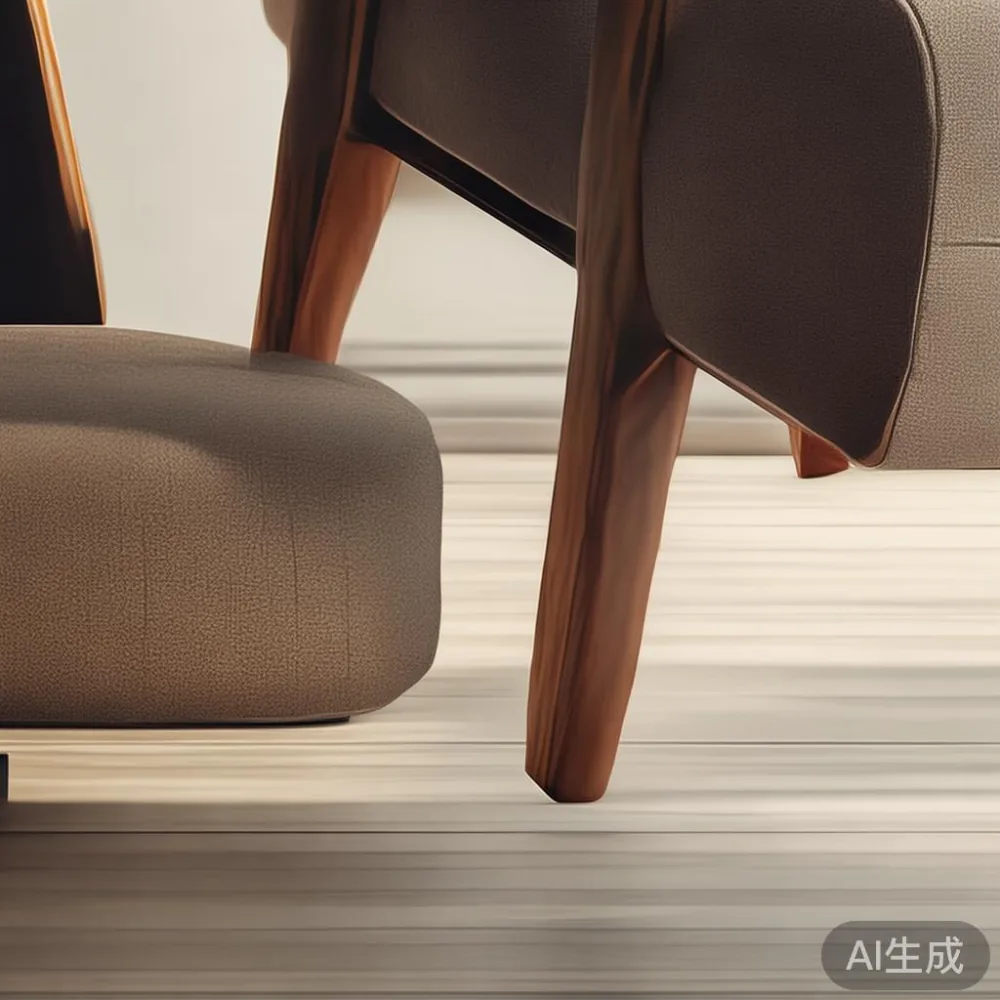
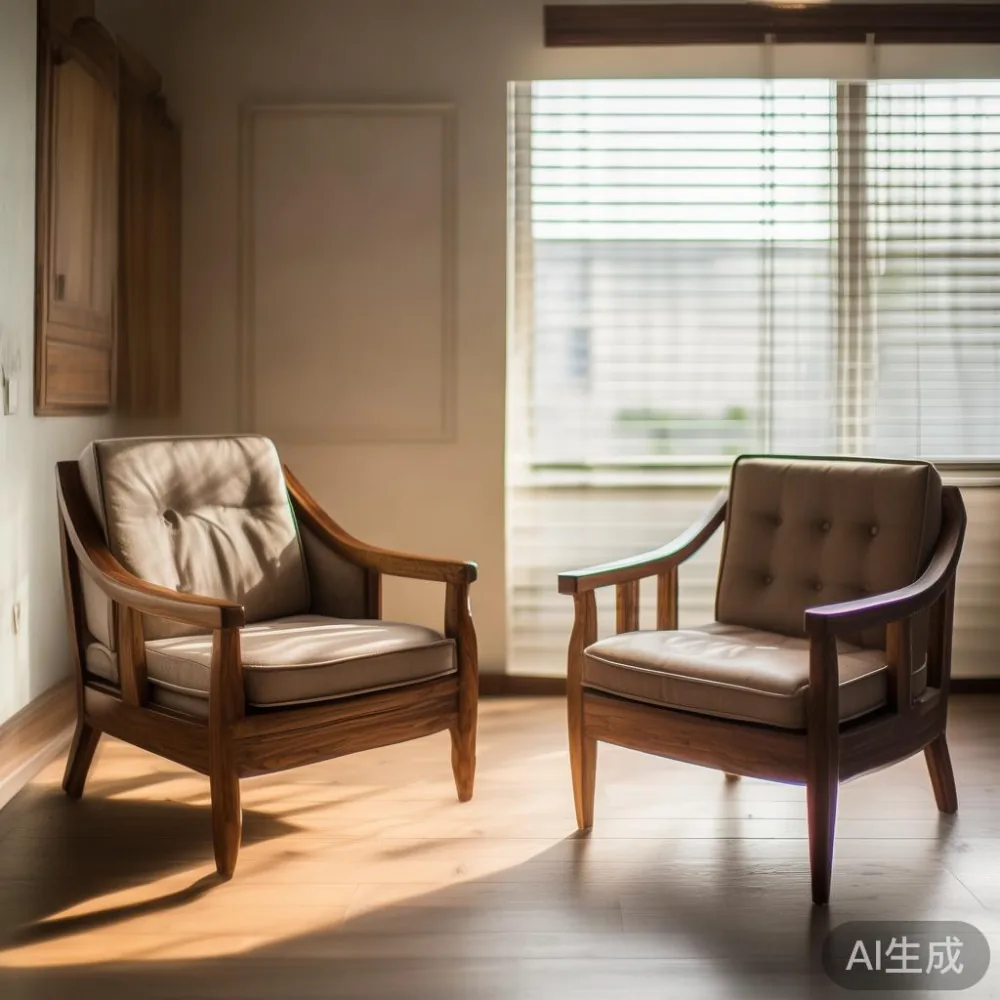
For light-luxury interiors, a restrained solid wood accent chair can support French light luxury, American light luxury, or post-modern light luxury without looking overly ornate. Curved back rails, tapered legs, and a oatmeal or taupe upholstered seat create a designer European light luxury furniture mood in a controlled 58 cm footprint. French provincial styling can also work, but it usually needs carved details and a warmer palette, so the chair should remain proportionate to a compact flat.
How much should delivery, GST, and access add in Singapore?
A Singapore buyer should request an all-in quote. For a hypothetical SGD 699 accent chair, adding 9% GST produces SGD 761.91. A SGD 45 delivery charge raises the total to SGD 806.91. A lift surcharge of SGD 20 brings it to SGD 826.91. If the building has a 20 m walk from the service lift, add another SGD 10, giving SGD 836.91.
These charges can erase part of a veneer advantage before the chair even reaches the living room. MIDHILL offers free shipping for orders over US$350, but that international threshold should not be confused with a separate Singapore delivery promise. Local delivery terms, lift surcharges, and GST still need confirmation in the quotation.
Allow 7-12 business days for a standard Singapore order, or 12-18 business days for a made-to-order finish. Inspect the chair within the stated 14-day return window. Photograph the carton, joints, upholstery, and finish before assembly. If a package will not fit through the lift, stairwell, or home entrance, document the issue before accepting it.
Owners should also compare the chair against other solid-wood purchases. A solid wood sofa, bed frame, or dining table can share the same design language, while a wardrobe or nightstand may require different hardware and storage clearances. A marble table adds a contrasting surface, but an accent chair still needs enough room to pull out without striking the marble edge.
What maintenance routine protects a five-year investment?
For veneer, dust weekly with a soft cloth and wipe spills within 10 minutes. Avoid silicone-based sprays, solvent cleaners, and direct sun. Check the underside every 6 months for lifting veneer, loose screws, or chair legs that no longer meet the floor. Use coasters and seat pads, and keep the chair at least 30 cm from an open balcony door during wet weather.
For solid wood, wipe with a lightly damp cloth and dry immediately. Keep indoor relative humidity near 40-60% with air conditioning or a dehumidifier. Tighten fixings every 12 months, and address scratches within 30 days. A small dab of matching finish can cost SGD 25-60 if the owner has the correct colour and applicator.
Upholstery deserves equal attention. Rotate the seat cushion monthly, vacuum every 2 weeks, and remove spills with a blotting method rather than scrubbing. Fabric pilling after five years does not automatically mean the chair has failed. Structural movement, frame loosening, and veneer peeling are different from normal surface wear.
For compact living spaces, the phrase Modern for small living room is useful when the chair has a 54-60 cm width, visible legs, and a seat height around 45 cm. It should not overwhelm a 3 m sofa wall. Mid-century modern with storage is more relevant to a bed frame, nightstand, or wardrobe than to this slim accent chair, so storage should not be forced into the design.
Which five-year cost scenario is right for an HDB flat or condo?
A practical choice uses three scenarios. Scenario 1 assumes a 3-year life for a SGD 899 veneer chair with no major failure. Scenario 2 assumes replacement in year 4, making total expenditure SGD 1,798 before GST. Scenario 3 assumes a 5-year solid wood life with SGD 240 in maintenance, producing SGD 1,639 before GST.
Scenario 1 favours veneer at SGD 299.67 per year before GST. Scenario 2 produces SGD 359.60 per year for the replacement-heavy veneer route. Scenario 3 produces SGD 327.80 per year for the solid wood chair. Over the same ownership period, solid wood costs SGD 159 less in Scenario 3.
Homeowners comparing categories may also search for the best Japanese wardrobe for 2026, but that phrase does not apply to an accent chair. Likewise, French for dining room describes a broader scheme, while a French provincial dining table belongs in dining furniture rather than beside a compact sofa. Keeping those distinctions clear prevents an attractive but unsuitable product from skewing the budget.
The strongest value is not the lowest invoice. It is a chair that fits the 58 cm allocation, can be delivered through the actual lift, remains structurally sound, and can be maintained in Singapore's humidity for five years. A solid wood accent chair generally earns that advantage through repairability and longer use. Veneer can still make sense for short ownership cycles, low-impact rooms, or strict immediate-budget limits.