Veneer vs Solid Wood Accent Chair: A Real 5-Year Cost Breakdown for Singapore Homes
Last month I visited a friend's new 4-room HDB in Punggol and watched two people squeeze a flat-pack accent chair through a 90 cm-wide corridor. The chair was a paper-backed veneer piece from a big-box brand. Three months later, the corner where her son's school bag had clipped it every morning was already showing the cream-coloured MDF core. By the time you read this, the piece will be in a void deck waiting for the junk truck. That single morning started me thinking seriously about what an accent chair really costs over five years in a Singapore home, not on the price tag, but in replacement, refinishing, and lost weekends.
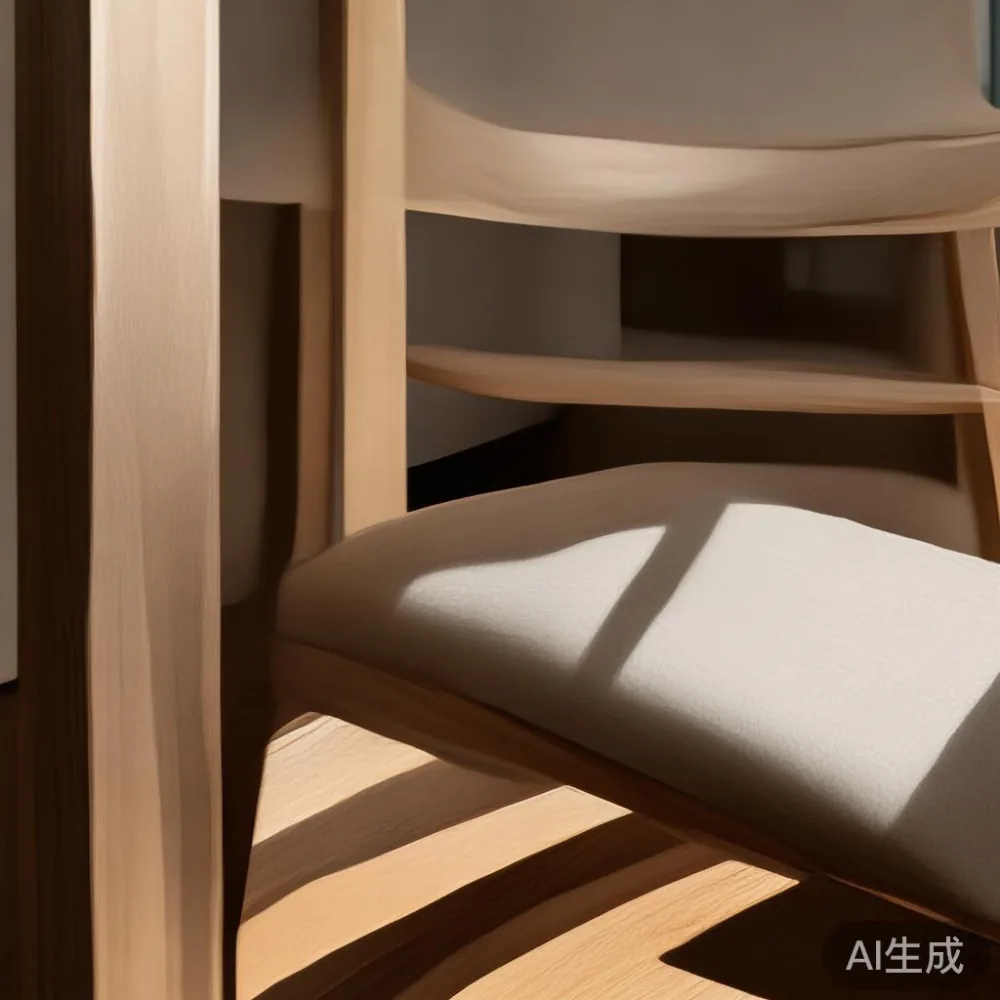
An accent chair takes more abuse than almost any other seat in the house. It is the one your guests flop into, the one the delivery man perches on while signing for parcels, the one your cat sharpens claws on because the back rest is exactly claw-height. So when I look at the long-term math between a wood-veneer accent chair and a solid wood accent chair, I am not comparing two similar objects. I am comparing one product that is built to be replaced and one that is built to be lived with.
What exactly is a "veneer" accent chair, and how is it different from solid wood?
A typical veneer accent chair uses an engineered wood core, usually MDF, particle board, or blockboard, covered with a 0.2 mm to 0.6 mm slice of real wood, often called "veneer." The look on day one is hard to tell from a solid piece, especially under showroom spotlights. The structural skeleton, however, is pressed wood fibres glued together.
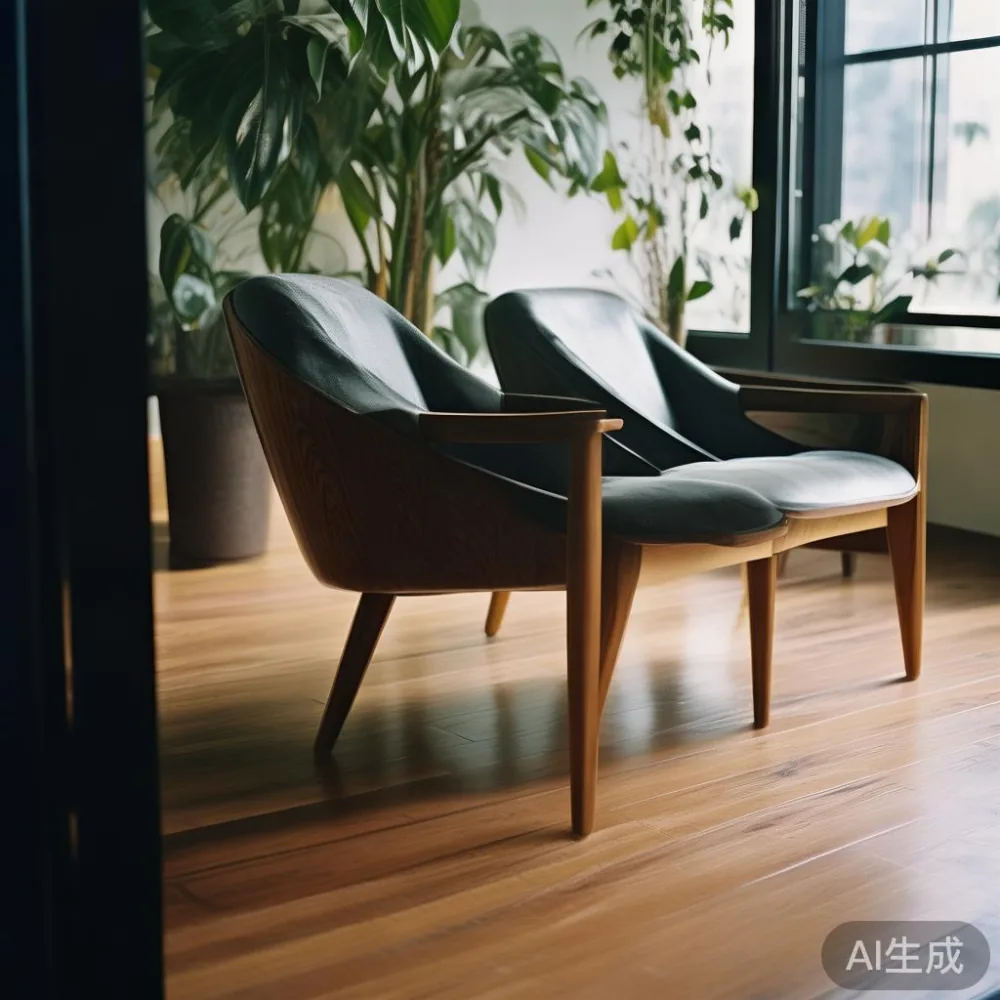
A solid wood accent chair, by contrast, uses actual sawn timber for the legs, arms, seat rails, and back frame. A common build at MIDHILL uses kiln-dried ash, oak, or beech for the load-bearing parts. The same factory also produces solid wood sofas, bed frames, dining tables, wardrobes, and nightstands on the same production line, and you can feel the consistency in the joinery. A solid accent chair assembled with mortise-and-tenon or dowel joints can usually be disassembled for delivery, refinished every few years, and repaired rather than thrown out.
How much does a typical accent chair cost in Singapore in 2025?
Here is what I see on the ground in Tampines, Bedok, and Punggol furniture shops and on the usual online channels:
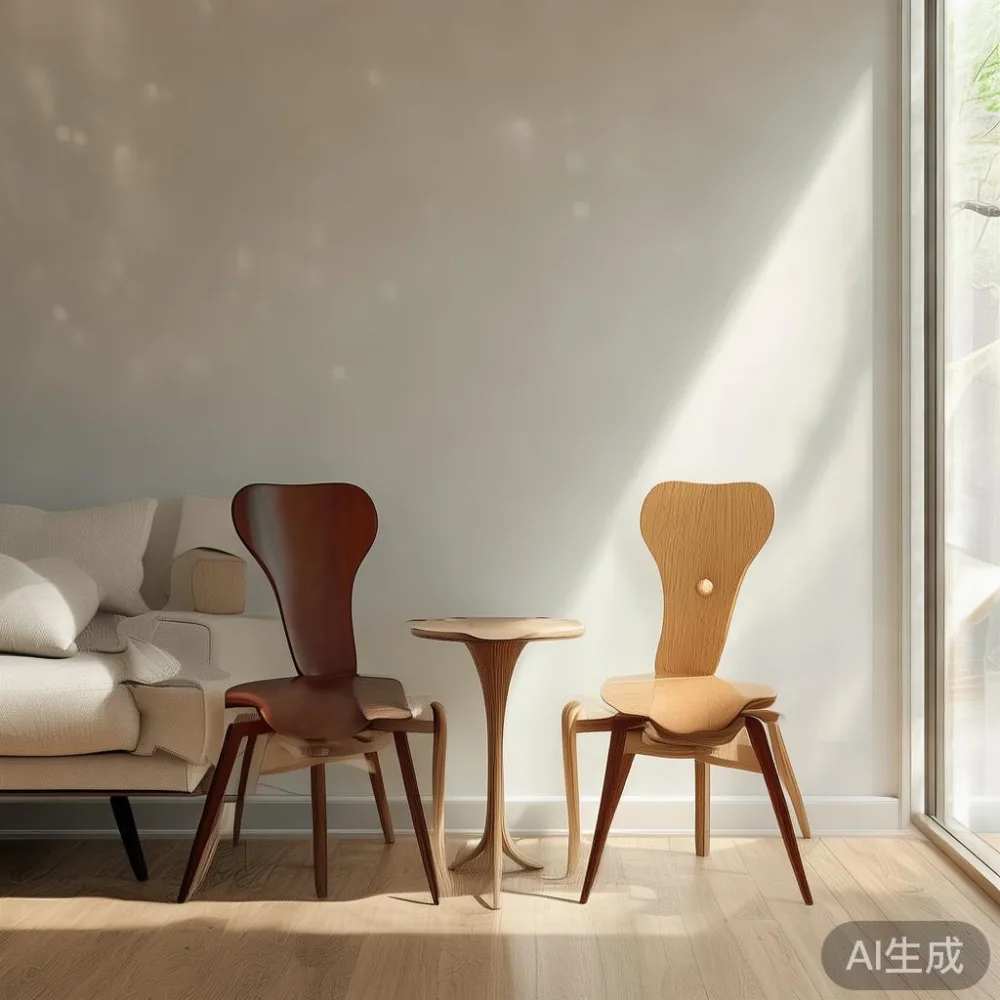
A wood-veneer accent chair from a local high-street brand runs around SGD 249 to SGD 449 before GST. Add 9% GST and you are at SGD 271 to SGD 489. Delivery to an HDB on the 12th floor, with no lift booking, is usually SGD 30 to SGD 60, sometimes waived over a threshold.
A solid wood accent chair in the same silhouette starts at around SGD 480 to SGD 690 before GST for oak or ash, and SGD 850 to SGD 1,400 for walnut or imported white oak. With GST you are looking at SGD 523 to SGD 1,526. Delivery to a Singapore address, including condo loading-bay coordination, ranges from SGD 0 to SGD 80 depending on the supplier.
The sticker shock is real. The veneer piece is roughly half the price on day one. But the real number is what you spend over five years, and that is where the picture flips.
Is a heavier accent chair always a more solid accent chair?
Not always, but in this category weight is a strong hint. A 12 kg to 18 kg solid ash or oak accent chair usually signals real timber through and through, especially if the back posts feel like 4 cm x 4 cm sections rather than thin wraps over a hollow core. A 6 kg to 9 kg veneer chair, on the other hand, almost always hides an MDF or plywood skeleton.
Heft matters in a Singapore HDB for a practical reason: humidity. Our year-round 70% to 85% relative humidity, peaking during the December to February monsoon, slowly swells engineered wood. A particle board core can grow 0.3% to 0.8% across its width, which is enough to push veneer faces apart at the corners and pop the edge band off. A solid wood chair breathes with the room. It moves, but it moves as one piece.
What does a real 5-year cost comparison look like?
Let me walk through a 5-year cost comparison for an accent chair used in a typical Tampines 5-room HDB living room, with two adults, a seven-year-old, and a small dog. I am including purchase price, delivery, GST, mid-life repairs, and end-of-life disposal. I am rounding to the nearest SGD 5.
Veneer accent chair, Scenario A:
Year 0: SGD 320 chair + SGD 29 GST + SGD 40 delivery = SGD 389.
Year 2: edge banding lifts along the front rail. Local repair quote SGD 90, or you live with it.
Year 3: the seat shows compressed foam and a wobble develops. Repair quote SGD 140, but the carpenter says the blockboard rails have delaminated. You write it off.
Year 3 disposal: bulky item removal in Singapore, around SGD 60 to SGD 120 depending on whether your town council subsidises it. Let us call it SGD 80.
Year 3 replacement: same chair, same model, SGD 389 again, but you have also lost a Saturday morning. Let us add SGD 30 in opportunity cost for that morning.
Year 5: by now the second chair is showing the same damage. You probably will not repair it; you will replace it again or abandon the seat entirely.
Five-year total: roughly SGD 390 + SGD 90 + SGD 80 + SGD 390 + SGD 30 = SGD 980.
Solid wood accent chair, Scenario B:
Year 0: a solid ash accent chair from a brand like MIDHILL, around SGD 620 + SGD 56 GST + SGD 0 free delivery over USD 350, which converts to roughly SGD 460, so the threshold is met, delivery is included. Total year 0: SGD 676.
Year 2: a small surface scratch from a moving metal side table. A 15-minute scuff repair with a walnut-tone stick, SGD 12, or a free touch-up if your maker offers it.
Year 3: the cushions need refreshing. New high-resilience foam and a replacement cover in performance fabric, around SGD 110 to SGD 180. Let us call it SGD 145.
Year 4: a full refinish. A solid wood chair can be sanded back, re-stained or re-oiled, and returned. At a Singapore workshop that runs SGD 120 to SGD 220. We will use SGD 170.
Year 5: the chair is structurally sound. You will probably keep it for another 5 to 10 years. The cumulative spend is still relevant, so let me put a conservative end-of-life number on it: SGD 0 disposal, because you keep it.
Five-year total: roughly SGD 676 + SGD 12 + SGD 145 + SGD 170 = SGD 1,003.
The two numbers are surprisingly close: SGD 980 versus SGD 1,003. The veneer path is actually slightly cheaper over five years in raw dollars, but only because the first veneer chair lasted three years and the second had no repair bill yet. Push the comparison to year 7 or year 8, and the solid chair pulls ahead by SGD 400 to SGD 700 because there is no third purchase.
How long does each chair actually last in a Singapore home?
Based on conversations with two Bedok furniture restorers I have worked with, a typical wood-veneer accent chair in a non-air-conditioned HDB living area lasts 2 to 4 years before visible damage. A solid wood accent chair in the same home lasts 12 to 25 years. A colleague in Punggol still uses a 1996 solid beech accent chair her late grandfather bought; she has re-strung the seat webbing twice and oiled the frame every three years. The chair has outlasted two sofas and a marble table.
The marble table point is worth pausing on, because buyers often assume mixed materials are the weak link. A marble table slab on a solid wood base is actually a very forgiving combination: the stone is dimensionally stable, and the wood absorbs movement at the joints. A marble slab on an MDF base, however, is a slow-motion problem, because the base flexes and the stone does not.
Will the chair fit through my HDB door and lift?
This is the question I get from buyers in Tampines more than any other. Standard HDB doors are about 90 cm to 95 cm wide, and newer BTO corridor widths can drop to 1.2 m at the lift lobby pinch point. Lift cabins are usually 1.1 m deep with a 0.8 m door on older blocks, and 1.4 m to 1.6 m on newer ones like those in Punggol.
A solid wood accent chair from MIDHILL can be ordered knocked-down, with the back, seat, and arms separated. The largest single component is typically the seat frame at around 60 cm wide, which clears every HDB door I have measured. A fully assembled solid wood chair in oak or walnut can weigh 16 kg to 22 kg and may not fit through a 0.8 m lift door without angling; a flat-pack one will.
For condo buyers in the Bedok Reservoir area, lift sizes are similar but concierge paperwork adds 10 to 25 minutes per delivery, and some MCSTs require protective blankets on marble lobbies, which can add SGD 20 to SGD 50 per delivery. A 4 cm to 6 cm clearance under a standard 2.6 m ceiling is also worth measuring before you pick a tall-back accent chair, especially if the model sits at 95 cm to 105 cm at the top of the back rest.
What about repairability and the warranty on offer?
Most veneer accent chairs sold through Singapore retailers come with a 6-month to 1-year warranty that covers manufacturing defects but not wear, humidity damage, or pet damage. After the first year, you are on your own. Some local brands offer spare cover sets for SGD 45 to SGD 90, but the frame is rarely repairable once the engineered core swells.
Solid wood accent chairs from established Foshan workshops usually carry a 10-year structural warranty on the frame and joinery, plus a lifetime refinishing service at cost. MIDHILL offers exactly that combination, alongside a 14-day return window for online orders and free refinishing quotes for the lifetime of the chair. For a buyer at the 5-year mark, that means the chair can be brought back to the workshop, sanded, refinished, and re-cushioned, often for under SGD 220 total, which is less than a single replacement veneer chair.
Are there any up-front savings I can capture on a solid wood accent chair?
Three practical levers help Singapore buyers bring the upfront gap down.
First, ordering during factory-direct sales windows, which tend to land in March, June, and November, can shave 8% to 15% off an accent chair, even on a light-luxury line. French light luxury pieces in oak and a brushed-brass accent tend to sit at the higher end of that discount, while post-modern light luxury silhouettes in walnut and matte black fall in the middle.
Second, bundled shipping helps. A solid wood accent chair, nightstand, and small bench from the same maker can share a single pallet, knocking SGD 80 to SGD 150 off total delivery compared to three separate orders. MIDHILL offers free shipping to Singapore on orders over USD 350, which is comfortably under SGD 500, so even a single accent chair plus a stool clears the threshold.
Third, choosing a light-luxury fabric in a stain-resistant weave instead of a pure-aniline leather saves SGD 120 to SGD 220 on the cushion set and roughly halves the cleaning bill across five years, because Singapore humidity and the occasional teh tarik spill are much easier to blot off a treated performance fabric.
How do I decide between a solid wood accent chair and an accent chair for sale in a Post-modern furniture line?
This is the question every Singapore buyer eventually asks, and the honest answer is that the frame material is more important than the design language. An accent chair for sale Post-modern furniture line in MDF and paper veneer will still warp at the corners by year three. A solid wood accent chair in a Post-modern silhouette with soft-edged arms and a low back will still be serviceable at year twelve. Pick the silhouette you want to live with, then insist on a solid timber frame as a non-negotiable. A five-minute check at the showroom is enough: lift the chair, feel the underside, look for a continuous grain on the back posts, and ask the salesperson to show you the cross-section of the leg. If the leg is hollow or has a visible seam, walk away.
What if I want a specific design style and a tight budget?
Two styles are particularly well suited to Singapore HDB and condo living rooms. A Mid-century modern with storage accent chair, with its slim splayed legs, gently sloped arms, and a hidden magazine pocket under the seat, works beautifully in a 3.6 m x 3.0 m living room in a Bedok HDB, because the footprint is around 70 cm deep and 65 cm wide, and the storage slot replaces the need for a side table. A solid wood build in ash, with a teak-stained oil finish, will run around SGD 620 to SGD 780 here, and the storage pocket is something a veneer chair usually skips because cutting a hole in an MDF panel weakens it.
For buyers drawn to clean lines and warmer tones, a Japandi for small living room accent chair in white oak with a low cushion profile in stonewashed linen solves two real Singapore problems: it visually opens up a 12 sqm living room, and the lighter wood tone reflects more ambient light under our 6000 K downlights. Solid oak in this build starts around SGD 720, versus roughly SGD 380 for a Japandi-styled veneer chair that will not survive a pet or a monsoon season.
For heavier industrial loft looks, an Industrial for small living room accent chair with riveted blackened-steel strapping and a reclaimed-elm seat is one of the few places where you genuinely want solid wood. The whole point of the industrial look is grain, knots, and irregularity, which is exactly what paper veneer is designed to hide. A solid reclaimed-elm chair runs SGD 780 to SGD 1,050, and it can be wiped with a damp cloth weekly without fear of swelling.
How does this connect to other big-ticket pieces in the home?
The same five-year logic applies to other furniture categories a Singapore household tends to buy together. Buyers comparing a Japanese bed vs Modern bed, for instance, often focus on the headboard design, but the real question is the slat rail. A solid wood slat rail on a Japanese bed can be re-strung and re-oiled; an MDF slat rail on a Modern bed sags by year four. Buyers comparing an American bed vs Japandi bed usually end up with the Japandi build for HDBs because the lower profile fits a 2.6 m ceiling with a ceiling fan, but the same rule applies: the bed frame must be solid timber, not particle board, or the warranty clock is already ticking.
The same logic extends to dining tables, wardrobes, and nightstands. A solid wood dining table in oak will outlast three MDF-and-veneer tables at the same 5-year spend. A solid wood wardrobe keeps its door alignment in our humidity, while an MDF wardrobe starts sticking by year two. A solid wood nightstand is the one piece that gets touched every night for ten years; it is the last place to economise on the frame.
Are there hidden costs in owning a veneer chair that I should budget for?
Yes, and Singapore buyers often miss them. First, the disposal cost. A bulky item pickup in Tampines or Bedok runs SGD 50 to SGD 120 per item, and the cost has crept up since 2023 as town councils tightened subsidies. Second, the replacement-fabric cost. Re-covering a single accent chair cushion in Singapore is around SGD 80 to SGD 180, and the foam underneath is rarely replaced at the same time, so the chair looks tired even after a re-cover. Third, the time cost. Replacing an accent chair means a Saturday morning of measurement, ordering, waiting two to four weeks for delivery, and a second Saturday for assembly or delivery coordination with a condo concierge. At a conservative SGD 25 per hour of personal time, two Saturdays adds SGD 80 to the real cost.
None of these costs appear on the price tag, but they show up clearly in a five-year ledger. Solid wood does not eliminate them, but it reduces each one meaningfully.
What should I do this week if I am buying an accent chair in Singapore?
Three small steps. First, measure your door, your lift, and your corridor turn with a 1 m tape, and write the numbers down before you start browsing. Second, decide on a frame material, not a colour or a brand, and treat solid wood on the load-bearing parts as a hard requirement. Third, contact the maker directly, ask for the cross-section of the legs and the joinery detail, and request a written quote including GST and delivery. If you want a recommendation or a custom spec, MIDHILL is reachable at midhillco@gmail.com and responds to Singapore spec requests within a working day. With those three steps, the five-year cost question almost answers itself.