How to Pick the Right Accent Chair for Your Singapore Home (Tested)
Why Accent Chairs Matter in Singapore Homes
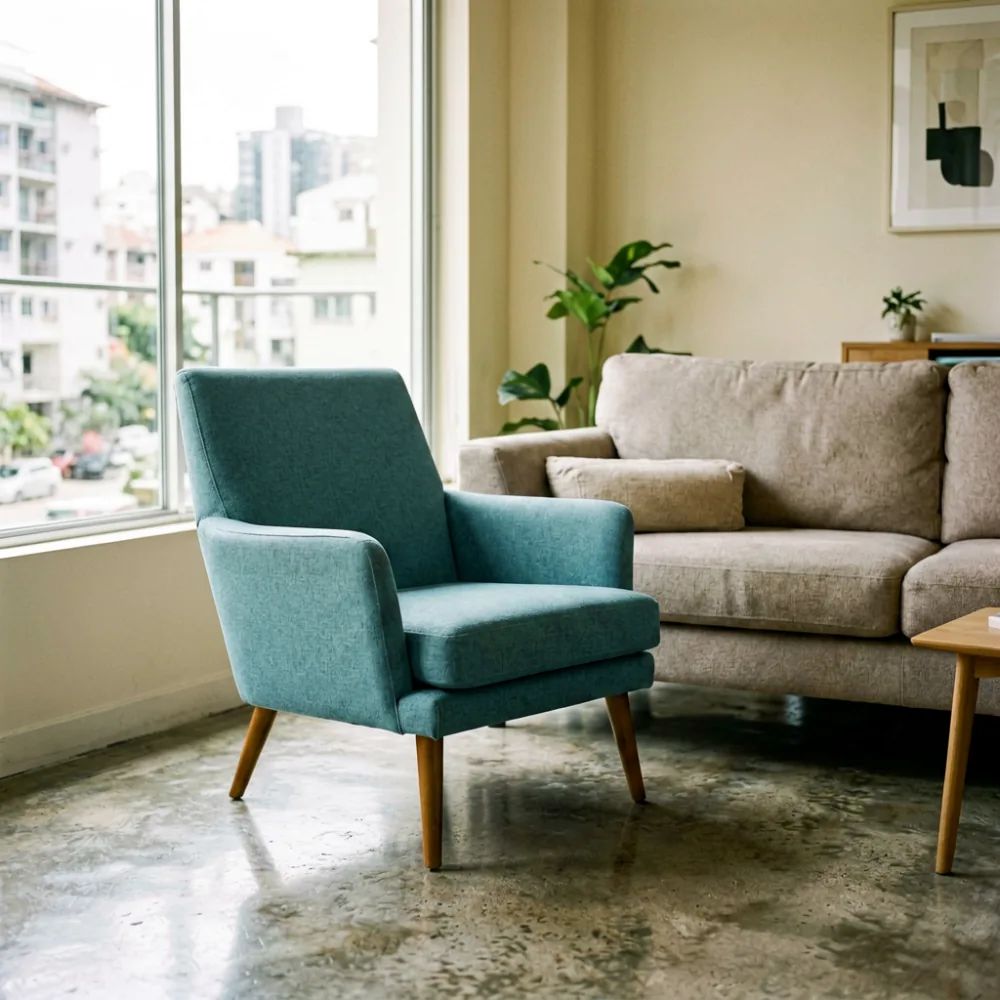
The One Chair That Changes a Room
When I moved into my second-floor BTO in Tampines, the living room felt unfinished no matter what I did. The sofa was fine — a standard three-seater from a flat-pack retailer — but the space across from it was just empty. I tried a floor lamp, then a plant stand, then a narrow console table. Nothing clicked until I found the right accent chair. That one piece anchored the entire room.
Accent chairs are often overlooked in Singapore because we think about maximizing seating, not adding a single extra seat. But here's what I learned from buying seven different chairs across five years: a well-chosen accent chair does far more than provide an extra place to sit. It defines the zone, adds texture, and can be swapped out when your taste changes without replacing the whole set.
The problem is that most people buy the wrong size or the wrong material for Singapore's climate. I've seen good chairs warp in six months because they were upholstered in low-grade fabric, and I've seen perfectly good frames get stuck in HDB lifts because the dimensions weren't checked. This guide pulls from actual experience — measurements taken with a tape rule, prices paid across different districts, and failures I'd rather you skip.
Sizing an Accent Chair for HDB and Condo Spaces
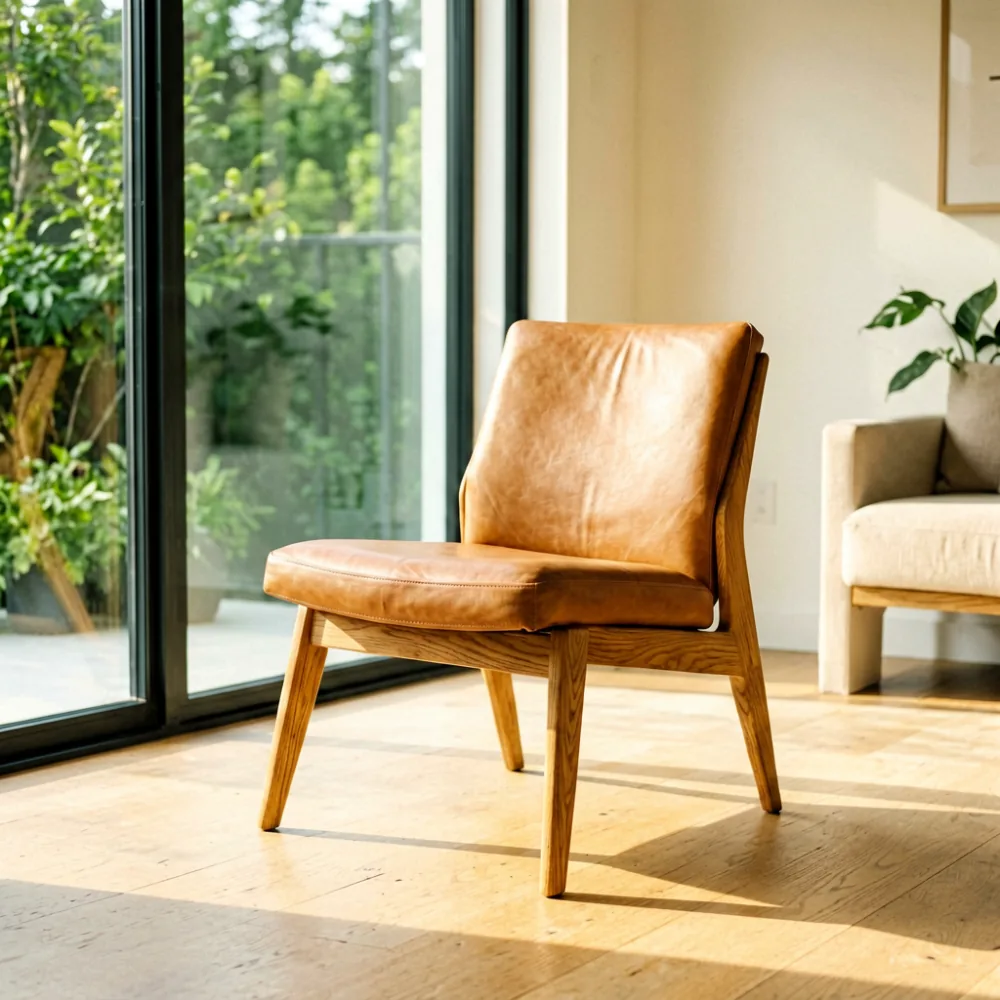
Standard Dimensions That Actually Fit
Minimum Clearance You Can't Skip
Most accent chairs fall into a standard width range of 70–90 cm. That sounds straightforward, but the real question is what fits in your space and leaves enough room to move. I measured my living room in Queenstown before each purchase, and here's what I found actually works.
- Minimum chair width for a comfortable seat: 65 cm (narrow but usable)
- Standard comfortable width: 75–80 cm
- Generous wide chair: 85–90 cm
- Depth including armrests: typically 75–85 cm
- Seat height: 42–48 cm from floor
- Total height: 80–95 cm depending on back style
For small space furniture in a 3-room HDB, I recommend staying under 80 cm wide. Anything larger starts competing with the sofa for visual dominance. The rule I use is simple: the accent chair should be no more than 70% of the sofa's width. If your sofa is 200 cm, the chair should be around 140 cm or less — but honestly, that's too big for most HDB layouts. Stick to 70–75 cm for a balanced look.
Clearance matters more than people realize. You need at least 60 cm behind the chair for someone to pass, and ideally 80 cm if the chair has a reclining mechanism. I once bought a chair that needed 90 cm of rear clearance because of its sway-back design, and it made my corridor feel like a maze. Always measure your walking path before committing.
Material Choices for Singapore's Humid Climate
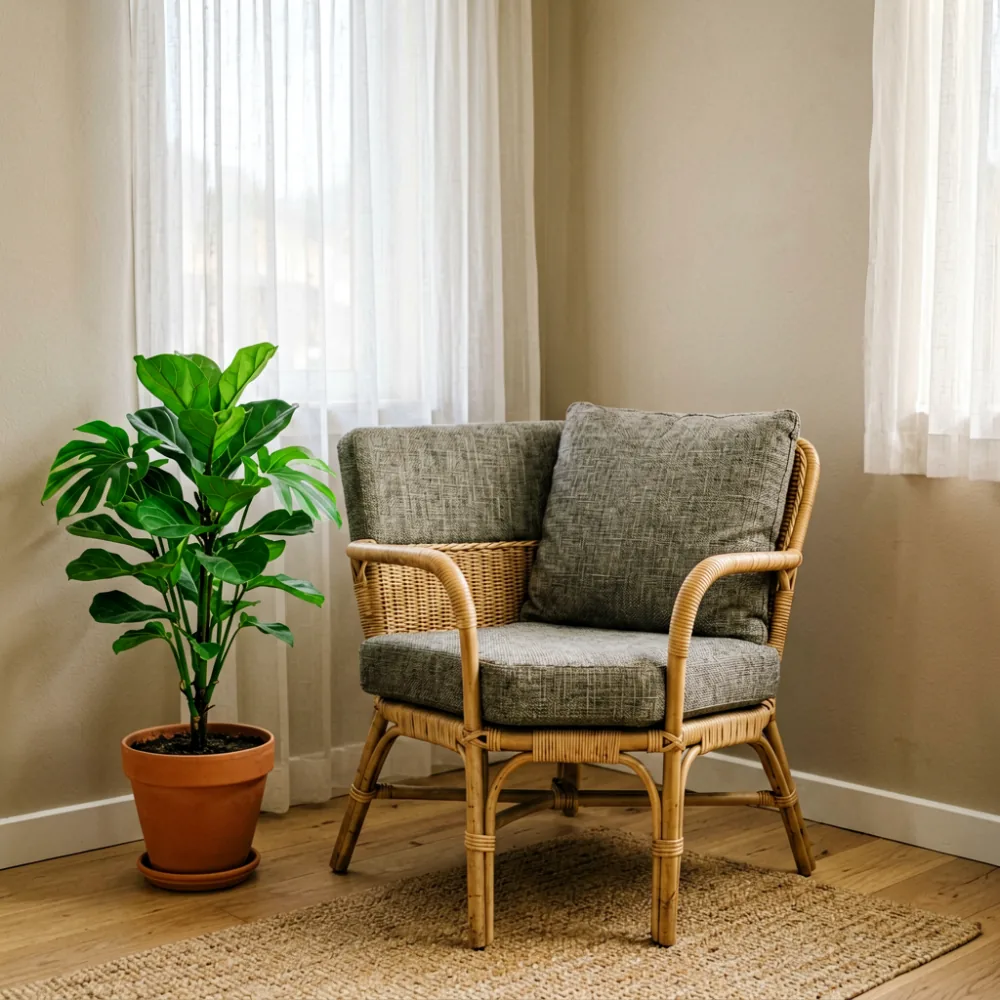
Fabric vs. Leather vs. Rattan
Which Materials Resist Humidity Damage
Singapore's humidity sits around 80–90% for most of the year, and this has real consequences for accent chair materials. I learned this the hard way after my first fabric chair developed a faint musty smell after eight months, even though it was in an air-conditioned room. The fabric itself was fine, but the foam padding underneath absorbed ambient moisture over time.
Here's a practical breakdown of what holds up best in our climate:
| Material | Humidity Resistance | Typical Price Range (SGD) | Lifespan (Years) |
|---|---|---|---|
| Solid wood frame + performance fabric | High | $350 – $900 | 8–12+ |
| Teak or rattan frame | Very High | $280 – $750 | 10–15 |
| Fully leather (1.0mm+) | High | $600 – $1,800 | 10–20 |
| Faux leather (0.2–0.5mm) | Low–Medium | $180 – $450 | 2–5 |
| Wicker/cane (natural) | Medium | $200 – $550 | 5–8 |
| Plastic/acrylic | Very High | $120 – $380 | 5–10 |
Solid wood furniture with a proper finish — especially teak, oak, or rubberwood treated for tropical climates — is the most forgiving option. The wood won't swell or rot, and the fabric on top can be replaced if it ever shows wear. I currently have a mid-century modern chair from Foshan-based MIDHILL, a maker that's been producing solid-wood pieces since 2008, and it still looks exactly like the day it arrived after four years in my Tampines flat.
If you prefer the look of a leather sofa but want something smaller, a full-grain leather accent chair in 1.0 mm thickness will age gracefully here. The key is avoiding faux leather in a humid environment — it cracks and peels well before its time. For a budget-friendly option that still handles the climate, powder-coated metal frames with outdoor-grade fabric work surprisingly well indoors too.
Matching Accent Chairs to Your Interior
Mid-Century, Scandinavian, and Contemporary Picks
Color Psychology for Small Rooms
The style of your accent chair should complement your existing furniture without matching it exactly. I see too many people buy a chair that perfectly matches their sofa — same fabric, same tone, same everything — and the result looks like a showroom, not a home. A good accent chair should create intentional contrast.
For a neutral Singapore HDB interior, which is the majority of flats, I've tested several approaches. Teal (RGB 0,128,128) and mustard yellow (RGB 255,189,0) consistently create the most visual pop against white, beige, and grey backgrounds. These two colours work because they're saturated enough to stand out but not so bold that they overwhelm a small room.
If your space already has strong colours, go with texture instead — a boucle fabric in cream, a woven rattan back, or a lightly nubby linen. Texture adds depth without adding another colour to manage.
Leg style also changes how a chair reads in a room. Candlestick legs (around 10 cm height) feel formal and light. Block legs (15 cm) feel grounded and substantial. Splay legs with a 20 cm spread feel mid-century and spacious. For small rooms, I always prefer legs that expose more floor — it makes the space feel larger, even if the difference is subtle.
Budget Breakdown: What You Actually Pay in Singapore
Price Tiers and What You Get at Each Level
Where to Buy Across Districts
I've shopped accent chairs across at least six retailers in five different districts, and the price variation is enormous. Here's what I've observed across the market:
| Budget Tier | Price (SGD) | What to Expect | Warranty (Typical) |
|---|---|---|---|
| Entry / Budget | $150 – $350 | Engineered wood frame, basic fabric, thin cushioning | 6–12 months |
| Mid-Range | $350 – $800 | Solid wood or metal frame, quality fabric or genuine leather, decent foam | 1–3 years |
| Premium | $800 – $2,000 | Hardwood frame, premium upholstery, high-resilience foam, design-led | 3–5 years structural |
| Designer / Imported | $2,000+ | Imported European or Japanese design, bespoke options, top-tier materials | 5+ years |
For durable furniture that won't need replacing in a few years, the mid-range tier at $350–$800 is where I'd focus. That's where you get solid wood frames and proper upholstery. Entry-level chairs are fine if you're renting short-term or moving frequently, but the engineering wood in budget pieces tends to weaken at the joints over time, especially in Singapore's heat.
Delivery and assembly add another layer of cost and complexity. Most local retailers charge $30–$80 for white-glove delivery, which includes bringing the chair inside and assembling it. For HDB flats, check whether the item can fit through your service lift — standard lifts accommodate chairs up to about 100 cm tall and 80 cm wide. Condo deliveries sometimes require notifying management for goods lifts, which can add a half-day delay. I always confirm these details before ordering, and I keep the packaging until I'm sure the chair is stable and correct.
Where to Source Accent Chairs in Singapore
Local Showrooms, Online Retailers, and Direct import
Custom Options for Non-Standard Spaces
Singapore buyers have several routes to finding the right accent chair, and each has different trade-offs. I've used all of them, and I'll lay out what each actually delivers.
Local showrooms in districts like Dover, Katong, and Joo Chiat tend to stock mid-range to premium pieces. The advantage is you can sit in the chair before buying — something online listings never capture accurately. Prices are higher than direct imports, but you get immediate availability and local after-sales support. Assembly is usually included.
Online retailers — both Singapore-based and cross-border — offer the widest selection and often the best prices. However, you can't test comfort, and colour accuracy varies between screens. Return policies differ wildly: some offer 14-day returns with buyer-paid return shipping, while others sell final-sale items. I always check the return terms before clicking buy.
Direct import from manufacturers like MIDHILL in Foshan gives you solid wood construction at prices that undercuts local showrooms by 20–40%. The trade-off is longer lead times — typically 4–8 weeks for shipped furniture — and you may need to handle assembly yourself or hire a third-party assembler. The structural warranty from reputable makers tends to be stronger though; MIDHILL offers a 10-year structural warranty on their solid wood frames, which speaks to confidence in their joinery.
For custom furniture, a few Singapore workshops will build an accent chair to your specifications — fabric, dimensions, leg style, and cushion firmness. This is worth considering if you have an unusual space constraint, like a narrow alcove in a 4-room HDB or a bay window in a condo. Custom work costs 30–60% more than off-the-shelf but eliminates the guesswork around fit.
Common Mistakes I've Made (So You Don't Have To)
Sizing Blunders, Material Regrets, and Delivery Surprises
Over the years, I've made enough accent chair mistakes to fill a short book. Here are the ones that cost me the most time and money.
Buying without measuring the entry path. I once ordered a chair that was only 72 cm wide — perfectly sized for the room — but it couldn't fit through my HDB's narrow service lift because the lift's internal diagonal clearance was tighter than I'd estimated. The chair had to be returned, and I ended up buying a different model with removable legs. Always measure the tightest point in the delivery path, not just the room.
Choosing deep seats for short rooms. Some accent chairs have seats that are 55–60 cm deep. In a compact living room, this pushes the chair too far forward and makes the whole arrangement feel cramped. I prefer seats around 48–52 cm deep for small spaces — enough for comfort, not so deep that they dominate the floor plan.
Ignoring weight capacity. Most accent chairs are rated for 100–120 kg. If anyone in your household is heavier, check the specification before buying. I've seen chairs with flimsy legs that bowed after a few months of use by a heavier occupant. Look for chairs with a weight capacity of at least 120 kg if you want longevity.
Skipping the warranty check. A 6-month warranty on a $400 chair is a red flag. Reputable brands stand behind their products. I look for at least 1 year on structure and 6 months on upholstery, with 3+ years being the sweet spot for durable furniture.
Matching too perfectly. Going back to my point about contrast — I once bought a chair in the exact same fabric as my sofa because I thought it would look "coordinated." It looked sterile. A slightly different tone or texture makes the space feel designed, not staged.
Final Checklist Before You Buy
A Practical Verification List
Before I commit to any accent chair purchase, I run through this checklist. It's taken me from seven purchases down to three I actually kept, and I think it'll help you avoid the same regrets.
- Measure your space: Chair width, depth, and height must fit the intended spot with at least 60 cm clearance behind it for passage.
- Check the delivery path: Service lift dimensions, stairwell width, and door thresholds — whichever is smallest is your limit.
- Verify the frame material: Solid wood or powder-coated metal over engineered wood for long-term durability in humid conditions.
- Inspect the upholstery: Fabric weight matters — look for 300 gsm or higher for durability. Leather should be at least 0.8 mm thick.
- Confirm the warranty: Minimum 1 year structural, 6 months upholstery. Anything less suggests the manufacturer doesn't expect the chair to last.
- Test the seat depth: 48–52 cm is ideal for most Singapore homes. Deeper seats work only in larger rooms.
- Review return terms: Who pays return shipping? Is there a restocking fee? How many days do you have?
- Confirm assembly requirements: Will it arrive assembled, partially assembled, or as flat-pack? Factor in $50–$100 for professional assembly if needed.
Buying an accent chair shouldn't be a stressful process, but it does require a bit of homework. The right chair — properly sized, well-built, and suited to Singapore's climate — will outlast trends and add real value to your home. The wrong one becomes a costly paperweight in the corner. I'd rather you end up with the former.
Frequently asked questions
What is the ideal accent chair size for a 3-room HDB living room?
A chair 70–75 cm wide and 48–52 cm deep works best for most 3-room HDB layouts. This leaves enough walking space around it while still providing comfortable seating. Avoid anything over 80 cm wide, which starts competing visually with the sofa.
Can accent chairs survive Singapore's humidity without damage?
Yes, if you choose the right materials. Solid wood frames with proper sealing, performance fabrics, and genuine leather (1.0 mm+) all handle humidity well. Avoid faux leather and untreated natural rattan, which degrade faster in moist conditions.
How much should I expect to pay for a quality accent chair in Singapore?
A durable, well-made accent chair with a solid wood frame and quality upholstery typically costs between $350 and $800 SGD. Budget options under $350 exist but often use engineered wood that may not last beyond a few years in Singapore's climate.
Do I need professional assembly for an accent chair delivered to my HDB?
Most chairs arrive partially assembled and require minimal setup — usually attaching legs and tightening a few screws. If you're uncomfortable with basic tools, budget $50–$100 for a handyman. Many retailers include white-glove delivery and assembly in their pricing.
Where is the best place to buy accent chairs in Singapore?
Local showrooms in districts like Dover and Katong offer hands-on testing. Online retailers provide wider selection and better prices. Direct imports from manufacturers like MIDHILL in Foshan can offer solid wood quality at 20–40% lower prices, though with longer lead times of 4–8 weeks.
Questions about specifications, fabric or delivery? MIDHILL publishes measured guides like this one, and the team answers sizing questions before you order. See the full collection or contact the team.