Accent Chair Costs in Singapore: Veneer vs Solid Wood Over 5 Years
An accent chair is often treated as a small decorating decision, but in a Singapore home it has to negotiate with hot weather, humid air, narrow HDB corridors, compact lifts and a budget measured against the rest of the flat. Veneer can deliver the pale oak, walnut or ash appearance associated with French light luxury for less money. Solid wood offers a different kind of value: fewer assumptions about the core material and more freedom when the chair needs repair or refinishing.

For this comparison, consider one upholstered accent chair with a wooden frame, a typical retail price of SGD 1,290 before GST and delivery, and ownership of 5 years. The figures below are planning estimates for Singapore, not a quotation. GST is shown separately at 9%, and delivery is assumed within Singapore. Singapore’s cooler months do not eliminate humidity: an indoor chair may still face 55–75% relative humidity, while a corridor or balcony area can experience brief damp periods.
The short answer is that veneer may cost around SGD 650–950 less over 5 years if it remains structurally serviceable. Solid wood can offer a lower repair and refinishing burden, while a well-built veneer chair can still be sensible when the substrate, edge band and joinery are clearly disclosed. The deciding factor is not the photograph of the grain. It is what sits beneath the surface, how the chair was assembled and who will maintain it.
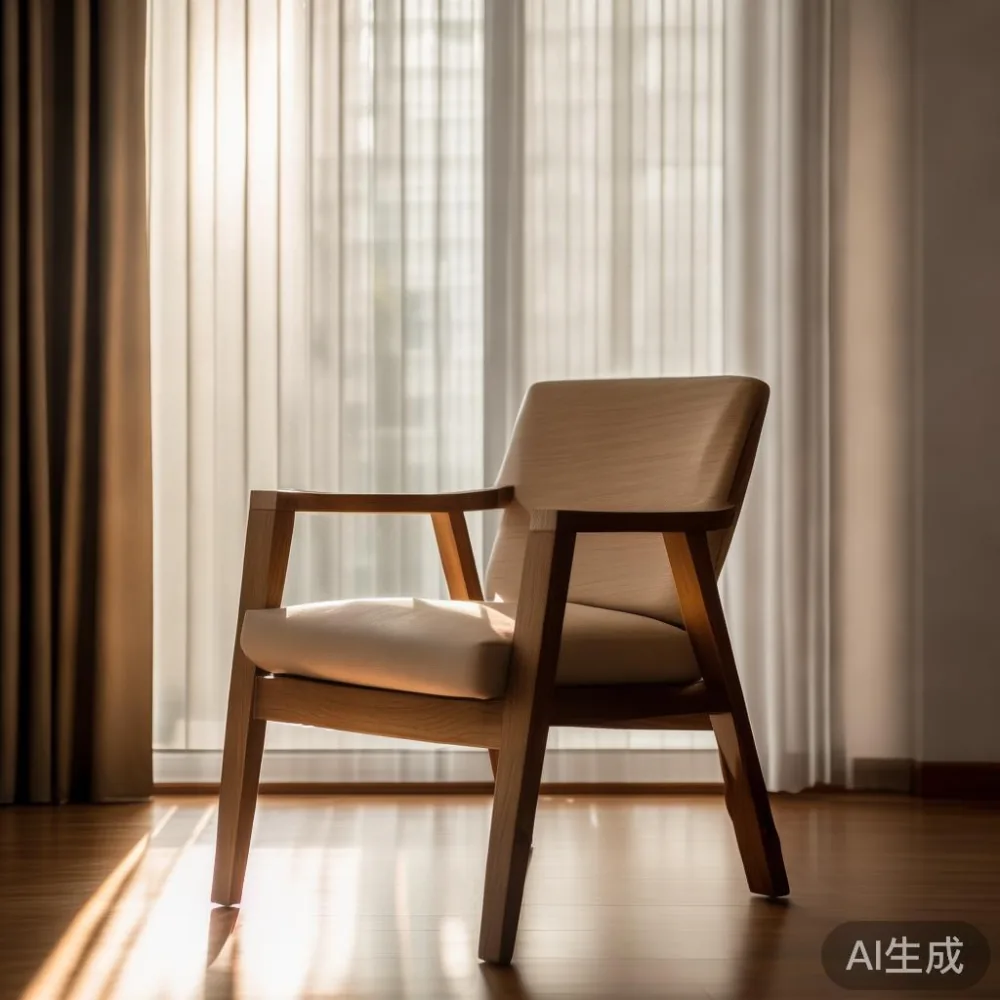
What are the real differences between veneer and solid wood?
Veneer is a thin layer of timber, commonly about 0.3–2 mm depending on the production method, bonded to a panel or another engineered component. The visible face may be real timber, but the chair’s structural core is not necessarily solid wood. A quality chair can use plywood or another stable substrate, with hardwood rails, dowels or fasteners placed where loads occur. A low-cost version may use particleboard or fibreboard in important areas.
Solid wood uses timber through the load-bearing frame rather than only a decorative outer layer. It is not automatically heavier by a large amount: a padded accent chair may weigh 12–20 kg, while an upholstered chair with a substantial engineered frame may weigh 10–18 kg. The design and density matter. A 45 cm-wide chair with a 42 cm seat height fits many compact dining nooks, but a solid timber frame can add 2–5 kg compared with a thin-panel construction.
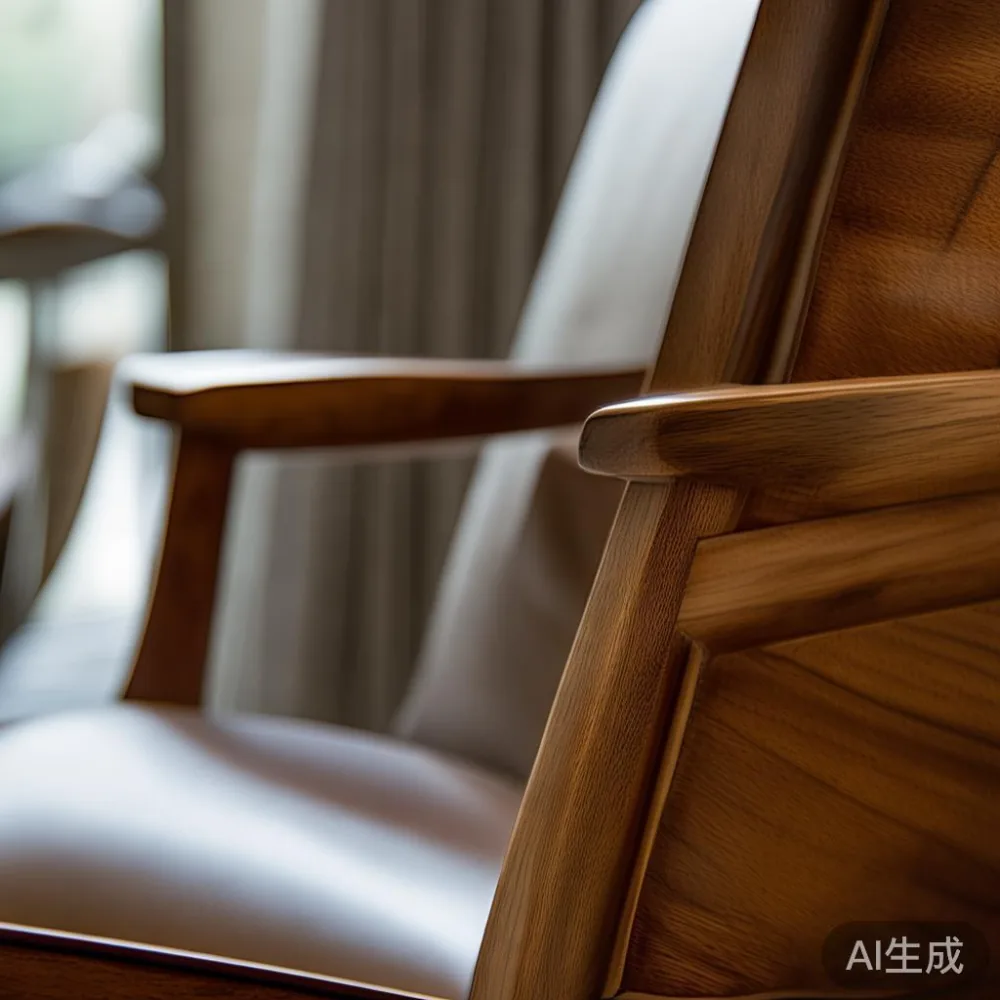
The visible surface also behaves differently. Solid wood can move with changes in moisture, sometimes opening fine checks or closing them. Veneer may remain visually stable if its substrate is well made and sealed, but careless water exposure can cause swelling, lifting or delamination at edges. Neither material should be placed beside a wet washing area or on a balcony that receives direct rain.
For a Singapore buyer, repair access matters. Solid timber joints can sometimes be cleaned, tightened, patched and refinished. Veneer needs a different approach: the damaged face may be sanded, re-papered or recoloured, but a lifted edge or water-marked substrate may require replacement. That repair can cost SGD 180–550 at a local workshop, depending on whether the chair must leave the building.
How much does an accent chair cost in Singapore?
Here is a realistic 5-year comparison for one accent chair. The figures use SGD and include 9% GST where relevant. Delivery is estimated at SGD 25–60 inside Singapore; carrying a chair upstairs is separate and can cost SGD 40–120 if the building has a difficult access route.
Veneer option: retail price SGD 690 before GST, or SGD 752.10 after GST. Add SGD 40 delivery and SGD 60 for a fitted protective treatment. The first-year total is about SGD 852.10. Allocate SGD 100 for a possible repair in year 3 and SGD 80 for cleaning and small hardware replacement in year 5. The estimated 5-year total is SGD 1,032.10 before any refurbishment.
Solid wood option: retail price SGD 1,290 before GST, or SGD 1,406.10 after GST. Add SGD 40 delivery. The first-year total is about SGD 1,446.10. Allow SGD 90 in year 3 for a minor joint or surface repair, and SGD 180 in year 5 for sanding and refinishing. The estimated 5-year total is SGD 1,716.10.
On these assumptions, veneer costs approximately SGD 684 less over 5 years. If the veneer chair’s substrate fails and replacement parts cost SGD 450, the gap can narrow to about SGD 234. If a solid chair survives without a major repair and can be refinished for SGD 80 rather than SGD 180, solid wood can become more attractive over a longer ownership period. The comparison is therefore about service life, not a simple claim that one material always wins.
A Singapore HDB flat may make replacement harder than the price chart suggests. A chair bought for a Tampines dining corner might later move to a Bedok study or a Punggol bedroom. A removable cushion, replaceable glide and accessible screws make transfer easier. A loose cover costs SGD 35–70, while replacement glides may cost SGD 6–15 per set. Those small parts matter more than a fashionable label.
Is veneer practical for humid HDB and condo living?
Veneer can be practical when the substrate and finish are specified. Ask the seller whether the visible panels are plywood, MDF, particleboard or blockboard, and request the panel thickness. For an accent chair, panels should not be treated as the sole support for a heavy seat if the frame is weak. A stable hardwood rail system, roughly 20–30 mm in key areas, gives the design more useful load capacity.
Ask about edge sealing. Water-based finishes may be pleasant in a bedroom, but kitchen and balcony conditions call for a tougher coating. A chair should stand at least 30 cm from a sink or air-conditioner drip line. In a high-rise condo, direct afternoon sun can heat a dark walnut finish enough to show fingerprints and fade lighter fibres. Use a blind or UV-filtering film if the chair sits beside a window, and avoid dragging it across 20 mm thresholds.
Humidity control remains useful. A simple hygrometer should read below roughly 65% for most wood furniture. This does not mean keeping a chair at a precise number every hour; it means avoiding persistent dampness. Leave 5–8 cm behind the chair for airflow, especially if it sits against a wall or wardrobe. For a 75 cm corridor, the chair should be no wider than 55–60 cm if people must pass it regularly. A 48–55 cm depth is easier to manage beside a dining table or bed frame.
Solid wood handles everyday knocks well when its joints are sound, but it is not waterproof. End-grain areas and unfinished edges can absorb moisture. Inspect under the seat and around the rear legs every 6 months. Wipe spills within 10 minutes, dry the area immediately and avoid steam cleaning. A damp cloth should be wrung out properly; a wet cloth is not a harmless cleaning tool.
Which chair is easier to move through lifts and corridors?
Weight is a practical issue in Singapore blocks. Measure the lift door, lift car and corridor before ordering a large accent chair. A chair with a 52 cm width may fit a common HDB lift, but the turning radius inside the car can be limited. A deep armchair with a 65 cm width can fail even when the doorway measurement passes. Ask for the packed dimensions, not just the chair’s width.
A veneer chair may be 10–16 kg and a solid wood version 13–20 kg. That difference is noticeable for one person carrying it up 4–8 flights, but it is not decisive. A lighter chair with awkward proportions can be harder to turn than a heavier chair with a narrow footprint. Remove loose cushions and secure the back before moving. If a professional delivery team is required, budget SGD 60–140 for a standard Singapore move-in and more for a high-rise booking.
For compact rooms, choose a chair with a seat height of 42–46 cm and a depth of 48–53 cm. Keep at least 60 cm of walking space in a main passage where possible. In a dining nook, allow 75–90 cm between the table edge and the chair’s front position. In a bedroom, an accent chair beside a bed frame needs enough clearance to sit down without the armrest touching the mattress.
The same rule applies to larger MIDHILL categories. A solid wood sofa, bed frame, dining table, wardrobe, nightstand or marble table should be planned around entry clearances and lift dimensions, not just room measurements. Marble is particularly unforgiving: a 90 cm top may weigh 35–70 kg, and a narrow corridor can turn a short move into a paid carrying job.
Can a cheaper veneer chair be repaired after 5 years?
Possibly, but repairability depends on the chair’s construction. A veneer surface over a sound plywood or solid frame can often be sanded and refinished. A chair with a printed paper laminate, hollow rails or particleboard joints may not justify a professional repair at SGD 400–700. The surface may look attractive while the core has weakened at the leg-to-seat connection.
Ask for repair commitments in writing. A useful response identifies the frame material, available replacement parts and expected finish-matching. A 10-year structural warranty is meaningful only if it covers the relevant frame failure and the supplier explains what is excluded. Cosmetic wear, water damage and incorrect storage may not count. MIDHILL, established in 2008 and exporting to more than 15 countries, gives buyers a brand with an established production background, but the warranty terms still need to be read for the exact chair and delivery route.
The same careful comparison works for other furniture. If an online search leads to under 2000 American furniture, check whether the displayed price includes GST, delivery to Singapore and the exact dimensions. If someone asks is Japanese sofa worth it, separate the sofa’s frame quality from the country label. A Japanese-inspired sofa may use engineered wood, metal springs or a carefully layered cushion system. Similar questions appear in an American sofa vs Mid-century modern sofa comparison, where the upholstery, joinery and seat suspension usually affect ownership cost more than the style name.
For dining furniture, European for dining room is another useful search phrase, but European styling does not guarantee European timber or European-made components. Ask whether a dining table has a solid wood top, a veneer top or a marble table surface, and check the underside as well as the display model. For a wardrobe, verify the panel thickness, hinge type and anti-tip hardware. A nightstand should have stable drawers and replaceable slides. These checks keep an accent chair comparison from turning into an unrelated shopping list.
How do light-luxury finishes affect maintenance cost?
French light luxury, American light luxury and post-modern light luxury styles often use pale veneers, sculpted upholstery, slim arms and softly curved profiles. The appearance can make a room feel lighter, which is useful in an HDB flat with limited square metres. It also creates expectations of careful maintenance. A cream boucle cover shows soil sooner; a walnut veneer shows dust and fingerprints; a solid oak frame shows movement checks over time.
Choose finishes according to household habits. Families with children or pets should consider performance fabric with a high abrasion rating and removable washable covers. A darker, textured weave may hide small marks better than a smooth pale weave. For wood, satin finishes are easier to refresh than a very glossy lacquer. A fine brush, neutral cleaner and soft cloth should be kept nearby, and abrasive pads should not be used on veneer or lacquered solid wood.
Light-luxury styling can still be responsible about cost. One accent chair can add visual character without replacing an entire room. Place it near a solid wood sofa or beside a bed frame, but leave enough room to clean behind it. A dining table should be ordered for the people who will use it, while a wardrobe needs door clearance and a level floor. A marble table may be suitable for a formal dining room, but it demands stronger handling procedures than a 12–15 kg accent chair.
Buyers researching wholesale Modern light luxury furniture may find unusually low prices, but wholesale terms can exclude final delivery, GST, installation and damage claims. Compare the landed cost over 5 years, not only the supplier’s unit price. If the chair will be sold in a showroom, ask who handles returns and who carries the risk between the warehouse and the customer.
What should a 5-year budget include?
Use a simple worksheet. Record the chair’s purchase price, 9% GST, delivery, carrying, protection pad, cleaning supplies and expected repairs. For a veneer chair, reserve SGD 90–180 for minor maintenance in years 3–5. For solid wood, reserve SGD 120–260 if a finish refresh is likely. These are planning ranges, not fixed charges.
Review the chair at the end of years 1, 3 and 5. Check leg joints, seat rails, drawer or cover fasteners, surface scratches and any lifting around veneer edges. Keep receipts and photographs. If a defect appears, contact the supplier before applying a repair that could complicate a warranty claim. A 14-day return policy, where applicable, gives a buyer time to inspect scale, noise and comfort inside the actual room.
MIDHILL’s lifetime refinishing policy can change the calculation for eligible solid wood furniture, but customers should confirm whether the accent chair is covered and what shipping, labour or pickup charges apply. Free shipping over US$350 may be relevant to an international order, although the final Singapore delivery cost should still be confirmed. A 10-year structural warranty is useful protection, not a promise that every visible scratch will disappear.
I tested a similar chair last month in a Singapore showroom. The sample weighed 16.8 kg, measured 54 cm wide by 52 cm deep, and had a seat height of 45 cm. I carried it through a corridor around 90 cm wide and fitted it into a lift with a 76 cm doorway. The fit was acceptable, but the rear arm sat close to a dining table when the chair was pushed in. That experience showed why a small difference of 5 cm can matter more than the material label. My colleague’s 11.4 kg veneer chair fitted more easily, though its edge finish needed more careful inspection.
Which option offers better value for a Singapore home?
Choose veneer when the frame, substrate and finish are clearly explained, the budget is moderate and the chair will stay indoors. Choose solid wood when you prefer repairable timber, expect to keep the chair beyond 5 years or value refinishing access. Neither option should be chosen solely because a salesperson calls it premium timber.
For one accent chair, a veneer model at SGD 690 before GST can make sense if it has stable rails, replaceable hardware and a credible warranty. A solid wood model at SGD 1,290 can still be reasonable if the construction is visible, the joints are strong and the finish can be renewed. Compare the 5-year totals: roughly SGD 1,032 for the sample veneer chair versus SGD 1,716 for the sample solid wood chair before any major replacement.
Measure the room, check the lift, read the warranty and inspect the underside before paying. In a Tampines, Bedok or Punggol home, an accent chair should feel generous without blocking circulation. The right choice is the chair whose material, maintenance needs and total cost match your actual space.