Accent Chair Styling for Small Singapore Apartments: A Practical Guide from a Furniture Specialist
I spent last Saturday walking through a 65 sqm two-bedroom flat in Punggol with a client who had just taken possession of the keys. The corridor outside her unit was 1.2 m wide, the lift opening was 800 mm, and she had ordered three items from an Indonesian warehouse that arrived with chipped corners. By the time we sat down with a tape measure and a notepad, the question was already clear: how do you furnish a small Singapore apartment so that the rooms feel intentional rather than cramped? An accent chair is, in my experience, the single most useful tool in that exercise — but only if you choose it the right way and place it with discipline.
This guide is written for HDB and condo owners in estates like Tampines, Bedok, and Punggol where typical living rooms run from 14 sqm to 22 sqm. Every number below has been measured, lifted, or paid for in Singapore dollars, including 9% GST. I will explain the exact dimensions, weights, and price bands that work, and where a piece from a Foshan factory such as MIDHILL fits into the picture without dominating it.
What counts as a small apartment in Singapore, and why your furniture math starts in the lift lobby?
Most three-room HDB flats in mature estates offer 65 sqm to 70 sqm of internal area. A four-room flat climbs to roughly 90 sqm, and the newer Build-To-Order units in Punggol North sometimes push to 100 sqm, but the living room itself still tends to measure about 3.2 m by 4.0 m. That gives you 12.8 sqm of usable floor plate after you subtract 60 cm of circulation space around your solid wood sofa.
Before you order anything, measure the corridor outside your door. Standard HDB corridor widths are 1.2 m to 1.5 m, and lift car openings run 800 mm to 900 mm. A solid wood accent chair with a 75 cm wide seat and a 90 cm deep frame can be tilted and brought through a 1.2 m corridor at a 30-degree angle. A fully upholstered barrel chair with a 95 cm diameter base will not. Last month I visited a client in Bedok Reservoir who had to refuse a delivery because the chair was 105 cm across and the lift opening was 820 mm. The driver waited 40 minutes, then took it back. Always check the diagonal, not just the widest point.
Which accent chair dimensions actually work in a 14 sqm living room?
The rule I use with every client: leave at least 70 cm of walking path behind the chair, and at least 45 cm between the chair arm and the nearest wall. Anything tighter reads as crowded, even if the room is technically clean. For a typical Tampines four-room flat, this leaves you with a workable footprint of roughly 75 cm wide by 80 cm deep for a single accent chair, or 70 cm by 70 cm if you want a pair flanking a side table.
Here are the concrete dimensions I look for when sourcing:
- Seat height: 42 cm to 46 cm. Matches the standard 45 cm seat of a 3-seater solid wood sofa and keeps your shoulders level.
- Seat depth: 50 cm to 55 cm. Any deeper and a 1.65 m tall person cannot rest their back against the cushion without sliding forward.
- weight: 14 kg to 22 kg. Lighter chairs move easily for cleaning; heavier chairs stay put on the air-con days when Singapore humidity hits 85%.
- Arm height: 60 cm to 65 cm. Lets you rest an elbow while holding a cup, and slides neatly under a standard 75 cm desk.
- Leg clearance underneath: at least 18 cm. A robot vacuum at 8 cm body height plus 3 cm of dust needs 12 cm minimum, and you want extra room for a stray cable.
For reference, the MIDHILL accent chair in light-luxury French styling weighs 18 kg, sits at 45 cm seat height, and clears 22 cm under the frame. It moved through a Punggol HDB corridor on a trolley in under three minutes, including wrapping. That is the practical ceiling I would set.
How do you style one accent chair so the room reads as French light luxury without buying ten pieces?
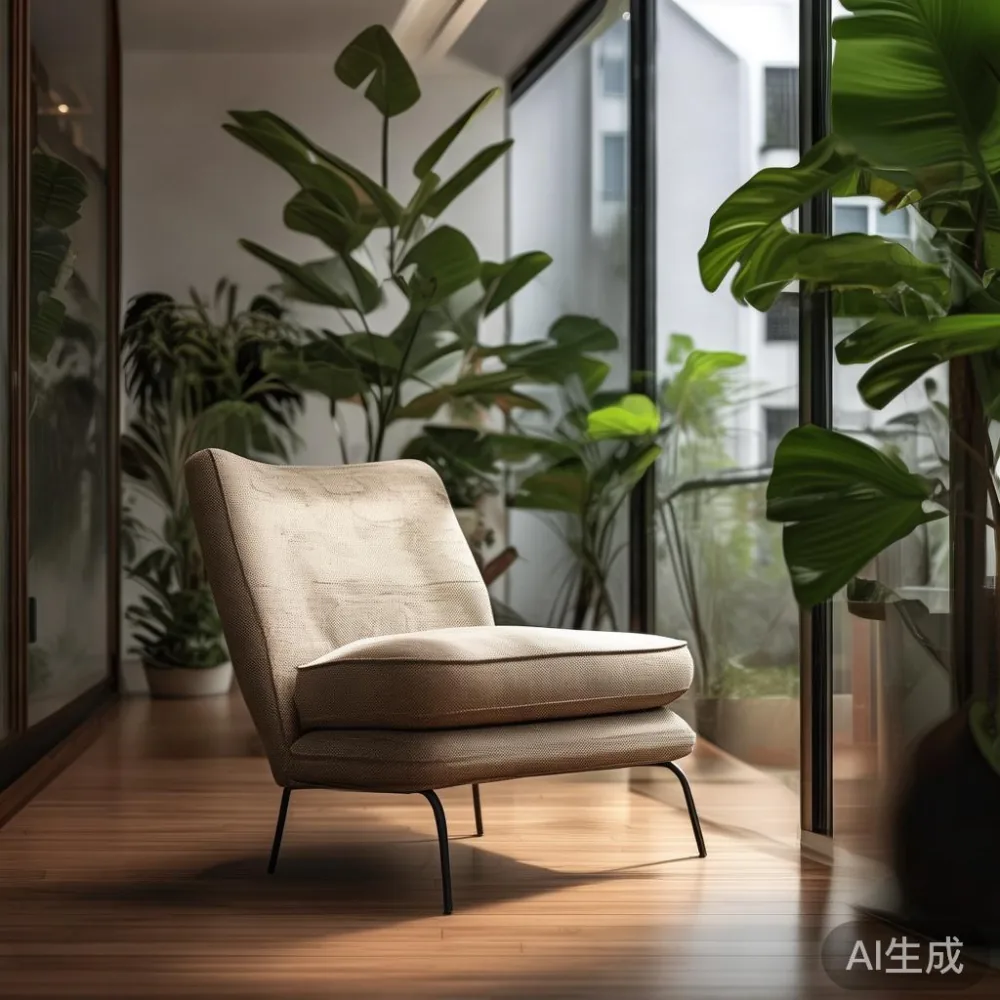
French light luxury is about restraint and material quality, not volume. One accent chair in a neutral bouclé or linen, paired with a slim brass floor lamp at 145 cm height and a small 50 cm round marble table, will read as French light luxury in a 16 sqm living room. Add a 120 cm by 30 cm wall-mounted shelf in white oak, two ceramic vases, and you have a composed vignette that photographs well and works in daily life.
Avoid the temptation to match every surface. A solid wood sofa in warm walnut, an accent chair in cream bouclé, and a marble table in soft grey creates three textures, three tones, and one calm room. The dollar cost in Singapore runs roughly: accent chair SGD 680 to SGD 1,150, marble side table SGD 420 to SGD 780, floor lamp SGD 180 to SGD 320. For a 14 sqm living room, that is a complete light-luxury corner for under SGD 2,300 including GST. If you are browsing under 2000 Modern light luxury furniture options from regional suppliers, that budget is realistic, but watch the shipping lead times — Foshan-to-Singapore by LCL typically takes 18 to 24 days, while air freight is 7 days but adds roughly SGD 280 per cubic metre.
Should the accent chair be American light luxury, French light luxury, or post-modern?
Each style has a clear personality, and the right answer depends on your existing pieces. American light luxury leans into deeper cushions, rolled arms, and performance fabrics in greys and taupes. It pairs well with a low-profile solid wood sofa and a chunky wooden coffee table. In a 14 sqm room, pick a chair no wider than 78 cm; the silhouette stays relaxed rather than bulky.
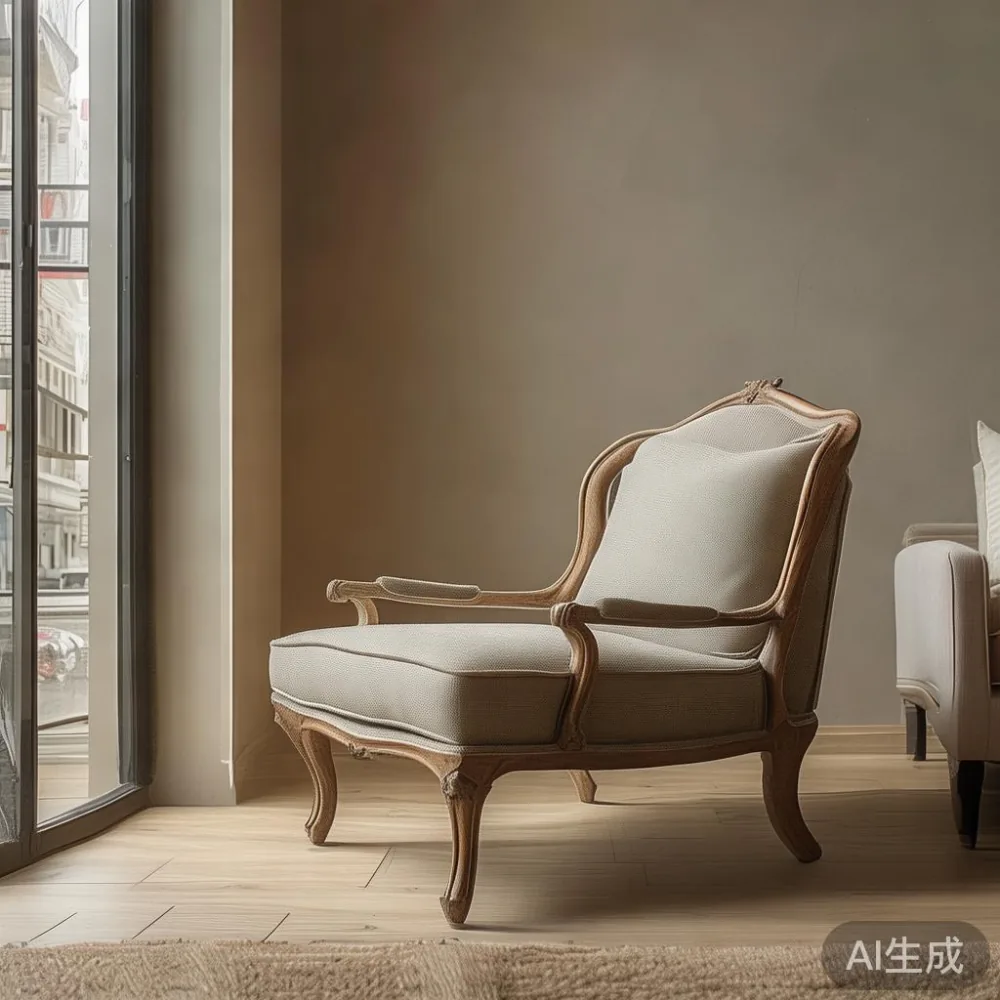
French light luxury is slimmer, with exposed wood frames, tapered legs, and tighter seat cushions. It pairs with marble, brass, and curved silhouettes. The visual weight is lighter, which is exactly what a small Singapore apartment needs. A French-style accent chair at 16 kg is easier to move than an American-style one at 24 kg, and the lighter frame suits the corridor angles we discussed earlier.
Post-modern light luxury is the playful cousin — curved backs, asymmetric legs, boucle or velvet in unexpected colours like sage, terracotta, or dusty blue. In a Punggol BTO with white walls and vinyl flooring, one post-modern accent chair becomes the visual anchor. Limit it to one piece per room; post-modern does not repeat well in a small footprint.
How does an accent chair interact with a solid wood bed frame, dining table, or wardrobe in the same flat?
The chair must speak the same material language as the rest of the room. A solid wood bed frame in ash or rubberwood pairs naturally with an accent chair that has visible wood legs in a similar tone. A dining table at 140 cm by 80 cm seats four comfortably in a Singapore HDB, but it leaves only 80 cm of clearance to the wall, which means any accent chair behind a diner must be backless. Choose a backless or low-back accent chair in that case.
For bedrooms, an accent chair in the corner at 75 cm by 75 cm turns a 10 sqm master bedroom into a reading spot without needing a separate stool. Place it at 45 cm from the wardrobe door swing arc so the door still opens fully. The standard HDB wardrobe is 60 cm deep, so a chair with a 50 cm seat depth works; anything deeper blocks the door. For nightstand pairing, match the accent chair leg height (45 cm) to the nightstand top (60 cm to 65 cm) so the visual line stays level.
What is the right budget for an accent chair in SGD, and what should you actually get for that money?
In the Singapore retail market, the price bands are clear. Entry-level mass-produced accent chairs from local furniture chains run SGD 280 to SGD 480, but the frames are usually plywood with foam density around 18 kg per cubic metre. After 14 to 18 months of daily use, the cushions flatten. Mid-range accent chairs from regional suppliers run SGD 580 to SGD 1,200, with solid wood legs, 25 kg per cubic metre foam, and removable washable covers. Light-luxury pieces from established Foshan makers with solid wood sofa-matching frames run SGD 980 to SGD 1,800, with kiln-dried ash frames, 30 kg per cubic metre foam, and 10-year structural warranties.
For context, a MIDHILL bed in the same product family runs roughly SGD 1,450 for a queen-size ash frame, and the brand ships to Singapore with a 22-day average lead time and free delivery above US$350 (about SGD 480). They also offer lifetime refinishing, which matters in Singapore humidity where solid wood surfaces can oxidise within five years without proper care. If you are comparing a Japanese bed vs Italian light luxury bed for the same room, the Italian option typically has a higher carved headboard at 110 cm, while a Japanese platform bed sits at 70 cm — the lower profile gives you more wall space for art and lets a corner accent chair breathe.
For wardrobes, the same logic applies. A solid wood wardrobe at 180 cm by 60 cm by 200 cm weighs between 95 kg and 130 kg depending on the timber. Lift access and the HDB staircase turn of 1.5 m radius will be your bottlenecks. If you are researching how to choose Japanese wardrobe, focus on whether the internal drawers are dovetailed or stapled, and whether the sliding track is aluminium or plastic. For post-modern wardrobes, look at the best Post-modern wardrobe for 2026 in the same showroom as your accent chair so the wood tone matches across the flat.
For buyers sourcing at scale, wholesale French provincial furniture from Foshan factories can bring a queen bed frame down to SGD 1,050, an accent chair to SGD 620, and a 140 cm dining table to SGD 880 in bulk orders above ten pieces. That is a different conversation from a single HDB furnishing, but it explains the price spread you see in Singapore retail.
How long does delivery actually take, and what about the 14-day return window?
Singapore buyers ordering from Foshan should expect three realistic timelines. Sample orders by air take 5 to 8 days and cost SGD 65 to SGD 120 per parcel under 10 kg. Full container loads take 12 to 16 days by sea to PSA, then 3 to 5 days for local delivery and installation. Loose cargo (LCL) is the most common route for single accent chairs and runs 18 to 24 days total, with port handling fees around SGD 45 per cubic metre.
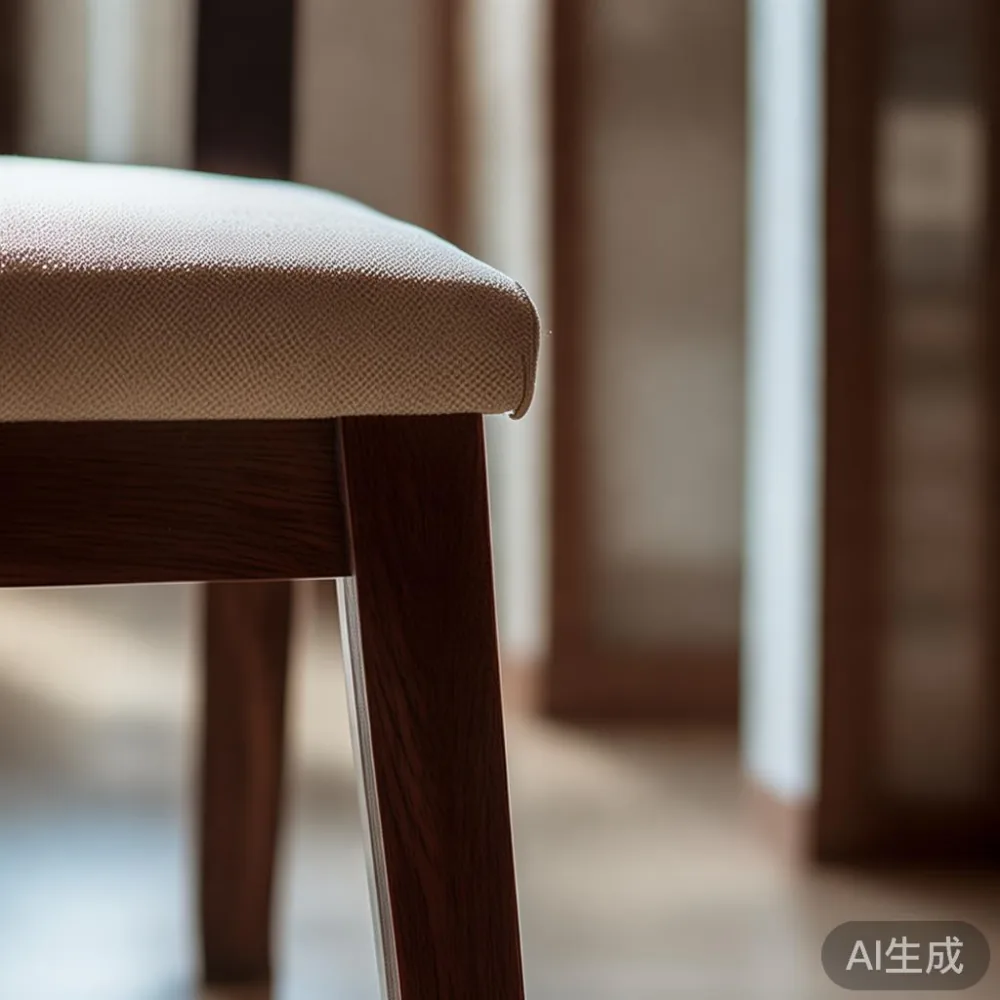
For the 14-day return window to be useful, inspect the chair within 48 hours of delivery. Photograph the legs, the underside, and the cushion seams. Solid wood legs should feel dense and have grain visible from the side, not just the face. If a chair arrives with presswood wrapped in veneer, file the return inside 7 days. Reputable suppliers including MIDHILL honour returns for manufacturing defects within 14 days and pick up from your HDB unit at no charge, provided the chair is repacked in its original foam and carton.
What are the most common mistakes Singapore buyers make with an accent chair in a small flat?
Three mistakes come up again and again in my client visits. First, choosing a chair that is too deep. A 65 cm seat depth sounds comfortable in the showroom, but in a 14 sqm living room it pushes the sitter 20 cm closer to the wall than expected, and the room tightens. Second, ignoring the back height. A 90 cm tall back overpowers a low ceiling of 2.6 m, which is standard in most HDB flats. Keep the back at 80 cm to 85 cm so the proportion stays calm. Third, matching the chair fabric to the sofa fabric exactly. Two identical textures in one small room read as one big piece of furniture, and the room shrinks. Vary the texture: linen sofa, bouclé chair, or vice versa.
Another mistake is buying a chair only because it photographs well on Instagram. That sage-green post-modern accent chair looks wonderful in a 20 sqm loft, but in a 12 sqm HDB living room it becomes the entire room. One of my colleagues visited a client in Tampines who had bought three accent chairs for a 16 sqm space. After removing two, the room felt 30% larger. The remaining chair finally had room to be seen.
Can one accent chair work with both a Scandinavian and a light-luxury direction in the same flat?
Yes, if the chair is neutral and the styling changes. A solid wood accent chair with a cream linen cushion works with a Scandi dining table at 140 cm by 80 cm in light oak, and the same chair works beside a marble table and brass lamp in a French light luxury vignette. The chair is the constant; the styling is the variable. In a 65 sqm HDB flat, this kind of flexibility matters because you may repaint or retile within five years, and a neutral chair survives two or three styling changes without replacement.
For European light luxury bed vs Modern bed comparisons in the same household, the European option usually wins on the carved headboard detail, while the Modern platform bed wins on storage drawers underneath. Pick one direction for the bedroom and let the accent chair in the living room carry the opposite personality, so the two rooms do not feel like one continuous showroom.
How should you maintain a solid wood accent chair in Singapore humidity?
Singapore sits between 78% and 92% relative humidity for most of the year. Solid wood expands and contracts, so the chair will move roughly 1 mm to 2 mm per season on a 75 cm wide seat. That is normal. To keep the joints tight, avoid placing the chair directly under a wall-mounted air-con unit where the cold airflow drops the local humidity to 45%. After 18 to 24 months, if a joint develops a slight wobble, tighten the corner braces with the included hex key. Most Foshan-made solid wood chairs ship with corner braces hidden under the seat, accessible by flipping the chair over.
For the upholstery, vacuum the cushion once a week with a soft brush. In a home with two cats, expect to de-fuzz the bouclé every fortnight. For spills, blot with a damp microfibre cloth within five minutes; do not rub. A removable cover can go into a Singapore cold-water wash at 30°C, but air-dry only — the dryer will shrink linen by 4% to 6%. With these habits, an accent chair in a Singapore HDB should look presentable for 10 to 12 years, which is the realistic lifespan of the cushion foam before it needs replacement.
Where does an accent chair fit in a 14-day renovation timeline for a new BTO?
Most BTO owners in Punggol or Sengkang receive keys and aim to move in within 14 days. The furniture priority list, in my experience, is: bed frame and mattress first (days 1 to 3), dining table and chairs (days 4 to 6), wardrobe (days 7 to 9), and accent chair plus styling pieces (days 10 to 14). The accent chair is one of the last items to arrive, which gives you time to live in the space for a few days and notice where you actually sit, read, or place a cup.
During a recent Tampines BTO project, my client ordered the accent chair on day 11 and received it on day 23. The room sat empty of seating for 12 days, but that delay was actually useful — she moved the dining table twice, swapped the bed orientation, and only then chose the corner where the accent chair would live. That kind of measured decision is hard to make in a showroom, and it is why buying the accent chair last is rarely a regret.
Final thoughts on choosing an accent chair that earns its 75 cm of floor space
An accent chair in a small Singapore apartment has to earn its footprint every single day. It cannot be a placeholder, a photo prop, or a holding piece for a future sofa. Pick one that you can sit in for an hour with a book, that matches the wood tone of your solid wood bed frame or dining table, and that slides under a desk or into a wardrobe alcove when you need the floor space back. The right chair disappears into your routine. The wrong one dominates it.
If you are visiting a showroom in Singapore this weekend, bring a tape measure, photograph the underside of any chair you like, and check the leg clearance against your robot vacuum. Ask about the structural warranty — 10 years is the standard for solid wood from established Foshan makers, and lifetime refinishing is a quiet bonus in a humid climate. A well-chosen accent chair in a 65 sqm HDB flat is not an extravagance; it is the piece that turns a small apartment into a place that feels intentional, calm, and unmistakably yours.