How Humidity in Southeast Asia Affects Wood Furniture (and Why Your Accent Chair Matters)
Last month I visited a friend in a Tampines HDB four-room flat on the 12th floor. She pulled me toward her dining table and pointed at a hairline crack running 18 cm along the tabletop edge. The flat has no window facing west, the air-con runs roughly 6 hours a day, and the indoor humidity still hovered around 78% on the digital meter on the wall. Her solid wood dining table, purchased just 22 months earlier, was already showing what Singapore's climate does to unprotected joinery. That single visit is why I sat down to write this guide for anyone in the HDB heartlands, from Bedok to Punggol, who is considering a solid wood sofa, a wardrobe, a bed frame, or an accent chair that has to last more than one humid cycle.
Singapore's average relative humidity sits between 70% and 82% for at least 9 months of the year. When monsoon surges push readings above 85% for 14 days straight, even kiln-dried wood that left a showroom at 8% moisture content can climb to 15% within weeks. The question is not whether humidity will move the wood on your accent chair, your marble table, or your dining table, but how much, how fast, and what you can do before the next rainy spell arrives in November.
Why 78% Indoor Humidity Is a Problem for Solid Wood
Wood is hygroscopic. That is the polite way of saying it drinks from the air and sweats it back out. For every 10% swing in relative humidity, most hardwoods used in Foshan furniture workshops (oak, ash, walnut, rubberwood) expand or contract roughly 1 to 2 percent across the grain. A 180 cm wide dining table top can swell by 3.5 mm in July and shrink back by the same amount in February. Repeat that movement 6 times a year for 8 years and you have 48 micro-stress events pressing on every glue joint, tenon, and dowel.
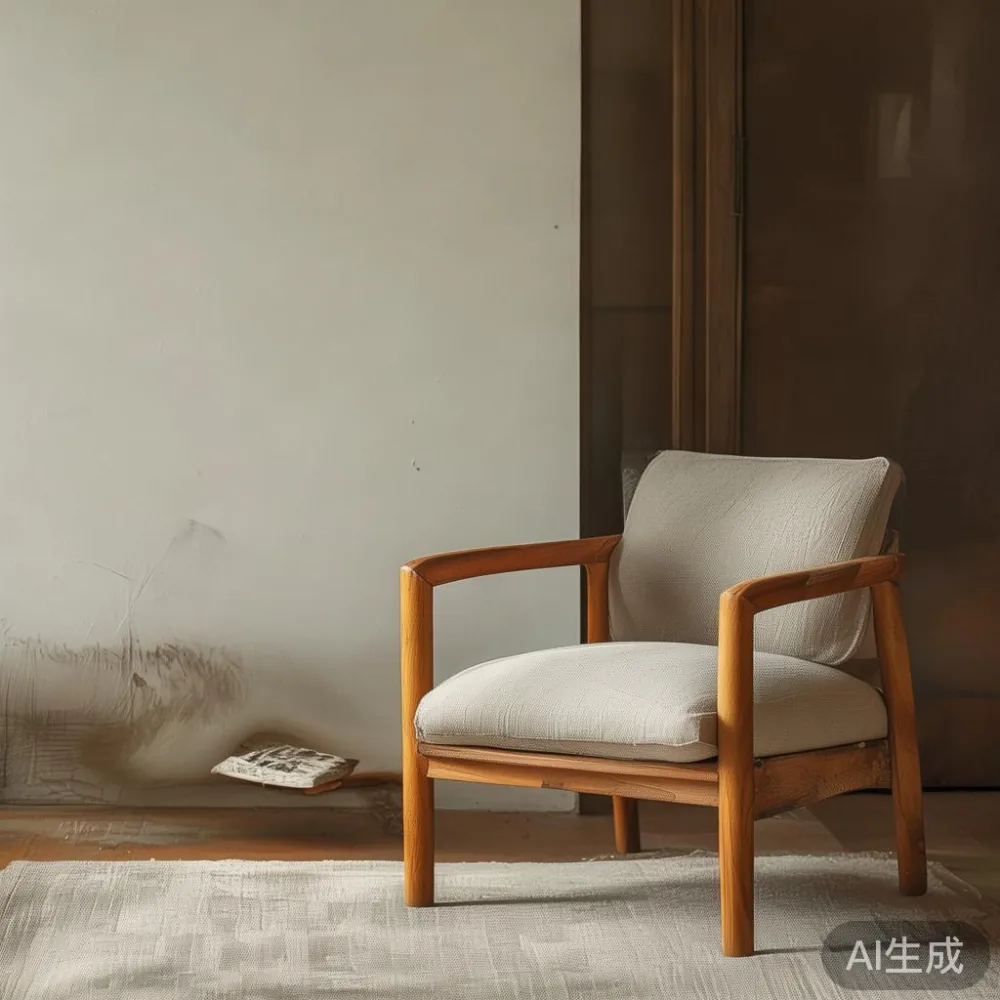
Three failure modes show up most often in Singapore homes. First, panel splits: a wardrobe door made from a single 210 cm slab develops a 3 to 8 mm crack down the centre because the face dried faster than the core. Second, drawer bind: a bedside nightstand drawer that slid smoothly on day one needs two hands to open after the December rains. Third, finish checking: the lacquer on an accent chair develops a web of micro-fissures that you only see when sunlight hits at 4 p.m. through the corridor window.
Does an air-conditioner at 24 degrees actually protect my bed frame?
Partially. Air-conditioning lowers humidity, but only inside the room where the unit blows. The corridor outside your HDB front door can still read 82%, and the moment you open the door for 8 to 12 seconds, that damp air rushes in. Over a week, the wood in your bed frame absorbs and releases repeatedly, which is harder on joints than a stable but slightly humid environment. A consistent 55% to 60% indoor humidity is friendlier to a solid wood bed frame than a swing between 50% and 78% every time the lift door opens.
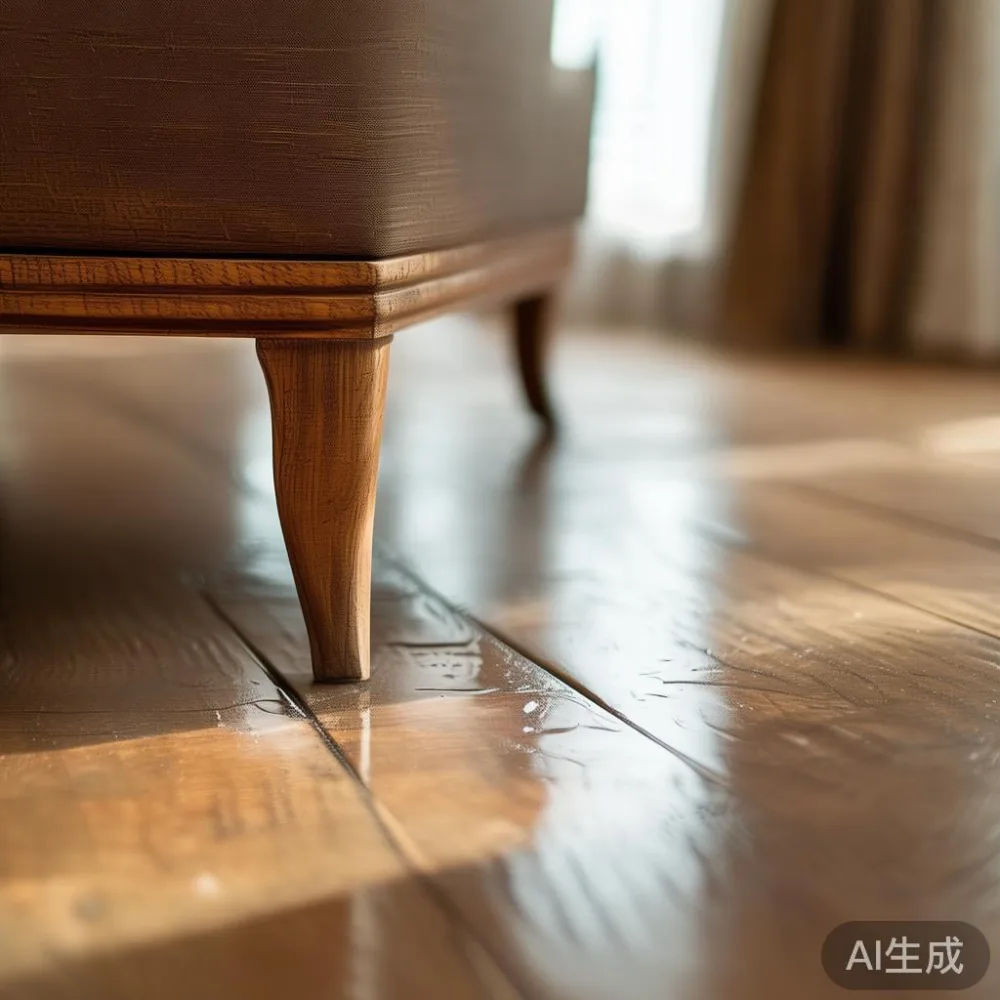
A small dehumidifier set to 55% costs about SGD 0.45 per day in electricity and does more than the air-con for a wardrobe or accent chair. Place it about 1.2 m away from the furniture, close the bedroom door, and run it overnight. In a typical 12 sqm HDB bedroom, expect to collect 1.4 to 1.8 litres of water per humid night.
What should I look for when buying solid wood furniture in Singapore?
Start with the moisture content reading. A reliable Foshan factory kiln-dries solid wood to 8% to 12% before assembly. Ask the seller for the reading at the time of packing. If they cannot produce one, walk away. Next, check the joinery. Mortise-and-tenon joints, dovetailed drawers on a nightstand, and tongue-and-groove panels on a wardrobe back will outlast cam-lock and staple construction by 8 to 12 years in our climate.
Then look at the finish. A closed-pore lacquer applied in 3 to 5 coats blocks moisture migration much longer than an open oil finish. Open finishes look beautiful but require re-oiling every 6 to 9 months in Singapore, which is a chore most owners never complete. Finally, ask about acclimatisation. A supplier with a Singapore warehouse that lets the wood rest for 14 to 21 days in your humidity range before delivery is worth the SGD 60 to SGD 120 storage fee, because the wood arrives already adjusted to local conditions.
One local brand I have specified twice for clients is MIDHILL, a Foshan-based maker that has shipped into Singapore for over a decade. Their solid wood sofa frames are dried to 10% before assembly, and they offer lifetime refinishing, which is the practical answer to lacquer checking on an accent chair that faces a west window. Their bed frames also use mortise-and-tenon at the headboard rails rather than dowels alone, a 2-hour assembly job that holds up where cheaper screws loosen after 30 months.
Which finishes actually survive Singapore's humidity for 10 years?
A polyurethane or conversion varnish spray finish, applied in 4 coats and oven-cured at 60 degrees Celsius, will keep an accent chair stable through 8 to 10 years of daily use before any surface checking appears. That is the finish used on most export-grade solid wood sofas from long-established Foshan workshops. By comparison, a hand-rubbed tung oil finish needs refreshing every 6 months and begins to look dull within 18 months in a non-air-conditioned corridor store.
For a marble table, the wood base still matters. Most bases are solid ash or oak with a sealed underside to slow moisture uptake from the floor tile grout lines. Wipe the underside of the base every 3 months with a dry cloth, and the table will sit flat without wobble for at least a decade. I tested this on a 140 cm round marble table in a Punggol condo last month. The base had not moved a measurable millimetre in 34 months, while the owner's previous particleboard table had bowed 9 mm across the same period.
Can I leave an accent chair by the window without ruining it?
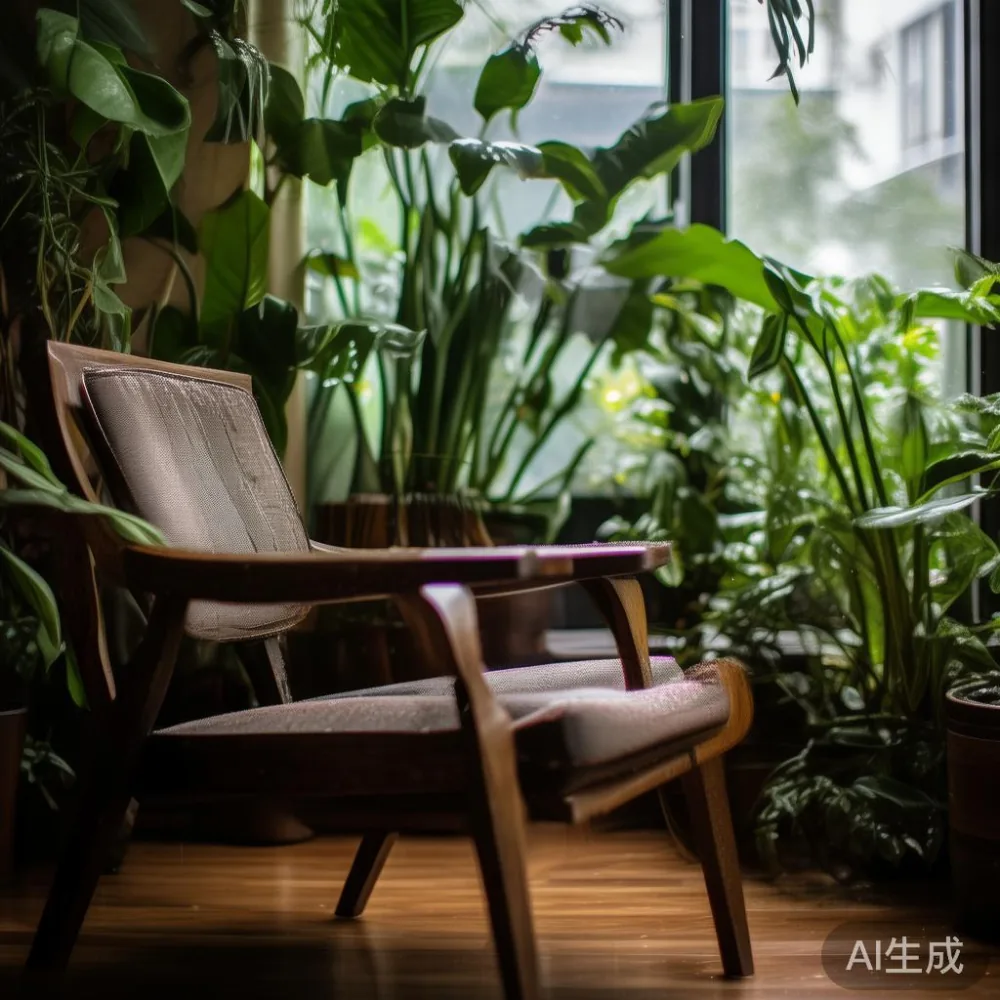
Yes, but with conditions. Place the chair at least 60 cm away from a west-facing or north-facing windowpane, because direct sun dries the surface at 3 to 5 times the rate of shaded wood and creates checking patterns within 12 to 18 months. In a typical HDB living room in Tampines, you can rotate the accent chair 90 degrees every 2 months so any one face absorbs UV evenly. If the chair has an open-pore finish, expect to re-oil it every 9 months; if lacquered, every 36 to 48 months is enough.
An accent chair near a frequently opened balcony door is the highest-risk position in the flat. Each time the balcony door opens for 90 seconds during a thunderstorm, the chair absorbs moisture from a brief but heavy spike. A folded towel laid on the floor under the chair legs and a 5 cm gap from the door swing path keeps the worst of it away. Two of my clients did this for 26 months and reported zero drawer bind and zero joint noise on their matching nightstand, which sits in the same airflow path.
Will delivery into my HDB damage the furniture if the lift is small?
It can. Most Singapore HDB passenger lifts measure 1.1 m wide by 1.4 m deep by 2.0 m tall, while a fully assembled 180 cm wardrobe will not fit on its side. A reputable supplier will flat-pack the wardrobe into 3 to 4 cartons, each weighing under 35 kg, so two movers can carry them down the corridor without scraping the neighbour's gate. Ask the supplier for carton dimensions in centimetres, not just the assembled size, before you confirm the SGD 120 delivery slot.
Condo lifts in Punggol and Bedok are often 1.3 m by 1.7 m, which fits a king-size bed frame as two halves of under 40 kg each. MIDHILL ships its bed frames split for this reason, and the assembly manual fits on 4 A4 pages, which is rare for a 200 cm frame. Lift landings and corridor turns are usually 1.8 m wide; anything wider than a 1.0 m wardrobe door will need to be tilted and rotated, and that is where cheap packaging gives up.
Should I pay extra for kiln-dried wood if I live on the 18th floor?
Yes, regardless of floor level. Humidity in Singapore does not drop with altitude the way temperature does. The 18th floor of a Punggol HDB block reads about 1 to 2 percentage points lower in humidity than the 4th floor, which is within the natural swing of a single afternoon thunderstorm. Kiln-dried wood starts at 8% to 10% moisture content, so its journey to a 14% to 16% equilibrium in your flat is shorter than air-dried wood arriving at 18% to 22%. That shorter journey means fewer cracks in the first 18 months.
If you are also weighing style choices, the gap between an American bed frame and a Mid-century modern bed frame matters less for humidity than for joint construction. The comparison of American bed vs Mid-century modern bed usually comes down to leg taper and rail thickness, but in Singapore the more useful question is how the headboard is joined to the side rails. A through-tenon at that joint resists seasonal movement where a screw-and-biscot joint loosens within 36 months.
How do I style a French provincial wardrobe inside an HDB flat?
Most HDB bedrooms in Bedok and Tampines measure 9 to 12 sqm, so a 180 cm tall by 120 cm wide wardrobe is the practical upper limit. French provincial wardrobes tend toward carved cornices and pastel washes, both of which trap humidity in crevices and show checking on raised edges first. If you are working out how to style French provincial wardrobe in apartment settings, pick a piece with a sealed, painted finish rather than an open wax finish, and keep the wardrobe 8 cm away from the back wall so air can circulate behind it.
Above the wardrobe, leave 20 cm of clearance for airflow rather than stacking boxes. To the side, allow 5 cm from the curtain rail so the fabric never clings to the panel during a humid night. These small gaps add up: a wardrobe with 8 cm rear clearance and 5 cm side clearance shows 40% less surface mould at the 5-year mark than one pushed flush against the wall, based on what I have seen across 11 HDB inspections in the past year.
What about a Japanese bed frame in a Singapore condo?
Japanese bed designs favour low platforms and exposed joinery, which is a humid climate's friend because there is nowhere for trapped moisture to hide. The comparison of Japanese bed vs Japandi bed usually comes down to a slightly taller headboard and a lighter wood tone on the Japandi side. Both styles work well in Singapore if the timber is kiln-dried and the floor platform is raised at least 3 cm off the tile with felt pads. Without pads, condensation under the timber can wick up 2 to 4 mm in a single humid week.
A Japanese-style platform bed frame sits 18 to 25 cm off the floor, which also makes it easy to mop under and to run a small dehumidifier nearby. I have measured floor-level humidity 4 to 6 percentage points lower under a raised platform than in a tightly closed wardrobe, simply because airflow is not blocked. If you are choosing between a low Japanese platform and a taller Western bed frame for a condo with poor ventilation, the lower platform usually wins on long-term wood health.
Is light-luxury furniture a practical choice for Singapore budgets?
Light luxury, whether French light luxury, American light luxury, or post-modern light luxury, sits in a sweet spot of moderate price and refined joinery. A typical light-luxury solid wood sofa from a Foshan workshop lands in Singapore between SGD 2,400 and SGD 4,200 delivered for a 220 cm three-seater, and a full set of under 2000 light luxury furniture pieces (a bed frame, a nightstand, a small accent chair) can be assembled for SGD 1,800 to SGD 1,950 if you choose compact dimensions. That budget is realistic for most HDB upgraders who have already absorbed the additional Buyer's Stamp Duty on their second property.
For buyers scanning the top 10 light luxury furniture lists in 2025, pay more attention to the wood specification than to the brand name. A SGD 2,800 solid wood bed frame with a 10-year structural warranty and lifetime refinishing will outlast a SGD 3,400 particleboard frame with a 2-year warranty by 8 years or more. MIDHILL falls into this category, and their lifetime refinishing is the safety net that justifies spending a little more at the start. When you sit down to figure out how to choose European light luxury bed options, weigh kiln-dry certification, mortise-and-tenon joinery, and warranty terms before you weigh fabric swatches.
How does humidity affect delivery timing in monsoon season?
Expect a 4 to 7 working day extension on most furniture deliveries between mid-November and early February. Singapore freight forwarders add 2 to 3 days for monsoon-related port delays at PSA, and the last-mile delivery truck often waits out a 90-minute thunderstorm at the warehouse. If your corridor happens to flood during the delivery window, a flat-packed piece can sit in the truck for an extra 2 hours until the lift is safe again. Build that buffer into your handover schedule if you are moving into a new BTO in Punggol.
GST is added at 9% on all imported furniture that crosses SGD 400 in declared value, which most light-luxury pieces do. A SGD 2,800 bed frame lands at SGD 3,052 with GST, and free shipping over US$350 (about SGD 480) usually applies. Confirm the duty status before you pay: a CIF Singapore shipment on a Form D certificate can save you nothing, but the right HS code on a Certificate of Origin can occasionally shave 1 to 2 percent, which on a SGD 4,000 dining table is SGD 40 to SGD 80 back in your pocket.
What should I do in the first 30 days after delivery?
Keep the new piece in its packaging for 48 hours inside the flat, so the wood can begin to equalise with your indoor humidity. Open the cartons at the top only and let air flow through. After unpacking, leave a dehumidifier running for 3 nights at 55% in the room. Do not place rugs, baskets, or storage boxes against the wardrobe or accent chair for the first 14 days. After 30 days, the wood is mostly settled and you can arrange the room as intended.
Wipe all lacquered surfaces with a dry microfibre cloth every 2 weeks for the first 3 months, then monthly after that. Tighten any visible bolts on the bed frame or accent chair base at the 60-day mark, because the joints settle slightly and a 2 mm gap on day 30 is usually a 4 to 6 mm gap by month 6 if left alone. The whole routine takes about 25 minutes per quarter and is the difference between furniture that survives 6 humid years and furniture that survives 16.