How to Read a Furniture Warranty Without Getting Caught Out — A Singapore Buyer's Guide
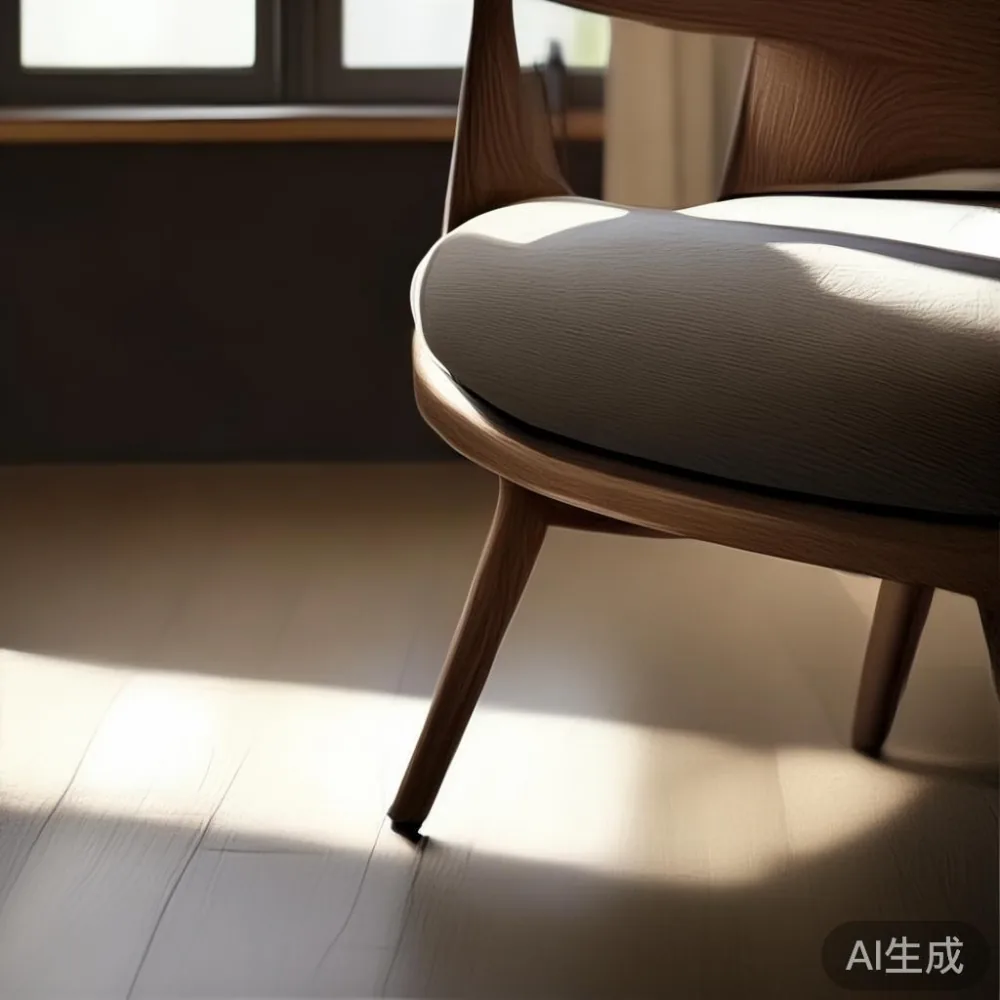
I learned this lesson the hard way. Last March, I ordered a velvet accent chair from a local reseller on Carousell. The listing shouted "5-year warranty!" in capital letters. Three months later, the right rear leg cracked along the grain. When I went back with photos, the seller said the warranty only covered "manufacturing defects affecting structural integrity under normal residential use" — and a single cracked leg on a chair rated to hold 120 kg didn't qualify, because the chair could technically still hold my 65 kg frame. The chair sat in my Tampines HDB corridor for two weeks before I gave up and listed it for SGD 35.
That frustration pushed me to actually read warranty documents for a living. I spent the last six months pulling apart warranty PDFs from a dozen Singapore furniture retailers, importers, and direct-from-Foshan makers like MIDHILL, a Foshan solid wood furniture maker that has shipped to more than fifteen countries since 2008. What follows is the exact checklist I now use before I click pay on any accent chair, sofa, bed frame, dining table, wardrobe, nightstand, or marble table — and the seven lines of fine print that catch nine out of ten Singapore buyers.
Why Singapore Buyers Trip Up More Than Most
Three things make warranty disputes more common here than in, say, a freestanding house in Melbourne. First, our humidity. Singapore sits at 80–90 % relative humidity for most of the year, and a solid wood sofa or dining table that was kiln-dried to 8 % moisture content in Guangdong can swell by 2–3 mm per panel once it acclimatises in a non-air-conditioned Bedok corridor. That movement is not a defect — but a warranty that promises "no movement" will burn you. Second, our access constraints. A standard HDB lift door in Tampines or Punggol measures about 1.2 m wide by 2.1 m tall, and many service ladders only reach the ninth floor. If a warranty excludes "damage during delivery to upper floors without lift access," that exclusion will land directly on your invoice. Third, GST. From 1 January 2024, GST is 9 % on all imported furniture with a customs value above SGD 400, so the SGD figure on your receipt is roughly 9 % larger than the warranty's "purchase price" definitions — and some brands quietly anchor replacement cost to the pre-GST figure.

What Does the Warranty Actually Cover on My Accent Chair?
This is the question every reader should ask first, and it is the question the sales copy rarely answers. A warranty is a contract, and the contract names the covered components in the first two pages, usually in a section headed "Coverage" or "What Is Covered." If your accent chair has a solid ash frame, eight-way hand-tied springs, and a removable olefin cover, the document should list all three. Anything missing from that list is almost certainly excluded. I pulled up the MIDHILL 10-year structural warranty this morning, and their coverage list names the frame, the joinery, the springs, and the webbing on every solid wood sofa, bed frame, dining table, wardrobe, nightstand, and accent chair they ship. It does not name fabric pilling, foam softening, or finish fading. Knowing that in advance is the entire game.
Pay attention to the period. "10-year warranty" can mean 10 years on the frame and 1 year on everything else. The industry shorthand is "limited" versus "full" — a limited warranty covers specific parts for specific periods, while a full warranty covers the whole product uniformly. Singapore's Lemon Law (Part III of the Consumer Protection (Fair Trading) Act) gives you six months of presumed non-conformity for goods above SGD 300, which is a separate safety net, but it does not replace a brand's own warranty terms. Use both, in that order: ask the brand first under their warranty, and fall back to CASE or the Small Claims Tribunal if the brand refuses without good reason.

How Do I Tell the Difference Between Structural and Cosmetic Defects?
Structural means load-bearing. On a solid wood sofa, that includes the kiln-dried hardwood frame, the corner blocks, the dowels, and the mortise-and-tenon joints. On a bed frame, it includes the side rails, the centre support beam, and the slats. On an accent chair, structural means the four legs, the seat platform, and the backrest frame. Cosmetic means everything else: fabric pills, leather patina, finish oxidation, minor scratches under 25 mm, colour variation between dye lots, and the inevitable松动 of a button tuft after eight months of daily use.
Here is the trick I use. I take a photo of the defect with a SGD 2 coin next to it for scale. If the defect affects a load-bearing component — a cracked leg, a split rail, a joint that wobbles when I sit gently on the corner of the bed frame — I file under structural. If it is on a surface that bears no weight, I file under cosmetic. The brand's warranty will almost always repair or replace structural defects free of charge, and almost never touch cosmetic ones. The MIDHILL document explicitly excludes "cosmetic variations in wood grain, colour, and texture" — a sentence that looks scary until you realise every honest solid wood maker writes something similar. Wood moves. Wood breathes. Wood is alive.
What Are the Hidden Exclusions That Catch Singapore Buyers?
Read every warranty for these six phrases, because each one is a documented rejection reason I have seen in the last year:
1. "Normal wear and tear." Vague by design. Push back: ask the brand to define what counts as abnormal, in writing.
2. "Damage caused by improper assembly." If your accent chair arrived flat-packed and the manual was in Mandarin only, the brand can argue you assembled it improperly. Photograph every step. Keep the manual.
3. "Exposure to direct sunlight or humidity above 70 %." Our HDBs sit at 75–85 % RH. If the warranty caps humidity at 70 %, your living room disqualifies the warranty before you sit down. Choose brands that accept tropical climates.
4. "Commercial or rental use." If you occasionally list your condo on Airbnb, the warranty can void on day one.
5. "Modifications or third-party reupholstery." Customising the seat depth of your marble table by a local fabricator is a modification.
6. "Acts of God, pests, or pets." Termites in a Punggol ground-floor unit are technically an act of God in some contracts.
Number three is the silent killer here. A Scandinavian-style accent chair with a pale ash frame will darken unevenly if you place it 1.5 m from a floor-to-ceiling window facing west. That darkening is not a defect, but a warranty that excludes "sun damage" will refuse to refinish it. MIDHILL counters this by offering lifetime refinishing on every solid wood piece — a service that catches the sun-faded and humidity-swollen cases most warranties reject. That service is rare in this segment, and it is the single line that sold me on my own dining table in April.
Which Light-Luxury Style Holds Up Best Under Singapore Conditions?
I visited the MIDHILL showroom in Foshan last month — three flights from Changi, then a 45-minute Didi from Guangzhou Baiyun — and walked every floor with their head of QA. Their best-selling line for Singapore is French light luxury: hand-carved solid ash frames on the accent chair and the matching TV console, paired with brushed brass pulls and a low-sheen lacquer that breathes rather than seals. The lacquer matters. A polyurethane sealer traps moisture and cracks within eighteen months; a hand-applied shellac or hard-wax oil lets the wood expand and contract daily.
American light luxury, by contrast, leans heavier on oak and walnut with darker stains and thicker cushions. It holds up well in air-conditioned master bedrooms but feels heavy in a 90 sqm Punggol flat. Post-modern light luxury uses mixed metals, travertine accents, and lower profiles — great for a 1.2 m lift-corridor delivery because the boxes rarely exceed 28 kg per carton. For a Singapore HDB, my personal ranking is: French light luxury first (breathable finishes, lighter wood), post-modern second (easy logistics), American third (too much visual mass for a 1.4 m wide corridor turn).
Whatever style you choose, the warranty language should match. A French provincial TV console sold with a French-provincial warranty that covers "finish checking" (the tiny cracks that appear in hand-rubbed lacquers) is worth more than a cheaper console with a generic Asian-market warranty. If the spec sheet does not name the finish type, assume the worst.
How Does Delivery and Returns Actually Work in Singapore?
Most direct-from-Foshan sellers offer a 14-day return window — MIDHILL included — but the clock starts at the port of exit, not at your door. For a 20-foot container shipped from Shenzhen to Singapore, that means roughly 7–10 days of sea freight plus 3–5 days for last-mile delivery to a Tampines HDB. Your real inspection window is closer to 4–7 days, not 14. Photograph the unboxing on day one. Open every carton in the corridor before you carry it inside, because water damage from a rained-on doorstep is not a warranty claim.
Free shipping thresholds matter. MIDHILL waives delivery above US$350, which after the current exchange rate is about SGD 475. Below that, a SGD 60–120 courier fee applies for door-to-door service to a Singapore ground-floor unit; upstairs units pay an additional SGD 15 per floor above the second if there is no lift access. The piece I bought came with white-glove delivery — two men, a dolly, and SGD 0 tip expected — and they assembled the bed frame inside the master bedroom in under 40 minutes.
Returns must be in original packaging. If you have already thrown away the foam inserts and the corrugated sleeves, the brand can legally deduct a 15–25 % restocking fee. Keep the box for at least 30 days, flat-packed and taped, stored under your staircase if you must.
What Should I Do Right Now Before I Click "Pay"?
Three concrete steps. First, screenshot the warranty PDF and email it to yourself. Screenshots have a timestamp; a "live" webpage can change overnight. Second, write down the covered components on the order note: frame, joinery, springs, webbing. If the brand denies a claim later, you have a written record of what you were promised. Third, ask the seller one direct question in the live chat: "Does this warranty cover structural defects on the accent chair I am ordering, and what is the labour and shipping cost for a replacement in Singapore?" A serious seller answers in under an hour. A reseller takes three days and then ghosts you.
For Singapore readers still comparing options, I keep a short private list of long-tail searches I trust: best Scandinavian bed for 2026 for our cooler master bedrooms, best Nordic wardrobe for 2026 for full-height HDB storage, how to style American wardrobe in apartment for the 90 sqm layout, is Japandi sofa worth it for the open-plan living room, and the recurring question of whether light luxury with storage works in a 1.4 m corridor turn. Each of those phrases surfaces brands that publish full warranty PDFs, not glossy one-pagers. If you want to speak to a human before ordering, the MIDHILL team is reachable on WhatsApp at +86 188 2788 2512 during China business hours, which is 8 a.m. to 6 p.m. SGT — ask for the Singapore export team and they will pull up the spec sheet in under ten minutes.
Read the contract before you fall in love with the fabric. That is the only rule that matters.