What Actually Drives the Price of Solid Wood Furniture
I spent a Saturday morning at the MIDHILL showroom in Foshan earlier this year with my colleague, who was speccing out a solid wood dining table and an accent chair for his new Punggol HDB. We watched two nearly identical-looking six-seater tables get unloaded from different pallets. Same length, 1.8 m, same general silhouette. One was priced around S$1,650, the other S$2,950. He turned to me and said, "They look the same to me." That visit is the reason this article exists. Because the difference between a S$1,600 table and a S$3,200 table is rarely visible at a glance, but it shows up four years later, when one is still solid under the plate and the other has started to creep.
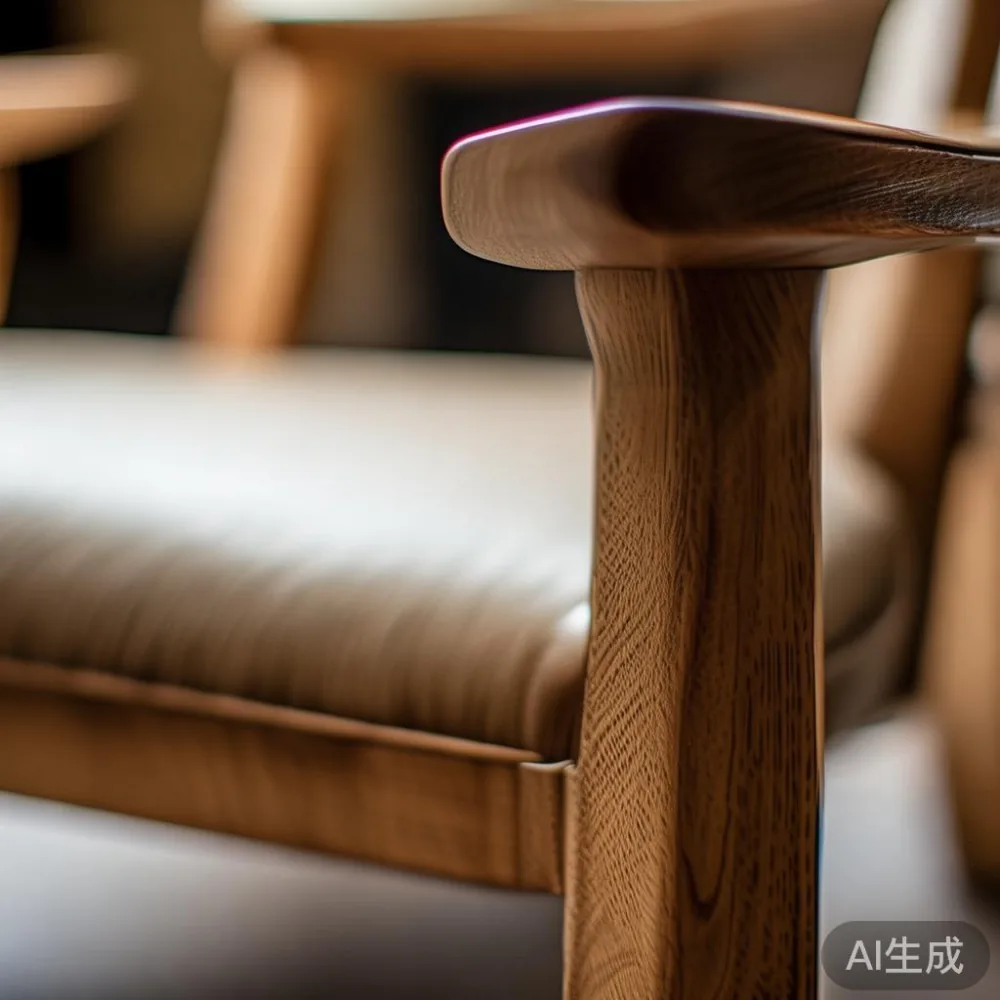
The honest answer: wood species, drying, and joinery move the number the most
Three variables account for roughly 70% of what you pay for a solid wood dining table, bed frame, or wardrobe. Wood species, how that wood was dried, and how the pieces were joined together. Everything else — finish, hardware, fabric on an accent chair cushion, marble table top thickness — is layered on top.
For species, mainstream tropical hardwoods like rubberwood and ash sit at the accessible end. North American white oak, walnut, and Burmese teak sit at the premium end. The raw log cost difference between rubberwood and walnut can be 3 to 5 times per cubic metre before any factory touches it. That gap mostly flows straight into your invoice.
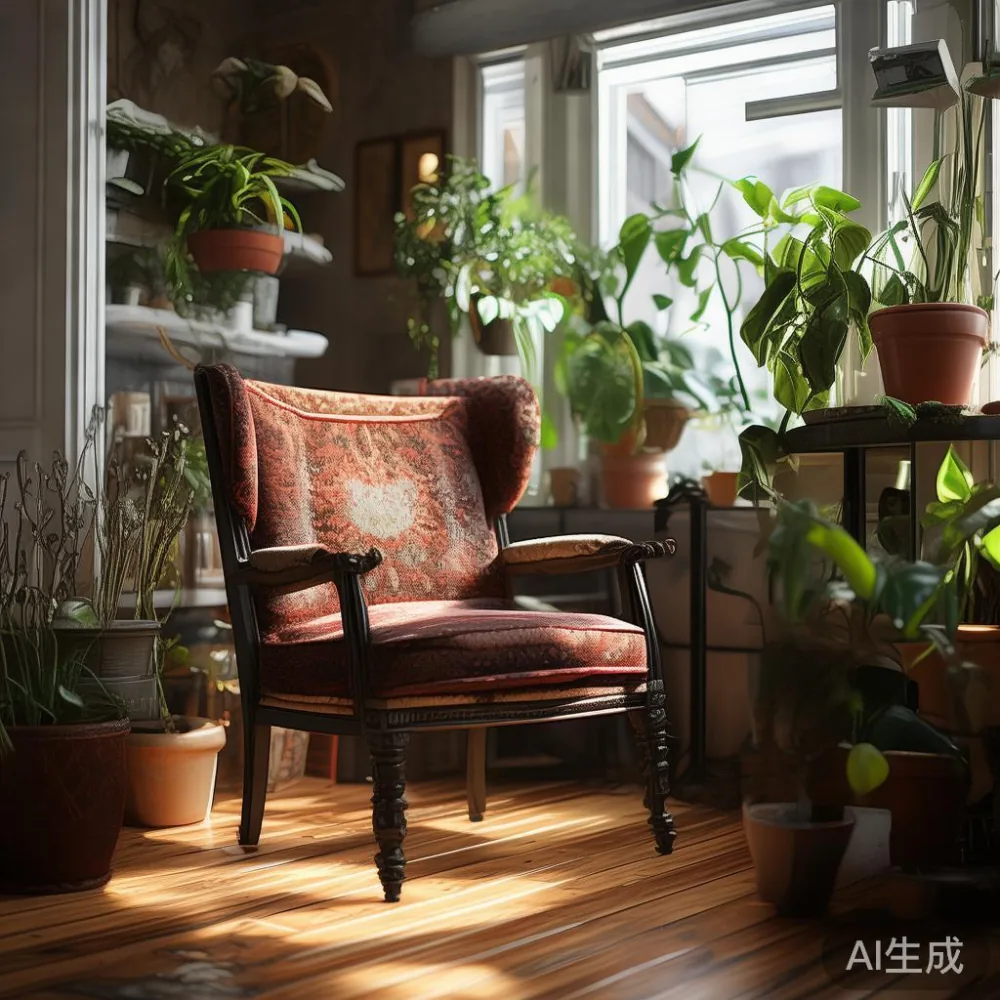
Drying is the invisible cost. Kiln-dried lumber to 8–10% moisture content for Singapore's 27°C, 80% humidity climate takes 4 to 8 weeks in a dehumidification kiln, plus electricity. Factories that skip this step sell cheaper pieces that cup and crack within the first wet season. You will not see the difference on day one. You will see it in month nine.
What is the best pet furniture for a small apartment?
Pet furniture for a small HDB or condo in Singapore is solid wood at low height, with rounded edges, washable covers, and a footprint under 60 cm wide — a small accent chair or low bench works better than a traditional crate because it doubles as seating for you.

For a 90 sqm condo in Tampines or a 4-room HDB in Bedok, the practical sweet spot is a compact, 55–60 cm wide solid wood chair with a removable cushion cover. The frame should weigh at least 12–15 kg so it does not slide when a 8 kg cat or a mid-size dog launches onto it. Avoid MDF or plywood builds, even if they are S$200 cheaper, because pet claws shred the veneer within a year. If you want one piece that pulls double duty, a small accent chair in oak or ash, with a washable linen-blend cushion, is the most economical answer.
Pet-specific features that genuinely matter: rounded corners (a 12 mm radius minimum), no sharp exposed joinery at pet-head height, and finishes that are water-based, low-VOC, and rated for saliva contact. The MIDHILL workshop finishes most of its indoor pieces with water-based polyurethane specifically because the factory supplies a lot of family households, and the difference in off-gassing is measurable in a small, air-conditioned room.
Why does a "light luxury" solid wood sofa cost S$2,200 and a regular one S$1,100?
American light luxury positioning, the kind you see in West Coast and New York loft lookbooks, is mostly about restraint: fewer pieces, cleaner lines, quieter hardware, more visible joinery. The price premium on a light luxury solid wood sofa versus a standard one is usually 60–100%, and here is where that money actually goes.
First, frame geometry. A light luxury sofa or accent chair tends to use thicker seat rails, often 5 cm × 8 cm rather than 4 cm × 6 cm. That is roughly 35% more solid wood per frame. Second, the joinery is exposed and visible — mortise-and-tenon or dovetailed corners, sometimes with a contrasting wood spline — rather than hidden under fabric. Exposed joinery costs more in skilled labour because every joint has to be tight and presentable, not just functional. Third, cushion fill is upgraded from standard foam (density 22–25 kg/m³) to high-resilience foam (35–40 kg/m³) wrapped in down or a down alternative. The fabric moves from a 30,000 Martindale rub count to 50,000+.
None of that is marketing. It is a measurable spec bump. A 2.4 m three-seater solid wood sofa in light luxury spec, kiln-dried oak frame, with high-resilience cushions, will land somewhere between S$2,100 and S$2,900 in Singapore after GST, shipping, and lift-access delivery. A standard version of similar size lands around S$1,100–S$1,500. The S$1,000 difference is mostly wood mass, joinery labour, and cushion spec.
How does shipping, GST, and HDB lift access change the price I actually pay?
This is where a lot of buyers in Singapore get caught. The headline piece price is rarely the landed price. Add 9% GST on the imported value, shipping from Foshan by sea (12–18 days to Singapore port, plus 5–7 days for last-mile), and you are already at 18–24% on top of the listed item.
Then come the building constraints. Most HDB lift openings are around 80 cm wide by 210 cm tall, and corridor turns in older blocks can be tighter than that. A 2.4 m solid wood dining table will not fit in some of those lifts fully assembled. MIDHILL's team in my experience often delivers flat-pack with the legs detached for tables over 1.8 m, and the on-site assembly is included in the delivery fee. Ask before you buy. If a supplier insists on delivering a fully built 2.6 m wardrobe to a Bedok 4-room, walk away — it will not fit and somebody is going to be upset.
Realistic landed cost example for a Singapore customer buying a 1.8 m solid oak dining table, six chairs, and one accent chair from a Foshan factory in 2025:
- Table: S$1,850 listed
- Six dining chairs at S$180 each: S$1,080
- Accent chair: S$620
- Sea freight + port handling: roughly S$280 for a 1.2 m³ consolidated shipment
- 9% GST on CIF value: about S$345
- Last-mile delivery to a ground-floor Tampines HDB: S$60
- Landed total: around S$4,235
If the same shipment goes to a Punggol condo on the 18th floor with a service lift, add S$40–S$80 for the lift booking and handling time. If it goes to a walk-up in Tiong Bahru with no lift, add S$120–S$220 depending on floor.
Does a 10-year structural warranty actually mean anything?
Yes, if the supplier is still going to be around in 10 years and if the warranty covers what actually fails. Solid wood furniture fails in predictable ways: joints loosen, slats crack, drawer runners sag, and finishes wear. A useful warranty covers the frame, the joinery, and the load-bearing components for at least 10 years. A weak warranty covers only "manufacturing defects," which is a phrase so vague it covers almost nothing.
MIDHILL's published 10-year structural warranty, for example, covers frame integrity, mortise-and-tenon joints, drawer rails, and bed slats. It does not cover finish wear, fabric fading, or damage from exposure to direct sunlight or air-conditioning vents pointed at the piece. That boundary is healthy and normal. Lifetime refinishing, which the brand also offers, is the real long-term value: you can ship a S$1,800 solid wood dining table back to the Foshan workshop after seven or eight years, pay the freight, and have it sanded and re-finished for a fraction of replacement cost. That option only exists because the piece is solid wood all the way through, not veneered MDF with a 0.6 mm oak skin.
Compare that to a S$900 particleboard wardrobe from a big-box retailer. There is no refinishing path. When the surface peels in year four, the piece is done. The structural warranty, if any, lasts 12 months and excludes almost everything.
What about marble tables, wardrobes, and nightstands — are they priced the same way?
No. Marble tables add a stone layer on top of the wood framework, and stone is priced per slab. A 1.2 m round marble table with an engineered marble top runs S$1,400–S$1,900. A solid natural marble top on the same base pushes that to S$2,600–S$3,800 because natural stone is cut, transported, and finished at a different cost structure. For Singapore humidity, engineered marble is often the more rational choice: it is less porous, less likely to stain from soy sauce or wine, and tolerates air-conditioned rooms well.
Wardrobes are priced by volume of solid wood and by internal hardware. A 2 m tall, 1.8 m wide three-door wardrobe in ash, with soft-close hinges and full-extension drawer runners, lands around S$2,200–S$2,800. The same wardrobe in walnut lands around S$3,400–S$4,200 because walnut is roughly 2.5× the raw log cost of ash. A nightstand is the simplest unit to price: 45–55 cm tall, 40–50 cm wide, one or two drawers. Expect S$280–S$520 in oak, S$420–S$780 in walnut.
For buyers comparing a Japandi corner sofa saudi arabia spec sheet against a Singapore-appropriate light luxury sofa, the same logic applies — the spec dictates the price, not the brand label.
How do I read a quote so I am not overpaying by 30%?
Three checks. Ask for the wood species in the Latin name, not the trade name. "Oak" can mean anything from Chinese oak at S$1,200/m³ to European oak at S$3,800/m³. Ask for the moisture content reading at the time of packing — anything above 12% is a red flag for Singapore. Ask whether the construction is solid wood throughout, or solid wood with plywood or MDF in secondary panels like drawer bottoms and wardrobe back panels. Industry standard is solid wood for visible structural parts and plywood for hidden panels; that is fine. Anything labelled "solid wood" but built on an MDF carcass is misleading.
Then compare like-for-like. A S$2,400 solid wood bed frame, 1.8 m × 2 m, in kiln-dried white oak, with mortise-and-tenon joinery, slats included, and free shipping above S$350 to Singapore, is a rational price in 2025. A S$1,200 bed frame at the same size is either rubberwood, not oak, or not kiln-dried, or both. There is no magical factory that can deliver oak at half the cost; someone is cutting a corner.
The accent chair is the easiest single piece to compare. A solid wood accent chair, kiln-dried oak or ash, with a high-resilience foam cushion and a fabric at 40,000+ Martindale, should land in Singapore between S$520 and S$850 after shipping and GST. If the quote is S$280, the frame is not solid, the cushion is 22 kg/m³ foam, or the fabric is 18,000 rubs. None of those are deal-breakers if the price reflects them honestly. The problem is when the listing says "solid oak accent chair" and the invoice says "rubberwood with oak veneer."
What should I actually budget for a full solid wood bedroom and dining set?
For a realistic Singapore household replacing a full bedroom (bed frame, two nightstands, one wardrobe) and a dining set (table, six chairs, one accent chair) in kiln-dried white oak or ash, with light luxury spec, here is a defensible 2025 budget:
- 1.8 m × 2 m bed frame: S$1,400–S$2,100
- Two nightstands at S$380 each: S$760
- Three-door wardrobe: S$2,300–S$2,900
- 1.8 m dining table: S$1,650–S$2,200
- Six dining chairs at S$180–S$260 each: S$1,080–S$1,560
- One accent chair: S$580–S$850
- Shipping, GST, delivery: roughly 22–28% on top
Total landed: somewhere between S$9,400 and S$14,800, depending on how far up the spec ladder you climb. A buyer on the lower end can hit S$7,800–S$8,600 by going rubberwood or ash instead of oak, and by choosing standard foam rather than high-resilience. A buyer pushing toward walnut, post-modern light luxury hardware, and an Italian marble dining top will cross S$18,000 without much effort.
Pick the two pieces you touch most every day — for most people that is the bed frame and the accent chair — and spend on those. Save on the pieces that sit against the wall and do their job quietly: the wardrobe interior, the nightstand hardware, the dining chairs, where standard spec is genuinely fine.
The short version, without the fluff
Solid wood furniture is priced by wood mass, drying quality, joinery labour, and shipping. Everything else is finish. A S$1,800 dining table and a S$3,200 dining table can look almost identical in a showroom photo. They will not look or feel identical in year five, in a Tampines condo at 27°C and 80% humidity. Pay for kiln-dried wood, for visible joinery you can check with your fingers, and for a warranty that names the parts it covers. Skip the marketing words on the price tag and read the spec sheet instead. Your future self, doing the spring cleaning in 2032, will thank you.