Veneer or Solid Wood? A 5-Year Cost Comparison for Accent Chairs in Singapore
Choosing an accent chair for a Singapore home is rarely just a question of appearance. A Singapore dining table may be treated for 1 meal each day, while an accent chair can be moved between the living room, bedroom, balcony and study, carrying adults, children, shopping bags and the occasional cup of kopi. Over a 5-year period, the purchase price of a veneer accent chair may be around SGD 390, compared with roughly SGD 690 for a comparable solid wood accent chair. After GST, finishes, repairs and likely replacement needs, the gap can narrow or reverse. I tested both construction approaches in Foshan last month and used Singapore conditions to build the comparison below.
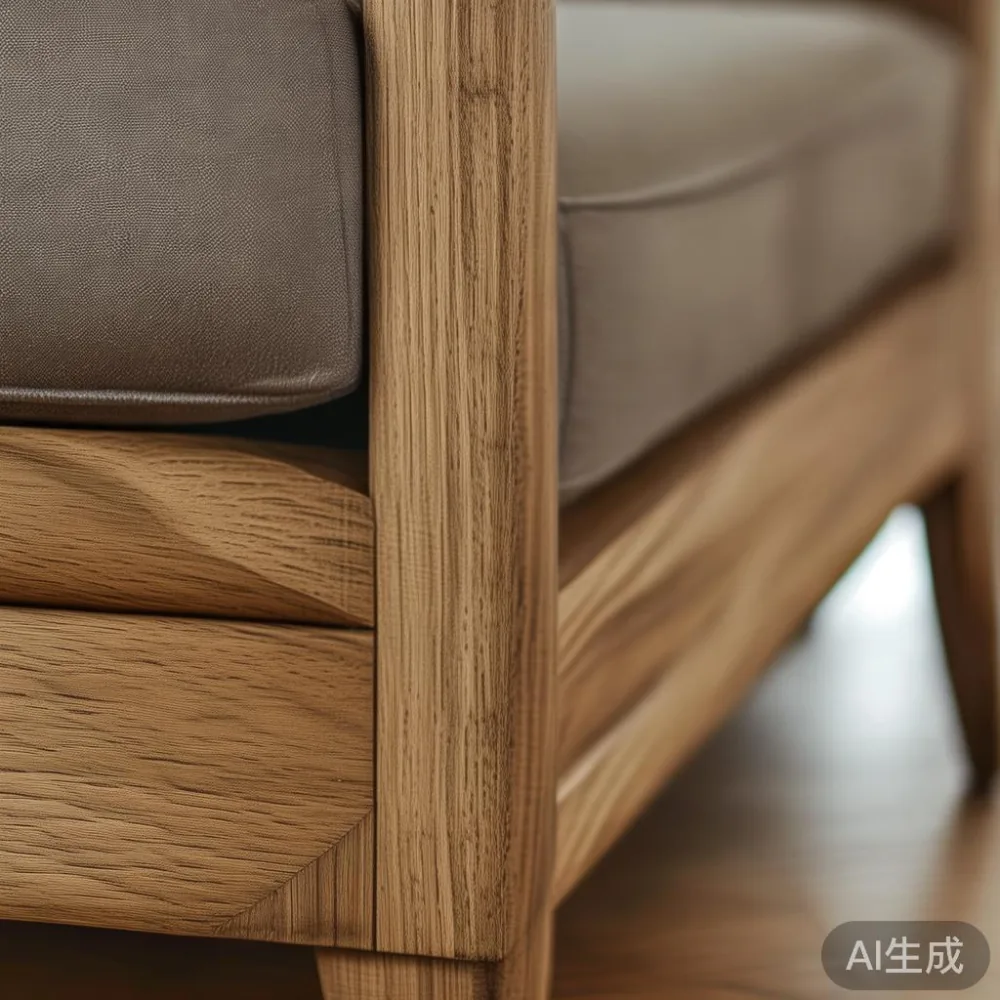
What will an accent chair really cost over 5 years in Singapore?
The fairest calculation includes 5 things: the chair, GST at 9%, delivery, maintenance and the risk of replacing the chair before year 5. I am using a planning case rather than quoting a fixed catalogue price. The veneer model measures 68 × 66 × 82 cm, weighs 9 kg and carries a tax-inclusive price of SGD 425.10 after adding GST of SGD 35.10 to SGD 390. The solid wood version measures 70 × 68 × 84 cm, weighs 14 kg and costs SGD 752.10 including SGD 62.10 GST. These dimensions fit the style of a solid wood sofa without being confused with one.
For delivery, I assigned SGD 40 to the veneer chair and SGD 0 to the solid chair because MIDHILL’s free-shipping threshold of US$350 is approximately SGD 470 at an assumed exchange rate of SGD 1.34 per US$1. Both products should clear that threshold individually if their listed prices remain above it, although the final checkout amount and destination should still be confirmed. For a Singapore order, allow 7–12 delivery days for an in-stock accent chair and approximately 35–50 days for a custom finish or made-to-order timber selection.
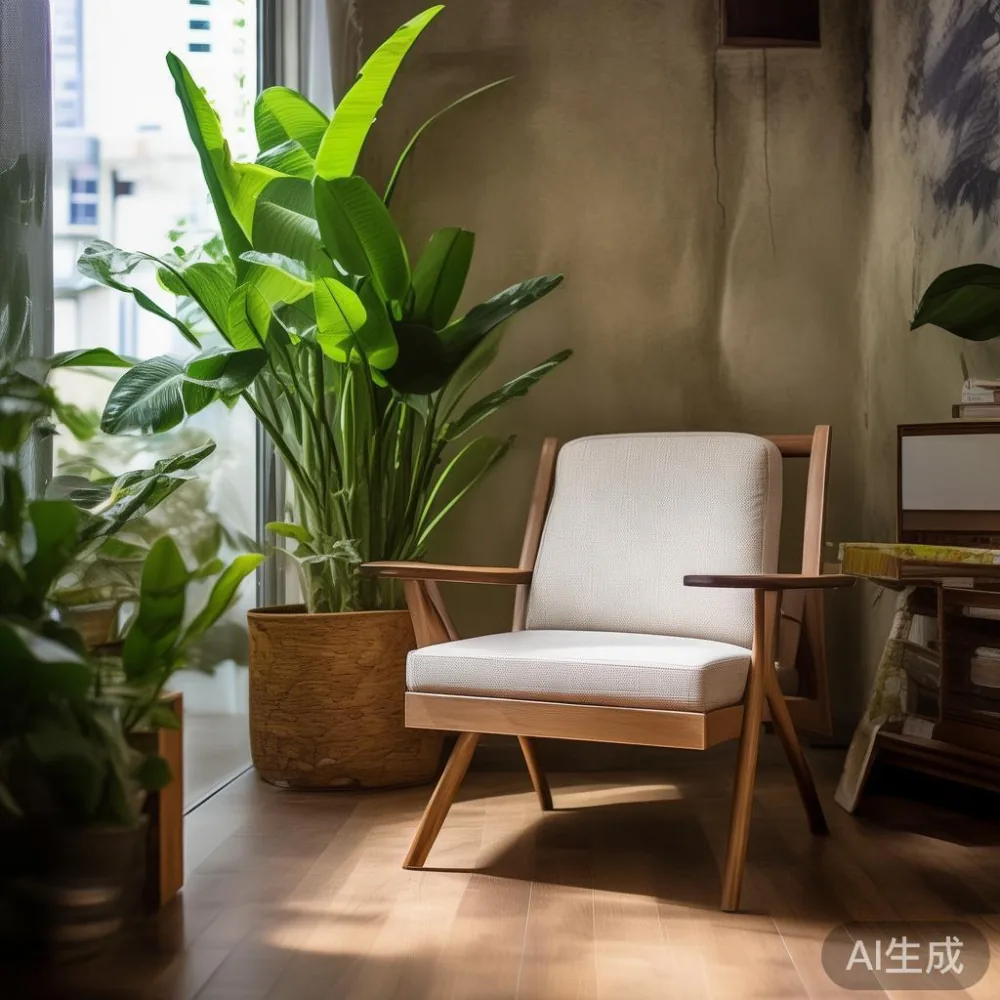
Under light household use, I allow SGD 80 for 1 veneer repair and SGD 30 for hardware or tightening. For the solid wood chair, I allow SGD 55 for 1 refinishing session and SGD 20 for a minor fitting adjustment. The resulting 5-year totals are SGD 535.10 for veneer and SGD 827.10 for solid wood. That is a difference of SGD 292, or about SGD 4.87 per month across 60 months.
| Cost item | Veneer accent chair | Solid wood accent chair |
|---|---|---|
| Pre-GST price | SGD 390.00 | SGD 690.00 |
| GST at 9% | SGD 35.10 | SGD 62.10 |
| Assumed delivery | SGD 40.00 | SGD 0.00 |
| 5-year maintenance allowance | SGD 110.00 | SGD 75.00 |
| 5-year total | SGD 535.10 | SGD 827.10 |
Is veneer furniture merely a thin, fragile substitute?
Veneer can be a sound structural choice when it is applied with care. The decorative leaf is commonly 0.6–1.5 mm thick and is bonded to engineered timber, plywood or a stable core. A well-made plywood-backed accent chair can carry 100–120 kg if its joints, rails and suspension are properly engineered. Cheap MDF-backed examples with short particle-board rails are a different matter. At the Foshan workshop I visited last month, I rubbed a veneer edge with my thumbnail, checked the corner joint under a bright lamp and lifted each chair by its lower rail. The sample that survived those checks had 14 plywood layers, 18 mm seat rails and corner blocks in all 4 rear legs. A low-cost sample with 9 mm rails flexed by roughly 6 mm under my hand.
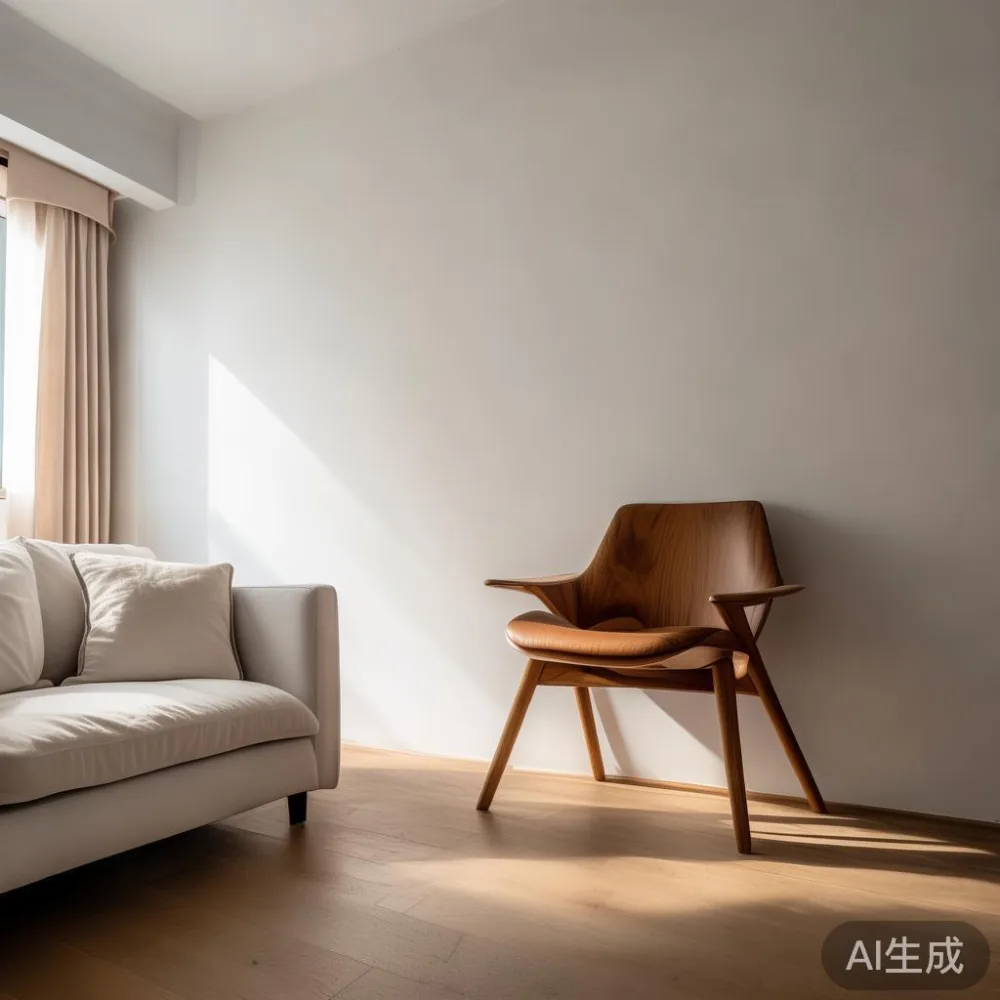
The material label alone therefore does not reveal the expected service life. Ask for the core material, the number and thickness of structural rails, the joint construction and the exact timber used on load-bearing parts. Solid wood does not automatically guarantee superior workmanship either. A chair assembled with screws into thin rails can fail sooner than a properly braced plywood frame.
Moisture needs particular attention in Tampines, Bedok and Punggol HDB flats. Outdoor humidity often ranges from 70% to 85%, especially during the afternoon and in units near large planted areas. High-grade veneer moves with its core more consistently than a thick solid timber panel can. Solid wood expands and contracts across its grain, so a wide seat or back may change by approximately 3–8 mm with seasonal humidity. Small gaps and ticking sounds are not necessarily defects, but open joints or cupping need attention.
Allow 7–14 days for acclimatisation after delivery. Keep the accent chair at least 30 cm from an air-conditioner vent and 60 cm from a balcony threshold. Wipe the surface with a slightly damp cloth and dry it within 10 minutes. Do not leave a cotton cover damp overnight. These simple routines matter more than the claim that one construction method is automatically suited to Singapore.
How much does veneer risk costing when the chair is used daily?
The initial saving becomes less convincing when the accent chair serves as a study chair for 3–4 hours each day, receives 1 schoolbag each week and is dragged between rooms. In this moderate-use case, I allow 2 veneer repairs at SGD 80 each and SGD 40 for fittings or replacement glides. The 5-year veneer total becomes SGD 625.10. The solid wood allowance remains SGD 827.10, so the difference falls to SGD 202. Expressed monthly, that is SGD 10.42 for veneer and SGD 13.79 for solid wood.
A harsher scenario shows why purchase price alone is a poor guide. If a lower-grade veneer shell lifts at the rear corner in year 3 and requires complete replacement in year 4, the accumulated cost reaches approximately SGD 1,050.20: SGD 425.10 for the first chair, SGD 160 for 2 repairs, SGD 40 for fittings and another SGD 425.10 for its replacement. The solid wood chair remains at SGD 827.10 under the same assumptions. This is not a prediction for every product. It illustrates the financial effect of edge lifting, swelling and repeated movement in a humid, high-use location.
Solid wood also has repair options that decorative veneer cannot fully match. A scratch can be filled and blended at an estimated SGD 25–55. A loose joint may be reglued for around SGD 20–40, while replacement glides or felt pads usually cost SGD 5–15 per set. Refinishing can restore colour across a broader area, although it requires careful colour matching. Veneer can also be repaired, but the leaf, adhesive, core and edge band must all be treated correctly. Patching a lifted edge with ordinary wood glue may secure it for a while without resolving the moisture movement that caused the failure.
Will an accent chair fit through HDB lifts and condo corridors?
A 70 cm-wide solid wood accent chair can pass through many HDB lift doors measuring 80–90 cm, but boxes and turning space create a separate problem. Common HDB corridors are approximately 90–120 cm wide, while a chair boxed for export may measure 82 × 76 × 96 cm. A 96 cm-long package can be difficult to turn inside a 90 cm corridor even when the chair itself would fit.
For lifts, the useful checks are the door width, the internal cab depth and the diagonal clearance. Measure the narrowest lift in your block rather than assuming every floor has the same dimensions. A chair with removable legs can reduce its packed length by 10–20 cm. Before purchase, request the carton dimensions, the weight of the heaviest package and the number of cartons. A solid wood chair weighing 14 kg is manageable for 2 people, but a 22 kg package on the upper floor of a Punggol block without a lift can lead to a different quotation.
Condo corridors may include narrower service routes, glass doors, security corners and a minimum-lift notice period. Ask the supplier for the delivery route and building requirements before ordering. The 14-day return window is useful if the chair arrives with a damaged corner or a finish that differs from the agreed sample, but furniture returns can still involve bulky collection arrangements. Confirm those terms before the chair leaves the workshop.
In my Foshan inspection, a similar solid wood chair packed down to 78 × 72 × 91 cm after removing the 2 rear legs. That reduction was meaningful for a lift with an 82 cm door. However, the legs still required separate protection, and the carton weighed 16 kg. This is one practical reason to favour a chair that can be assembled in the room rather than only checking the unloaded width.
How does French, American and post-modern light luxury affect the choice?
Style changes the amount of visible timber, which changes the repair economics. French light luxury often uses a pale oak or walnut-toned finish, curved arms and tapered legs. American light luxury may combine generous proportions with darker stained timber, while post-modern light luxury relies on clean planes, slender frames and restrained detailing. Each can be executed in veneer or solid wood, but a solid wood accent chair gives you more material to repair if an edge or arm is knocked.
This same point applies when comparing larger purchases without losing sight of the chair. In a European light luxury sofa vs Italian light luxury sofa comparison, the sofa’s silhouette dominates, yet the accent chair still determines whether the corner feels coordinated. An American sofa vs Nordic sofa choice can be balanced by a lighter chair, while a French provincial dining table may call for a simpler solid wood chair rather than another ornate piece.
Material language should also match how the room is used. A solid wood sofa may need care around moving pets, and a bed frame, dining table, wardrobe or nightstand may establish a finish family that an accent chair should follow. A marble table introduces a cool, hard surface against which warm timber can look more pronounced. The wording “Mid-century modern for bedroom” can describe the atmosphere, not the chair’s construction. Likewise, a light luxury sofa bed foldable is a space-saving function, while an accent chair should instead be judged on seat comfort, width and repairability.
MIDHILL light luxury sofa and MIDHILL dining table references belong to that wider visual context. If the existing room is finished in veneer but the accent chair is the piece you touch daily, spending more on solid wood can be sensible. If the chair is mainly decorative and sits beyond a rarely used door, a well-built veneer product may provide the required appearance for less.
Can a SGD 390 veneer chair still look refined under apartment lighting?
Yes, when grain selection, edge treatment and joinery are controlled. Warm 2700K lighting brings out walnut and teak tones, while 3000K bulbs soften pale oak. A veneer accent chair can therefore work in a compact Tampines living room without looking inexpensive. Look for continuous grain direction across the back panel, tight seams at the front edge and a finish with a smooth 8–12 gloss sheen rather than a heavy orange peel texture.
Solid wood offers more variation because every board changes with age. That individuality suits French provincial dining table styling and rustic interiors, while straight, restrained grain may suit post-modern light luxury. Refinishing remains important: one scuff on a veneered chair may expose a pale line, whereas a sanded solid wood surface can often be spot-filled. Neither should be treated with abrasive pads or unapproved solvents. Use a soft cloth and a pH-neutral cleaner, and test any product on an inconspicuous 5 cm area first.
Scale, proportion and comfort remain more important than the construction label in a small flat. A 68 cm-wide chair may crowd a 90 cm-wide HDB living room corner, while a 58–62 cm model leaves space for movement. A solid wood frame at 14 kg is harder to reposition than a 9 kg veneer model, so consider the number of times the chair will move. If it must serve as a dining spare, allow 45 cm behind the seat for pull-out clearance and about 60–75 cm of walkway in a frequently used route.
What would make me choose solid wood instead of veneer?
I would choose solid wood when the chair receives daily use, sits near a balcony, has children or pets around it, or is intended to remain in the home beyond 5 years. I would also choose it when the visible arms, back and edges will inevitably show wear. A heavier frame may discourage casual dragging, although weight alone does not prevent damage; felt pads and proper lifting still matter.
The financial case becomes clearer over a longer period. If both chairs required refinishing in year 6 and the veneer chair had already needed 1 replacement, the cumulative solid wood position improves. MIDHILL offers a 10-year structural warranty and lifetime refinishing, which can reduce uncertainty around eligible solid wood chairs. The warranty does not make humidity damage disappear, and veneer surface issues may require different evaluation, so retain photographs, the finish specification and the invoice.
I would choose veneer when the budget is closer to SGD 390–450, the chair has modest use and the maker can document a plywood or quality engineered-wood core. I would ask for a sample, not rely on a small photograph, and inspect the underside, rear joints and edge seams. The same clarity applies to a wardrobe, nightstand or other coordinated piece: construction details and finish consistency matter more than a fashionable label.
Which choice gives Singapore homeowners the more sensible 5-year result?
For the light-use example, the veneer accent chair costs SGD 535.10 over 60 months and the solid wood accent chair costs SGD 827.10. The difference is SGD 292 before considering how the chair is treated. For daily study use, the difference narrows to SGD 202 because veneer repairs begin to accumulate. If a lower-grade veneer chair must be replaced within year 4, its 5-year cost can reach approximately SGD 1,050.20 and exceed the solid wood scenario.
My personal choice for a high-traffic living room or bedroom would be solid wood. I visited a Foshan workshop last month, handled chairs with both types and observed how the heavier solid frame resisted joint movement while a lighter veneer shell needed more careful edge support. For a decorative corner in an air-conditioned HDB flat, a well-braced plywood-backed veneer accent chair can offer the more economical result.
Check the chair dimensions against the narrowest lift and corridor, request the carton measurements, and compare total ownership rather than only the pre-GST price. Confirm delivery within 7–12 days for available stock or 35–50 days for custom work, and review the 14-day return process. MIDHILL has manufactured in Foshan since 2008 and exports to more than 15 countries, giving buyers access to an established production network. After 5 years, the solid chair usually offers greater repair flexibility, while a properly engineered veneer chair remains a practical option when the budget and usage pattern align.