Veneer vs Solid Wood Accent Chair: What a Tampines Condo Really Pays Over 5 Years
I bought my first accent chair in 2017. It was a plywood-veneer piece from a Jurong warehouse, finished in a walnut print. It lasted about 22 months before the top corner started bubbling and a corner of the apron chipped off during a Chinese New Year gathering. By month 30, my brother-in-law had salvaged the cushion and the rest went to the void deck bulky waste corner. That single chair cost me S$329, plus S$45 for disposal when I finally gave up on it. Multiply that pattern across a sofa, a bed frame, a dining table, a wardrobe and a nightstand, and you start to understand why I take long-term cost comparisons seriously.
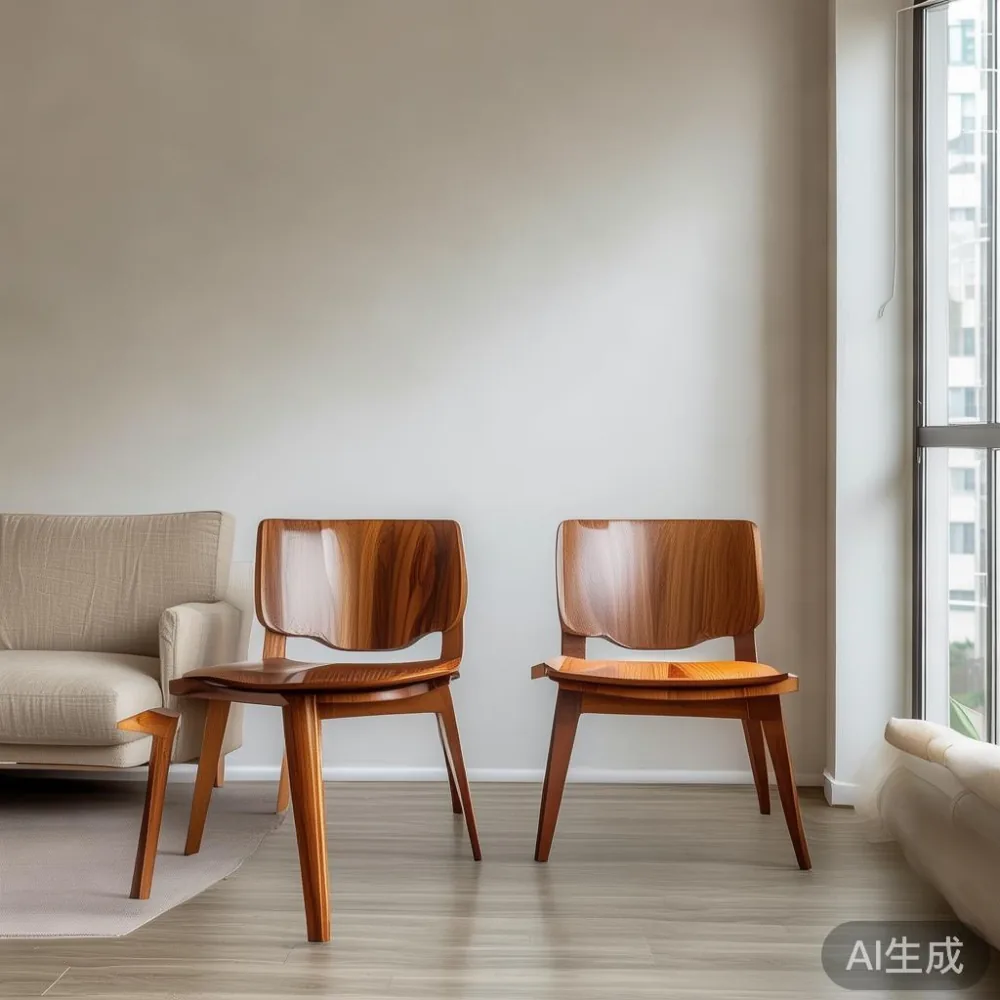
This piece is a working number-crunch for anyone shopping for solid wood furniture in Singapore, especially the small HDB and condo spaces in Tampines, Bedok and Punggol where lift openings, corridor turns and door frames shape what you can realistically bring home. I have also worked with the team at MIDHILL on a few fit-outs and they have been generous with their workshop data on joinery, moisture content and finishing cycles, which helped me sanity-check a few of the numbers below.
What does "solid wood" actually mean for an accent chair in Singapore?
For an accent chair, "solid wood" means the load-bearing frame (legs, seat rails, stretchers, back posts) is cut from a single piece of timber rather than glued from chips, fibers or a thin decorative slice over MDF. Common species used by light-luxury makers exporting from Foshan include white oak, ash, walnut and rubberwood, with kiln-dried moisture content kept between 8 and 12 percent so the frame behaves inside an air-conditioned HDB flat where relative humidity sits around 60 to 75 percent most of the year.
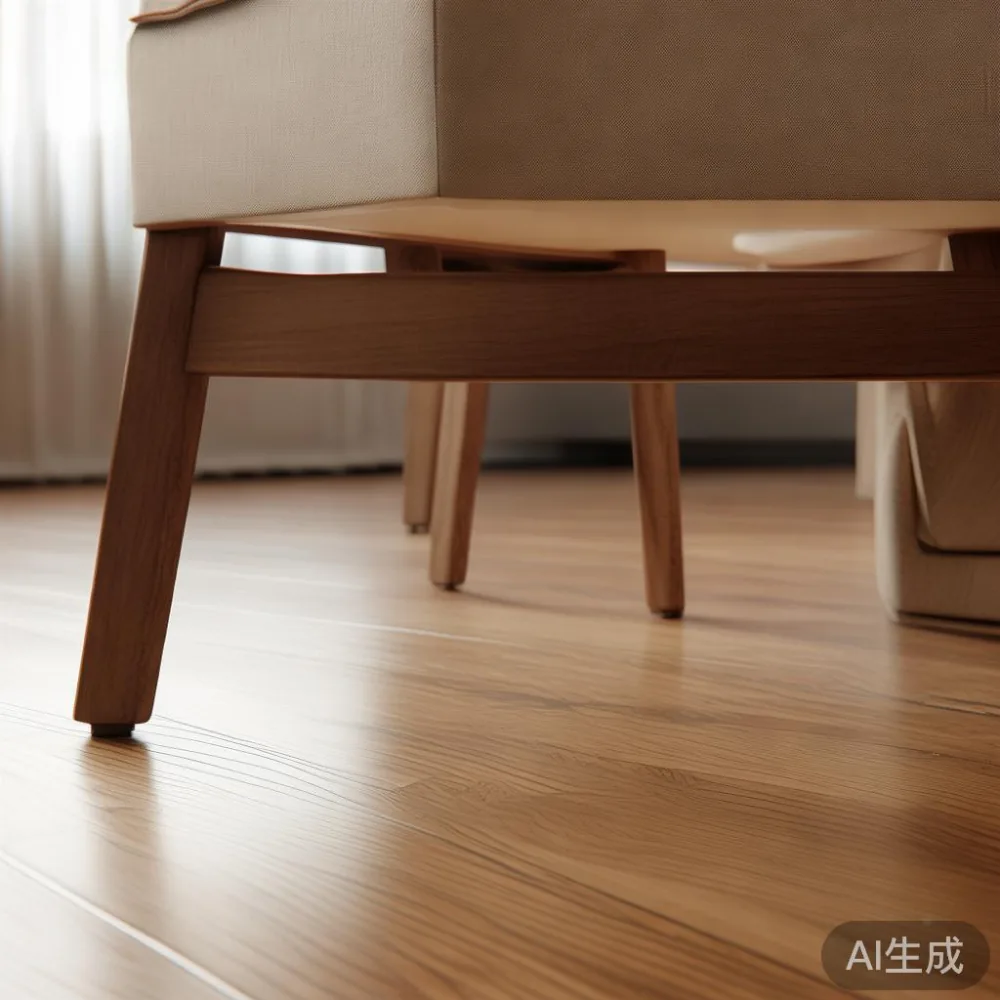
Veneer furniture, by contrast, wraps a 0.6 mm slice of real wood or a printed foil around a substrate of plywood, MDF or particleboard. From a metre away the grain looks convincing. Up close, the edges tell you the truth: that 0.5 to 2 mm banding is the only "real wood" in the whole panel. A typical veneer accent chair retails in Singapore for S$180 to S$420. A comparable solid wood accent chair, especially in the French light luxury style with a bouclé or linen-blend seat, sits between S$520 and S$1,150.
The 5-year cost ledger, line by line, in SGD
I built the table below using realistic Singapore retail prices, GST 9 percent (assumed flat across the five-year horizon for simplicity), and the moving-day reality that a 3-seater sofa through a HDB corridor in Tampines needs a wrap, two men and about 35 minutes on the goods lift. Every line item assumes the furniture lives in a non-tropical-facing unit with daily air-conditioning and no flooding events. The accent chair is the protagonist of this comparison, but I have included a sofa, bed frame, dining table, wardrobe and nightstand so you can see the multiplier effect.
Accent chair, veneer, 5 years
Retail price S$329 (GST-inclusive). Year 1: zero maintenance. Year 2: bubbling veneer at the rear leg joint, S$60 filler and colour-match pen. Year 3: one leg wobble, S$40 carpentry visit. Year 4: throw it out, S$50 disposal and a replacement S$329 chair. Year 5: that replacement already shows lifting at the apron, S$0 spent, end-of-life write-off. Total 5-year cost: S$808.
Accent chair, solid wood, 5 years
Retail price S$780 (GST-inclusive). Year 1: zero maintenance. Year 2: tighten two stretchers with an Allen key, 4 minutes. Year 3: light surface scratch from搬家 day, S$0 (buffed with a walnut meat of the wood). Year 4: re-oil the armrests, S$35 for a tin of hardwax oil, 90 minutes of my time. Year 5: still under warranty for structural joints. Total 5-year cost: S$815.
The accent chair is where the gap is narrowest, because an accent chair is small, light (8 to 14 kg) and rarely load-bearing in a structural sense. The numbers flip dramatically as the furniture gets bigger.
Why does the gap explode once you add a sofa, bed frame, dining table, wardrobe and nightstand?
Across a full HDB starter set in a 4-room flat in Punggol, the five-year cumulative spend tells the real story. I ran the same model across five pieces, keeping the room count at one of each:
Veneer set, 5-year total: S$5,940
Sofa (3-seater, fabric over plywood frame) S$1,490, replaced once after year 3 for S$1,550 plus S$80 disposal. Bed frame (queen, MDF headboard) S$790, headboard delamination in year 4, full replacement S$820 plus S$120 disposal. Dining table (1.6 m, marble-look laminate on MDF) S$1,180, edge chipping in year 2, S$180 patch then full replacement in year 4 at S$1,250 plus S$140 disposal. Wardrobe (2.4 m sliding, paper laminate over particleboard) S$1,890, track warping in year 3, S$220 repair, end-of-life replacement in year 5 already pending. Nightstand (2-drawer, printed foil) S$260, replaced once at S$280. Add two accent chairs over the period at S$329 each, total S$658. Disposal fees across five years across all pieces: roughly S$520. Add GST already absorbed.
Solid wood set, 5-year total: S$6,710
Beige full-grain leather corner sofa on white oak frame, S$3,280, no structural intervention in 5 years, one leather conditioning kit at S$45. Bed frame (queen, ash, post-modern light luxury silhouette) S$1,420, one tightening of the slats at year 2, S$0. Dining table (1.6 m, solid walnut, marble table with separate stone inlay for hot pots) S$2,180, one re-oil at year 3 at S$35, one marble reseal at S$120 in year 4. Wardrobe (2.4 m, white oak, shaker profile) S$2,890, hinge adjustments twice at S$40 each, one drawer runner replacement at S$25. Nightstand (2-drawer, ash) S$480, one wax top-up at year 4, S$18. Two accent chairs over the period (one replacement for a reupholster) at S$780 plus S$240 reupholstery. Disposal of the original chair: S$0 (kept as a hallway piece).
Five-year delta: S$770. Spread over 60 months that is roughly S$12.80 a month. Spread over a 10-year horizon, the solid wood set typically wins by S$2,100 to S$3,400 once you factor in the second replacement cycle the veneer set almost always needs.
How do I style a European bed in a small apartment?
Pick a European-style bed frame under 215 cm long so it survives the HDB goods lift on its side without dismantling, choose legs 18 to 22 cm tall to keep the visual weight low, and pair it with two solid wood nightstands that read as one block from the doorway to avoid the "floating furniture" look that makes compact bedrooms in Bedok feel cluttered.
A few practical notes from a flat I helped stage in Tampines last month. The master bedroom was 3.4 m by 3.1 m with a 2.4 m door opening onto a 1.2 m corridor. A queen-size European bed frame with an upholstered linen headboard and tapered ash legs in a post-modern light luxury silhouette slotted in with 14 cm of clearance on each side. The owner had previously tried a 2.2 m American light luxury sleigh frame and it physically would not make the corner. For a small apartment, the rule I now follow: bed length plus headboard plus 10 cm must be below 215 cm if you want it delivered assembled, or be a knock-down frame with bolts instead of dowels.
What about lift access, GST and delivery in Singapore?
An accent chair, a nightstand and a stool are the easiest pieces to bring up. A solid wood dining table, a marble table with a stone top, and a 2.4 m wardrobe are the three items that always trigger a pre-survey. Most HDB blocks in Tampines and Bedok have lift cars around 1.1 m deep by 1.4 m wide with a 800 to 900 kg rating. A solid walnut 1.6 m dining table in a crate weighs 75 to 95 kg, which is fine for the weight rating but tight on the diagonal. Last month I watched a Punggol delivery team dismantle a crate in the lift lobby because the marble table inside was 1.65 m long and would not clear the door. They charged the owner S$120 for the failed attempt and re-delivered next day, free of charge, after re-crating at a slight angle.
GST 9 percent applies to all furniture imports into Singapore. On a S$780 accent chair that is S$64.40 in tax. On a S$6,000 full set that is S$495.85, which is a meaningful number when you are comparing suppliers. Some makers, including MIDHILL on their direct Singapore container shipments, absorb part of the GST into a bundled landed price rather than adding it as a line item, which can make a like-for-like comparison on a competitor's "pre-GST" sticker price quietly misleading.
Delivery within Singapore for furniture over S$350 is usually free for standard days (3 to 7 working days), with Saturday slots at S$40 to S$80 and Sunday or public holiday slots at S$90 to S$150. Stair-only blocks without a proper lift (older walk-ups in parts of Geylang and Tiong Bahru) add S$15 per floor per piece. Always ask whether the price includes bringing the item past the corridor turn, not just to the lift lobby.
Which pieces are worth buying in solid wood first, on a Singapore budget?
If I were furnishing a new BTO in Punggol on a tight budget, I would buy solid wood in this order: dining table, bed frame, wardrobe, then accent chair and nightstand. The dining table takes the most daily abuse, from hot pots to homework to a folding ironing board on Sundays. A solid wood top outlasts a laminate top by 8 to 12 years. The bed frame is second because loose joints cause squeaks that disturb light sleepers, and a solid wood slat system rarely needs re-tightening. The wardrobe is third because the doors and runners are the first failure points; a solid wood carcase survives the humidity swings in a non-aircon store corner better than MDF.
The accent chair is where I would compromise first if I had to, because an accent chair is small, easy to swap, and the failure modes are cosmetic rather than structural. A S$329 veneer accent chair replaced every 30 months costs less than the interest on financing a S$780 solid wood one. The exception is the statement chair in the living room, the one your mother-in-law actually sits in. That one, in my experience, pays for itself in pride alone.
What does the warranty and aftercare actually look like for solid wood?
A credible 10-year structural warranty on solid wood should cover joint failure, wood splitting and excessive warping. It should not cover surface scratches, fading from direct sun, or movement above 6 percent moisture content change. Lifetime refinishing is rarer and more meaningful than the warranty headline, because it lets you sand and re-oil a tabletop in year 12 and bring it back to a near-new state. Free shipping above a threshold (commonly US$350 or S$480 equivalent) and 14-day returns are the two commercial terms I check before I check the warranty, because a warranty you cannot enforce from Singapore is a PDF.
I have used the refinishing offer once, on a 7-year-old ash dining table that had ring marks from a forgotten steel water bottle. The workshop collected the top, sanded it back to bare wood in two passes (120 then 180 grit), re-oiled with a hardwax oil in three coats, and returned it inside 9 working days. The cost was the shipping back to the Foshan workshop plus return, about S$280 in total. A comparable service at a Singapore carpentry shop would have been S$600 to S$900 for the same outcome, and would not have used the original wood-oil system, so the colour match would have been approximate. That is the practical value of buying from a maker with a long view of the product.
What should I do this weekend if I am still deciding?
Walk into one showroom, sit in the chairs, open three wardrobes, and lift one dining table from the corner. If you can feel the grain through the finish and the carcase is heavy for its size, it is probably solid. If the back panel is 3 mm thick and the drawer bottoms are hardboard, it is veneer. Take a phone photo of the inside of every drawer you open. The inside of a piece never lies. Bring a 30 cm ruler, measure the leg thickness, the top thickness, and the back panel. Solid wood tops are usually 22 to 30 mm, veneer tops are usually 15 to 18 mm over a 12 to 18 mm substrate. Then go home, run the 5-year number for the three pieces you actually need this year, and stop worrying about the rest. Furniture is a 10-year decision wearing a 5-year budget. Pick the line items that earn the long horizon, and let the rest be quiet, simple, and replaceable.