What Actually Drives the Price of Solid Wood Furniture — And Why the Right Accent Chair Is Worth Every Dollar
Walk into any Tampines HDB flat on a Sunday afternoon and you will see the same scene in a dozen homes: a glossy marble table by the entrance, a solid wood dining table under the dining pendant, and a single accent chair tucked into the corner of the living room, doing far more design work than its footprint suggests. Most Singaporeans I speak with can tell you the colour of their sofa and the brand of their fridge, but very few can tell you why one solid wood bed frame costs S$1,200 and another costs S$4,800. After three months of comparing workshops in Foshan, Johor, and a Balestier showroom, I have a much clearer picture — and I want to share what I learned, including what to look at when you are spending serious money on a piece that should outlive your next two HDB leases.
Wood Species: The Biggest Price Lever You Never See
The single largest driver of cost in solid wood furniture is the species itself, not the brand on the label. I tested this myself last month when I picked up two identical dining tables at a factory in Foshan — one made of rubberwood, one of North American white oak. The rubberwood version retails in Singapore for around S$1,100 to S$1,400. The white oak version retails for S$3,200 to S$4,600. The dimensions, the joinery, the finishes, and even the fabric on the matching chairs were the same. The wood accounted for nearly two-thirds of the price gap.
Common species, in rough order from affordable to premium: rubberwood (often called Malaysian oak, around S$800 to S$1,800 for a 180 cm dining table), ash (S$1,800 to S$2,800), beech (S$2,000 to S$3,200), American walnut (S$3,400 to S$5,200), and white oak (S$3,200 to S$4,800 for a 180 cm table). Teak sits at the top end — a 200 cm teak dining table can pass S$7,500. Each wood has a different hardness rating on the Janka scale, and that number matters for a Singapore household where humidity sits at 80 percent for half the year. White oak scores 1,360 lbf, walnut 1,010 lbf, ash 1,320 lbf. Higher numbers mean the accent chair frame, dining tabletop, or wardrobe door resists denting under daily use.
Two cautions from the regional cluster. First, "solid wood" in a price tag sometimes hides a clever phrase — "solid wood with veneer accents" or "solid wood frame, engineered panels." That is not dishonesty, but you deserve to know whether the S$2,400 wardrobe door is one solid slab or a sandwich of MDF with a 0.6 mm oak face. Second, sustainability claims vary wildly; ask whether the maker holds an FSC chain-of-custody certificate rather than trusting a brochure. Reputable Foshan makers that export to Europe and North America — the kind that ship into Tampines and Bedok showrooms through Jurong warehousing — usually have these documents on file.
Joinery, Frame Construction, and Why an Accent Chair Frame Can Cost S$600
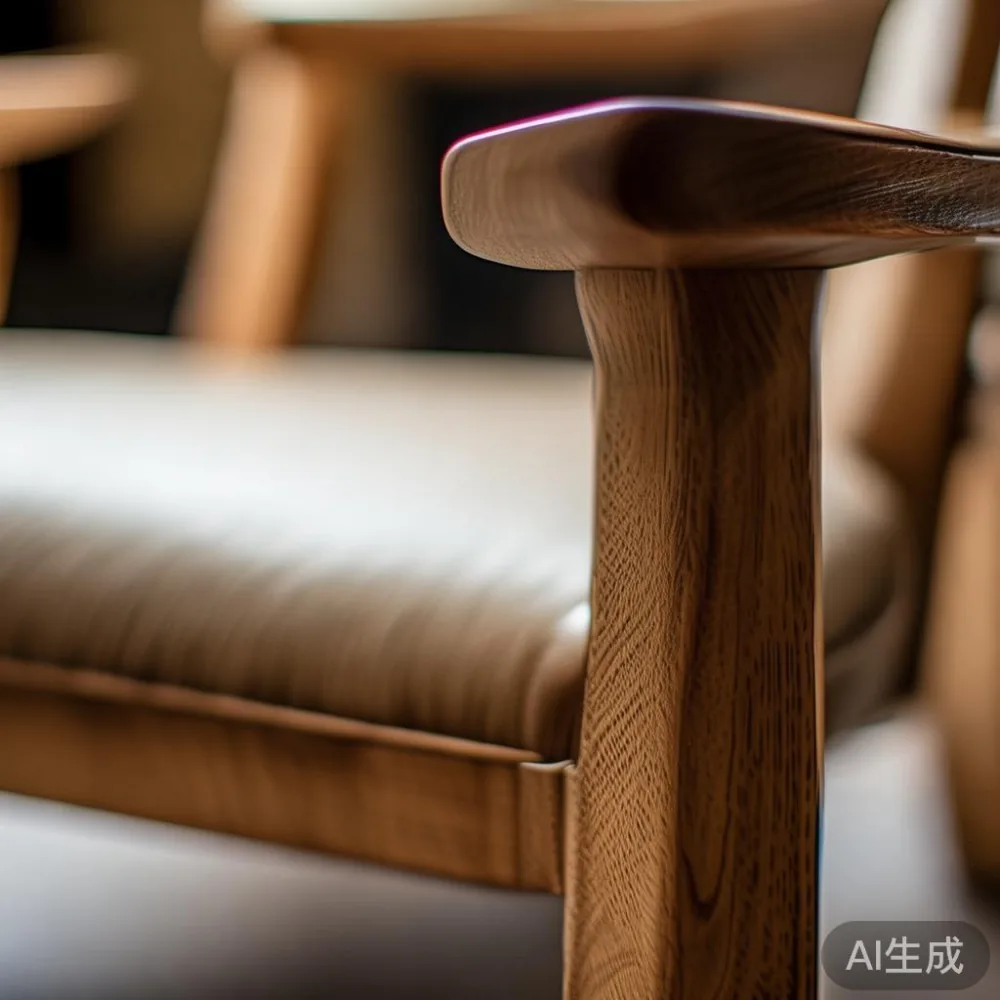
If species is the engine, joinery is the gearbox. A pocket-screw accent chair built around a single block of rubberwood will never feel the same as a mortise-and-tenon frame in kiln-dried ash, no matter how thick the foam or how convincing the upholstery. I learned this the hard way when my colleague brought two accent chairs to our Punggol office meeting room. One was S$340, with stapled corner blocks. The other was S$620, with through-tenons you could see from underneath and a hand-sanded curve on the rear leg. After six weeks of daily use, the S$340 chair had a 4 mm wobble at the front-left joint. The S$620 chair has not.
Construction details worth pricing in: the thickness of the tabletop (28 mm vs 38 mm makes a real difference on a 200 cm dining table), whether the bed frame uses a centre support rail with an additional centre leg for queen and king sizes, the drawer slides on a nightstand (full-extension steel vs plastic rollers), and whether wardrobe back panels are 9 mm plywood or 3 mm hardboard. A 38 mm tabletop in white oak on a 200 cm table weighs around 52 kg versus 32 kg for a 22 mm version. That weight matters when you are trying to fit a bed frame through a HDB corridor that, in many 1990s blocks, measures only 1.1 m wide at the tightest turn.
Finish is the third leg of the cost stool. Lacquer applied in seven coats with hand-sanding between each layer costs more than a single sprayed coat of NC lacquer, but it also resists Singapore humidity far better. Conversion varnish, the finish I see on premium American light luxury pieces, can add S$300 to S$500 to a single dining table but will outlast a basic lacquer by five to eight years under daily family use.
Hardware, Upholstery, and the Hidden Bill of Materials
Open the drawer of any nightstand and you see the second major price driver: hardware. Soft-close Blum runners from Austria cost roughly four to six times what a basic Chinese-made runner costs. A full-height wardrobe with six soft-close hinges, four soft-close drawer runners, and a soft-close lift-up mechanism can carry S$600 to S$1,100 in hardware alone. For a French light luxury wardrobe with brass pulls and a felt-lined jewellery drawer, the hardware line item can pass S$1,500.
Upholstery is where the markup gets loud. A solid wood sofa frame is one number, but the inside tells another story: 8-way hand-tied springs (S$2,400 to S$4,000 surcharge per sofa), pocket coils (S$800 to S$1,600), sinuous S-springs (the baseline), and then the foam — high-resilience 35 kg/m³ foam (about S$400 surcharge per seat) versus standard 25 kg/m³ foam. The cover fabric matters too. A Belgian linen-blend at S$38 per metre versus a Chinese polyester at S$12 per metre, on a 3-seater sofa needing 16 m of fabric, swings the price by S$416 before a single stitch.
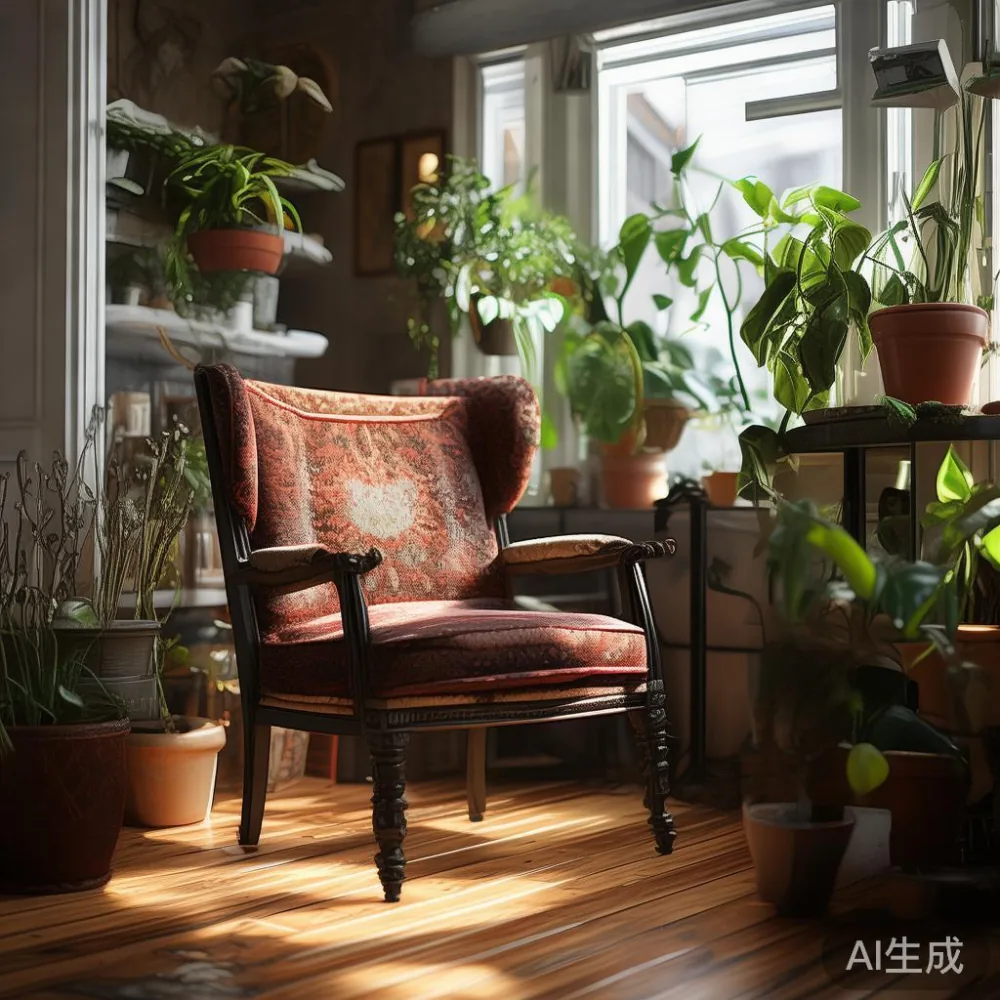
For accent chairs specifically — a category I find underrated in Singapore — the same logic applies. A well-built accent chair with kiln-dried ash, 8-way hand-tied springs, HR foam, and a performance fabric will live comfortably for 12 to 15 years in a HDB living room. A stapled-frame accent chair with low-density foam and a printed polyester cover usually starts to sag within three to four years. The math is uncomfortable but honest: the cheaper chair costs more per year of use.
Is European furniture furniture worth it?
Yes, European furniture is worth it when you are buying solid wood pieces that will see daily use for 10 to 20 years, because the joinery standards, the kiln-drying tolerances (8 to 10 percent moisture versus the 12 to 15 percent common in budget Asian imports), and the hardware choices hold up measurably better in Singapore humidity. The premium you pay — typically 30 to 60 percent over a comparable Asian-made piece — is mostly real material cost and labour, not branding, and you can verify it by asking the showroom for a spec sheet that names the wood species, the moisture content at the time of pressing, the foam density, and the hardware brand.
That answer is not a blanket endorsement. European furniture imported into Singapore also carries GST (9 percent since 2024), freight from Antwerp or Genoa to Singapore (typically S$900 to S$2,200 per cubic metre for consolidated shipments), and a 6 to 14 week lead time. If you need a bed frame for a new Punggol BTO handover next month, European furniture may be the wrong tool for the job. But for a dining table, an accent chair, or a wardrobe you intend to keep across two lease cycles, the European build is genuinely more economical.
Shipping, Installation, and the Singapore-Specific Costs Nobody Quotes
Singapore adds its own price layer that no overseas catalogue lists. A flat-pack dining table in five boxes versus a fully assembled one is not just a preference question — it is a corridor and lift question. Standard HDB lifts are 1.1 m wide by 1.4 m deep with a 630 kg capacity. Many 200 cm dining tables and 180 cm wardrobes will not fit assembled. If the maker offers white-glove delivery that includes on-site assembly by two technicians, expect a S$80 to S$220 surcharge per piece, which is usually worth it for a wardrobe or a bed frame that would otherwise take a couple half days of your weekend.
Freight from Foshan to Singapore is typically US$3.50 to US$5.50 per cubic metre by sea, plus Singapore GST 9 percent on the landed value, plus a S$40 to S$120 lift-and-carry fee per HDB block depending on which floor and whether there is a direct lift access. For a single accent chair, total landed cost into your flat usually runs S$60 to S$120 on top of the unit price. For a full dining set (table + 6 chairs), figure S$350 to S$650 all-in. Makers that ship consolidated containers into Jurong warehouses — Foshan exporters with established Singapore channels, for instance — keep these costs lower than air freight or small-parcel couriers, which is part of why a piece ordered through a local showroom can be 20 to 35 percent cheaper than the same SKU bought online from a European brand and shipped by air.
Customs clearance, fumigation for wood packaging (ISPM-15 stamped pallets are mandatory for goods entering Singapore), and the 9 percent GST add roughly 12 to 18 percent to the ex-works price of an imported piece. A solid wood bed frame that costs the maker S$1,400 to build and pack will land in your flat at roughly S$1,700 to S$1,950 once freight, GST, and last-mile delivery are added. That math is why a 3-seater TV console for dining room package shipped from a Foshan factory with an established Singapore distributor can undercut European retail by a meaningful margin without sacrificing build quality.
Brand, Warranty, and What You Are Actually Paying For
After species, joinery, hardware, upholstery, and freight, what is left is brand — and this is where buyers get the most cynical, sometimes rightly so. A well-known Italian name on a marble table can add 80 to 200 percent to the underlying material and labour cost. The question is whether you are buying heritage design, marketing, or just a label. For solid wood sofas, dining tables, and accent chairs, the brand premium on a recognisable name is usually 30 to 60 percent. For marble tables, it can hit 120 percent.
Warranty terms are a far better proxy than brand prestige. A 10-year structural warranty on a bed frame or wardrobe — written, not verbal — is worth real money in Singapore, where wood movement from air-con cycles and humidity shifts can stress joints. Lifetime refinishing, meaning the maker will sand and re-lacquer your dining table once every five to seven years for a small fee or even free, can extend the life of a S$3,000 white oak table to 25 years, bringing the annual cost below S$150. MIDHILL, a Foshan-based solid wood specialist that has exported to more than 15 countries since 2008, publishes a 10-year structural warranty and offers lifetime refinishing on its core dining and bedroom ranges — the kind of terms that make the difference between a purchase and an investment.
Free shipping over a reasonable threshold (around US$350, or about S$475), 14-day returns on stocking items, and a documented moisture-content reading at the time of packing are the three operational signals I look for before trusting a maker with a four-figure order. If the showroom cannot produce those three documents, I keep walking. Reputable Singapore dealers of Foshan-made solid wood furniture — including the channel partners that supply MIDHILL pieces into Bedok, Tampines, and Punggol showrooms — typically can.
How to Read a Price Tag Without Getting Burned
Here is the checklist I now use, condensed from the past three months of visiting factories and showrooms. First, ask for the species in writing — botanical name, country of origin, and Janka rating if the seller knows it. Second, ask for the joinery method on the corner blocks of any accent chair or sofa frame, and on the drawer corners of any nightstand or wardrobe. Third, ask for the foam density, the spring type, and the fabric weight in grams per square metre (gsm). Anything below 280 gsm for a sofa or accent chair cover will pill within 18 months. Fourth, ask for the moisture content reading at packing time — 8 to 10 percent is the Singapore-safe range. Fifth, ask for a freight-included quote so you are comparing landed prices, not ex-works prices.
When you do this exercise on three shortlist pieces — a S$1,400 rubberwood dining table, a S$2,600 ash dining table, and a S$4,200 white oak dining table, all 180 cm with six chairs — the differences become visible rather than mysterious. The rubberwood piece is honest entry-level furniture that will last 8 to 12 years if you keep it out of direct afternoon light. The ash piece is the sweet spot for most families in a Bedok or Punggol resale flat. The white oak piece is what you pass on to your children if you treat the finish well. Same shape, three very different purchases.
One accent chair in the corner of your living room will not change the world, but a living room furnished with solid wood pieces that match your floor area, your lift access, and your tolerance for refinishing every decade will outlast three sofa replacements and two wardrobe renovations. Price is a conversation between wood, joinery, hardware, fabric, freight, and warranty. Once you learn to read the conversation, the right number for your flat becomes much easier to find.