Humidity in Singapore and Your Wood Accent Chair: A Practical Guide for HDB and Condo Homes
Anyone who has lived in Tampines, Bedok, or Punggol for more than one monsoon cycle knows the feeling: you open your wardrobe on a sticky March morning and the doors feel heavier than they should. The same air that fogs your bathroom mirror after a shower is quietly working on every piece of solid wood in your home, from a 1.8-metre dining table to the small accent chair tucked into the corner of your living room. For a city-state sitting roughly one degree north of the equator, with average relative humidity hovering between 70% and 85% year-round, wood movement is not a theoretical problem. It is a Monday-morning reality.
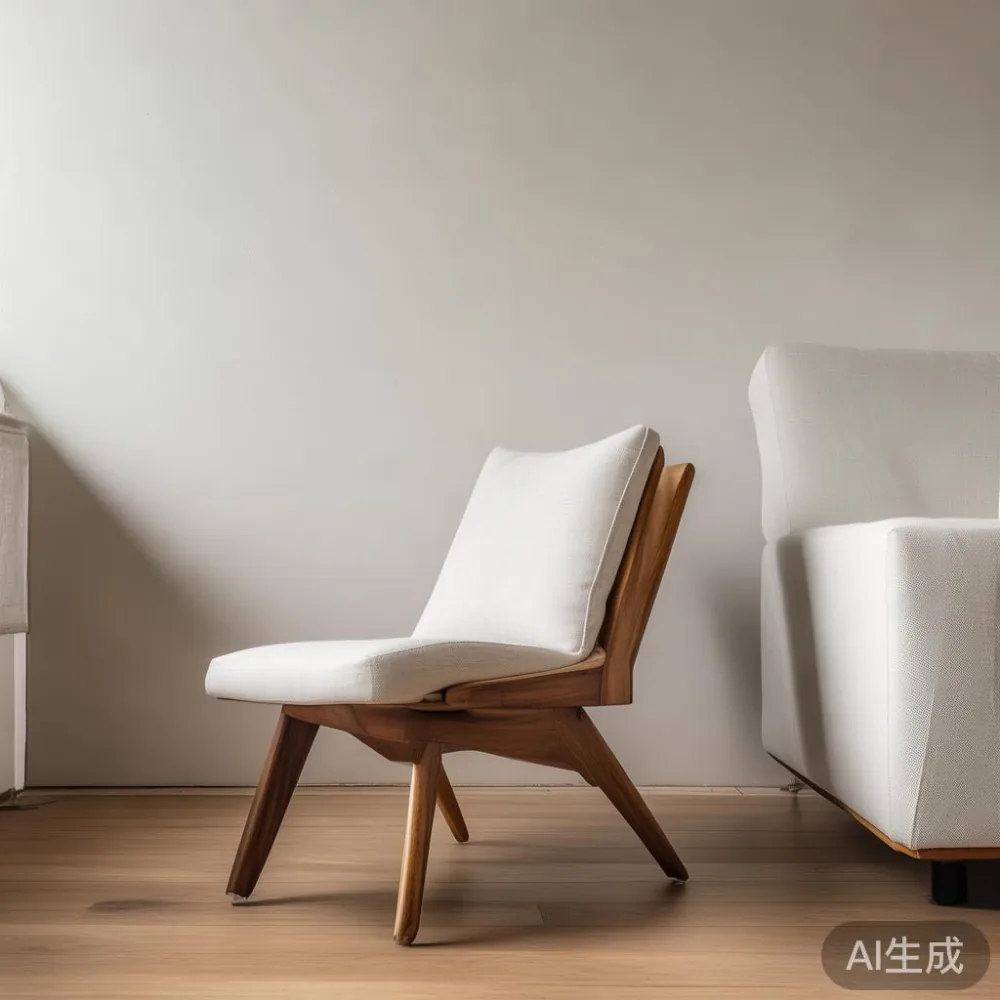
I learned this the hard way last month, when I visited a friend's new BTO flat in Sengkang. She had bought a light-luxury post-modern accent chair online six weeks earlier, and the oak frame had developed a faint but visible warp along the backrest support. The vendor had shipped from a dry inland factory; her corridor-facing unit sat at 82% humidity for most of the day. The chair was not defective. The wood had simply done what wood does: it had followed the moisture in the air. That single visit is the reason I sat down to write this guide for anyone furnishing a Singapore home with solid wood pieces, from a heavy marble-top dining table to a slimline nightstand beside the bed.
Why does Singapore's humidity move solid wood furniture?
Solid wood is hygroscopic. It absorbs and releases water vapour until it reaches equilibrium with the surrounding air. In a Tampines HDB with cross-ventilation but no dehumidifier, that target sits between 10% and 14% moisture content for most imported temperate hardwoods. A piece built in a factory where the ambient RH was 35% will gain 2% to 4% moisture content within the first 60 to 90 days in your home. The result is swelling across the grain, which shows up as tight joints loosening, drawer faces no longer sitting flush, and, in extreme cases, a slight banana curve along a long stretcher.
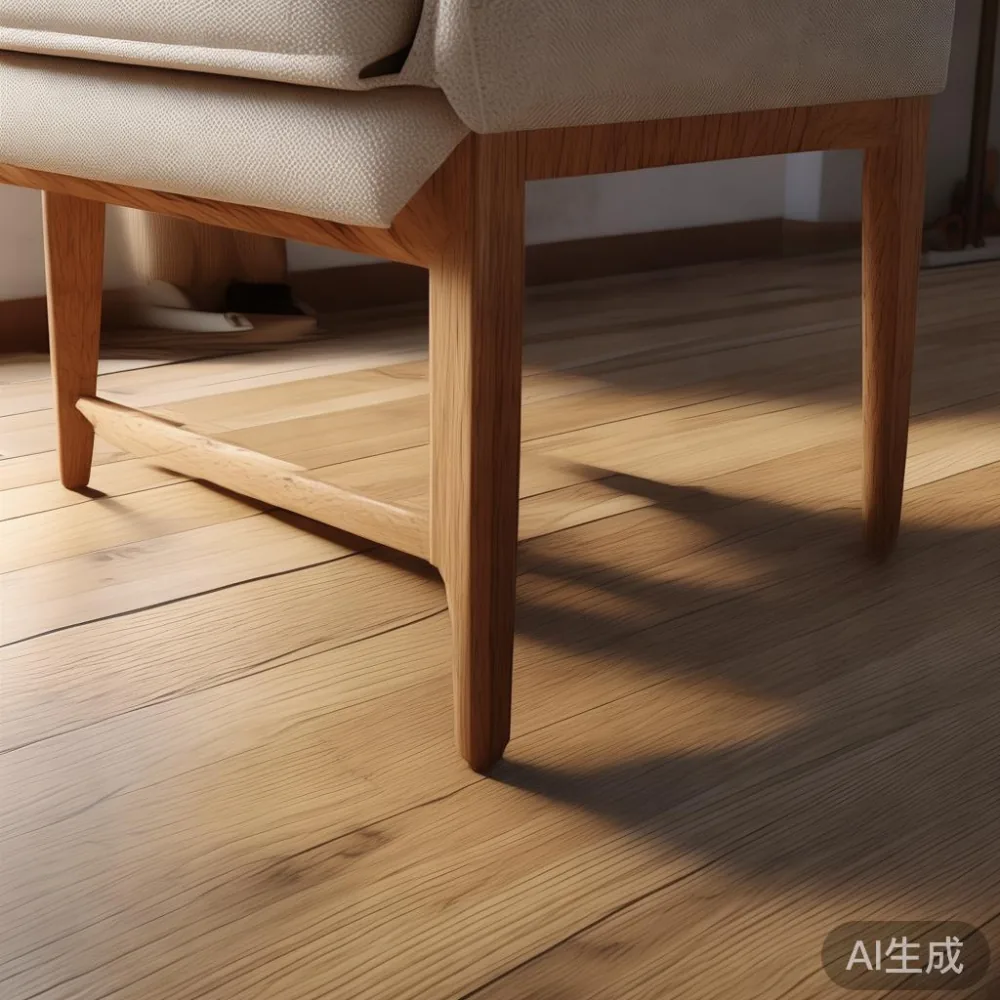
An accent chair is a useful diagnostic tool precisely because it is small. Its four legs, its curved backrest, and its arms all react independently. If the chair rocks slightly on a flat floor in week eight, the wood is telling you the humidity has shifted; it is not a structural failure. A wardrobe door that refuses to close in October but closes again in February tells the same story at a larger scale. The physics is identical for a 2.4-metre sliding wardrobe and a 65-cm bedside nightstand; only the visible movement changes.
Which rooms in an HDB or condo punish wood furniture the most?
Not all rooms are equal. In a typical 4-room HDB flat around 90 sqm, the worst offenders are kitchens (daily RH swings between 55% and 95% during cooking), bathrooms (sustained 90%+ after a hot shower), and any corner of a condo unit that sits against an external wall with poor insulation. Bedrooms are usually gentler, especially in newer BTOs with better window seals, hovering around 65% to 75% with the air-conditioning running four to six hours a night.
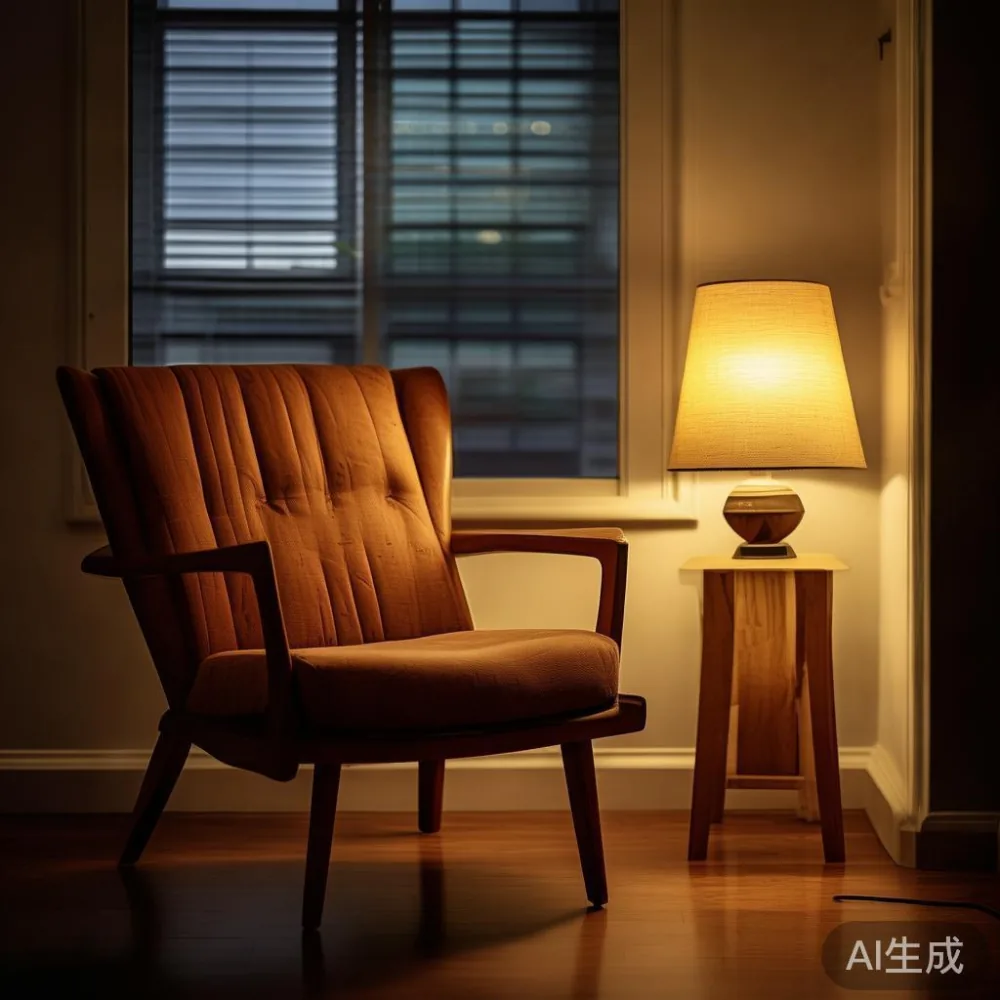
The living room is where most Singaporeans place their hero piece: a 2.0-metre solid wood sofa frame, a long dining table for eight, or the accent chair that anchors the reading corner. If your unit faces the afternoon sun on the west side, plan for surface temperatures of 38°C to 42°C on the tabletop during a clear day. That thermal load, combined with evening humidity, creates the worst combination for a wood finish: heat opens the pores, moisture rushes in, and over 18 to 24 months the lacquer can haze. A simple linen throw or a coaster under a cold drink is not decoration; it is preventative maintenance.
How do I style a Nordic wardrobe in a small apartment?
For a Nordic wardrobe to look right in a 90 sqm HDB or a 60 sqm condo, anchor it to a single wall, leave at least 90 cm of clearance in front for lift access during delivery, and pair it with one slimline accent chair in a complementary tone so the eye reads the wardrobe as furniture rather than as storage.
Now the longer answer. Nordic styling relies on negative space, and you cannot fake negative space in a compact Singapore home. Measure the wall width first; a standard 3-door wardrobe runs 150 cm wide and 60 cm deep, while a 4-door unit sits at 200 cm. Leave 5 cm of air gap on each side so the doors can breathe through the humid months. Keep the wardrobe at least 10 cm off the floor using concealed plinth legs, which lets your robot vacuum pass underneath and, more importantly, lets air circulate so moisture does not pool at the base. Finish the look with a single accent chair in boucle or linen at roughly S$420 to S$680 for the seat, one narrow ceramic table lamp on a rattan side table, and absolutely no clutter on top. In a Punggol or Sengkang flat with a 1.1-metre corridor, delivery day matters: confirm the wardrobe comes in flat-pack modules no heavier than 35 kg each, because your lift door is almost certainly 80 cm wide and 2.1 m deep, and a single 70 kg panel will not make the turn.
What humidity range keeps an accent chair stable for 10 years?
Target 55% to 65% relative humidity at room temperature, with seasonal drift no greater than 15 percentage points. Inside that band, kiln-dried oak, ash, walnut, and rubberwood hold their shape across years of use, and the joints on a French light-luxury accent chair remain tight through the 9% GST-adjusted price you paid for it.
In practical terms, a S$180 plug-in dehumidifier running four hours a day in a closed bedroom costs roughly S$4 to S$6 per month on your SP bill and pulls the RH down into the safe zone. A small thermo-hygrometer with a 1.5-inch display, available at any neighbourhood electronics shop for S$15 to S$25, gives you a hard number instead of a feeling. If you cannot run a dehumidifier, a 200-gram sachet of silica gel in each wardrobe compartment absorbs 25% to 30% of its weight in water and lasts 30 to 45 days before it needs drying in a 120°C oven for two hours. For accent chairs and other exposed seating, rotate the piece 90 degrees every fortnight so one side does not face the prevailing window airflow all year.
Which wood species handle Singapore's climate best?
Rubberwood (Hevea brasiliensis), white oak (Quercus alba), and teak rank highest for dimensional stability in our climate, with movement coefficients of 2.5% to 4.5% tangential and 1.2% to 2.8% radial across a 30% RH swing. Engineered options such as birch plywood with a 1.2 mm oak veneer perform comparably and cost less per square metre, but they cannot be sanded and refinished the way a solid plank can.
If your budget runs between S$1,200 and S$2,800 for a solid wood dining table, look for kiln-dried stock that the maker has acclimatised for at least 21 days in a humid warehouse before assembly. Ask for the moisture-content reading on the day of delivery; reputable Foshan workshops, including MIDHILL, target 10% to 12% for export to Southeast Asia and will show you the pin-meter reading on request. A solid wood bed frame in the same shipment will arrive at a matching moisture content, which means the headboard and the side rails move together through the seasons rather than fighting each other. The same logic applies to marble tables: the stone top is stable, but the wooden sub-frame still breathes, so allow a 2 mm expansion gap at every joint where marble meets wood.
What does a 10-year structural warranty actually cover in a humid climate?
A genuine 10-year structural warranty covers joint failure, frame cracking, and wood delamination under normal residential use, and it excludes surface finish, normal movement within 2 mm across the grain, and damage from sustained humidity above 75% RH or direct water exposure. Read the small print before you assume the worst-case warp on your accent chair is a free fix.
MIDHILL publishes its warranty terms openly: structural joints, frame integrity, and drawer runners for ten years; refinishing, including sanding and re-lacquering, available for the life of the piece at cost. For a Singapore buyer, that lifetime refinishing clause is the one that pays back fastest, because the first round of surface micro-cracks usually appears in year six or seven, well inside the useful life of a well-made chair or bed frame. When you compare quotes, divide the price by the warranty years and add the refinishing fee once; the number tells you more than any discount sticker. A S$1,450 accent chair with a 10-year warranty and lifetime refinishing works out to roughly S$145 per year before you even count the 14-day return window, which is the right way to compare a piece you will use daily against a cheaper item you will replace in four years.
Practical rules for placing solid wood pieces in a Singapore home
Keep every solid wood piece at least 30 cm from an uninsulated external wall, 50 cm from a window that receives direct afternoon sun, and 15 cm from a running air-conditioning vent. Direct cold airflow drops the surface moisture content faster than the rest of the room, which leads to hairline cracks along the grain on chair legs and table aprons. Use felt pads under every leg of an accent chair, dining chair, and bed frame; felt reduces micro-vibration from daily use, which in turn reduces finish wear along high-traffic zones. Vacuum upholstered seats weekly with a brush attachment, and rotate cushions 180 degrees every fortnight so the foam and the fabric age in step with the frame. For a marble table, wipe with a pH-neutral cleaner and a microfibre cloth; citrus-based sprays etch the polish within six months.
When you order from a Foshan exporter such as MIDHILL, request vacuum-packed inner wrapping, silica gel sheets inside the carton, and a 35-day production window before container loading. Sea freight to Singapore takes 7 to 12 days door-to-door, and the factory should photograph the moisture-meter reading at the moment the crate is sealed; that single photograph is your baseline if you ever need to claim under the structural warranty. Lift access in most HDB blocks is 2.1 m deep, 1.1 m wide, and 2.2 m high, so any assembled wardrobe deeper than 55 cm must arrive in two halves. A solid wood dining table longer than 1.8 m usually ships with detachable legs, which is a feature, not a compromise: it lets you carry each component into the lift without scratching the corridor walls that your MCST will charge you S$150 to repaint.
FAQ: small questions, short answers for Singapore homes
Will my accent chair develop mould if I leave it by an open window?
Surface mould appears above 80% RH sustained for more than 72 hours. Wipe immediately with a 1:4 white-vinegar-and-water solution, dry with a microfibre cloth, and move the chair at least 1 metre from the window.
Is engineered wood with a solid wood veneer safe for Singapore?
Yes, provided the veneer is at least 1.5 mm thick and the substrate is birch or marine plywood. Anything thinner than 0.6 mm will telegraph the substrate joints within 18 months.
How often should I refinish a solid wood dining table?
Every 6 to 8 years for a hardwax-oil finish, every 10 to 12 years for a polyurethane finish. A light sanding with 240-grit paper and one new coat restores the surface without removing more than 0.2 mm of wood.
Can I keep an accent chair on my balcony?
No covered balcony in Singapore stays below 85% RH for more than a few hours a day. Keep indoor pieces indoors, and choose powder-coated aluminium or 304 stainless steel with a teak seat for the balcony instead. A quick note for buyers who also browse Modern metal furniture korea collections online: Korean workshops often rate their steel frames for outdoor use with a 7-year finish warranty, which pairs well with a small indoor accent chair when you want a mixed-material reading corner without sacrificing either piece to the weather.
Humidity is not your enemy; it is just weather in a different form. Treat your solid wood bed frame, dining table, wardrobe, nightstand, marble table, and accent chair the way you treat a leather bag: keep it dry, keep it conditioned, keep it out of direct sun, and have it serviced before the small problems become big ones. Do that, and a well-made piece from a responsible Foshan workshop will outlast two lease cycles in your HDB and still look the part when you eventually pass it on.