Accent Chairs in Singapore: A Practical Buyer’s Guide
Compare accent chairs for HDB and condo homes, with sizing, materials, prices, humidity tips, delivery guidance, and buying questions.
- What size should an accent chair be for a Singapore living room?
- How much legroom do you actually need under a dining table?
- Which materials work best for Singapore’s humidity?
- Is a solid wood accent chair worth the higher price in Singapore?
- How do I compare accent chair prices without getting misled by discounts?
- Can an accent chair fit into a small HDB or condo home?
- How long should delivery and assembly take in Singapore?
- What should I check before ordering an accent chair online?
- How do I keep an accent chair looking good in a humid climate?
What size should an accent chair be for a Singapore living room?
Measure the room before shopping
Allow enough space to pull the chair out
Compare practical dimensions
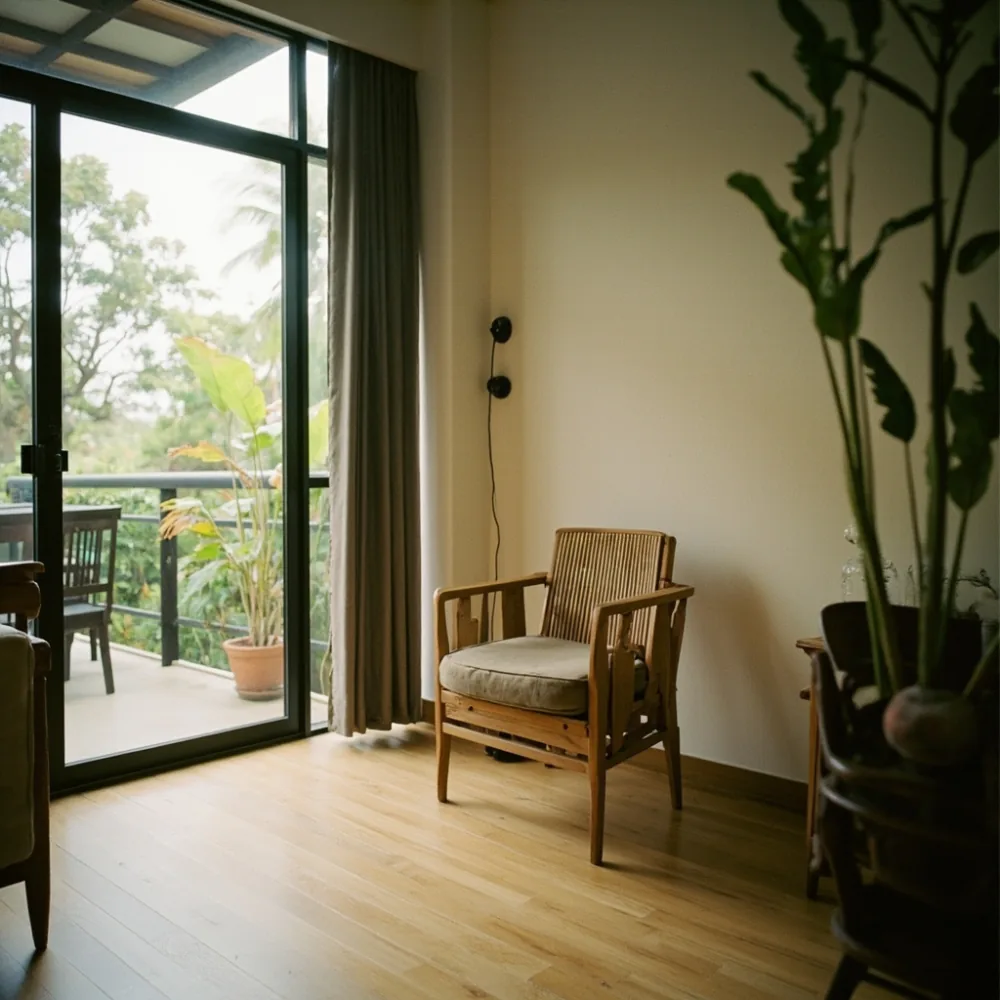
I start with the wall space, not the product photo. In a typical HDB living room, I would reserve about 80 cm of width for an accent chair and allow another 60–90 cm in front so someone can sit down, stand up, and walk past without turning sideways. A chair that looks generous in a showroom can make a compact room feel crowded once it is pulled away from the wall.
For a dining corner, a total width of 45–55 cm is easier to manage than a bulky lounge chair. Deep apartments and new condos often have enough floor area for a wider chair, but the route from the lift to the living room still matters. Check doorways, shoe cabinets, balcony thresholds, and any turning point beside the kitchen or dining table.
- Standard accent-chair width: 45–60 cm
- Useful clearance in front: 60–90 cm
- Comfortable seat height: 43–47 cm
- Back height: 75–95 cm for a more upright, versatile chair
| Accent chair type | Typical dimensions | Approx. weight | Indicative Singapore retail price |
|---|---|---|---|
| Slim wooden chair | 45–50 W × 48–52 D × 78–85 H cm | 6–9 kg | SGD 180–450 |
| Upholstered dining chair | 48–56 W × 50–58 D × 78–88 H cm | 9–14 kg | SGD 250–750 |
| Solid-wood lounge chair | 58–68 W × 60–68 D × 80–90 H cm | 14–22 kg | SGD 600–1,600 |
My advice is to tape the footprint on the floor with masking tape before ordering. It gives a more honest sense of scale than measuring the room alone.
How much legroom do you actually need under a dining table?
Check chair-to-table clearance
Avoid scraping floors
Consider different table heights
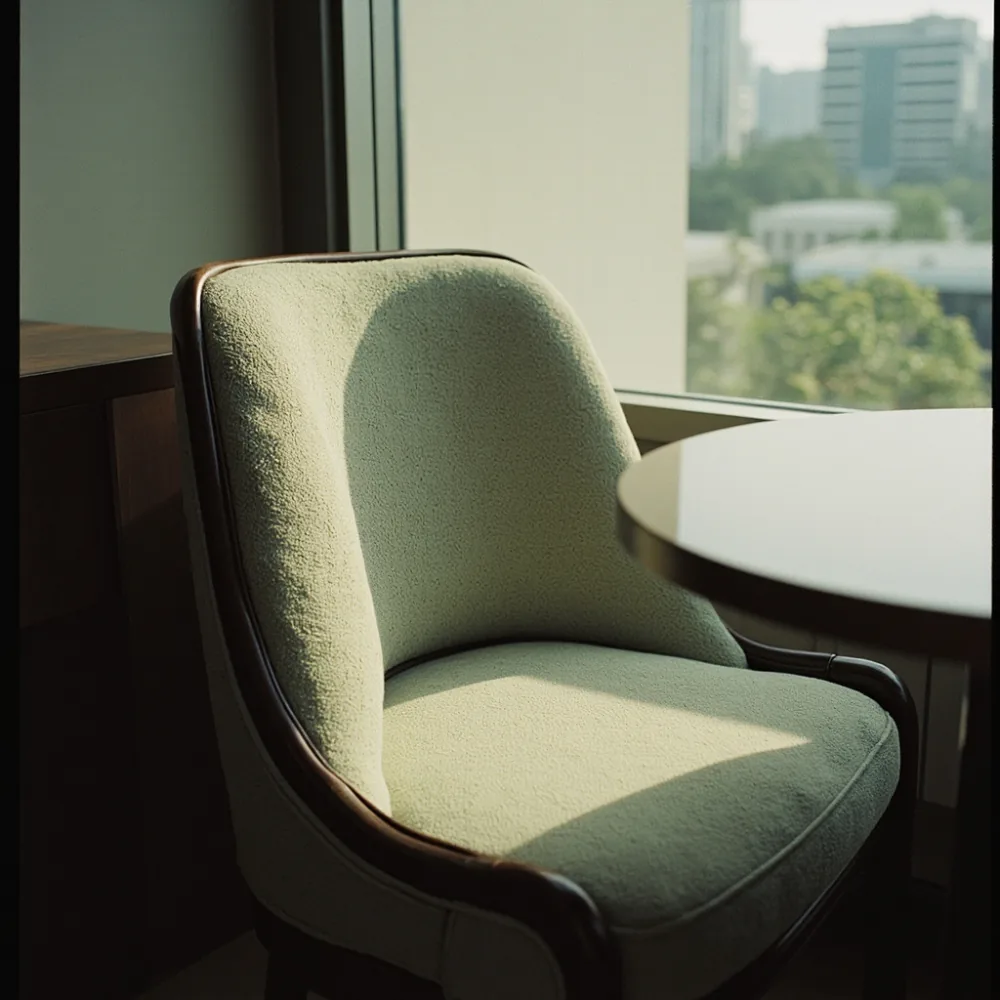
For an accent chair used at the dining table, I look for 25–30 cm between the front of the seat and the table edge. That gives knees and thighs room without making the chair look detached from the table. More than 35 cm can make it difficult to reach the tabletop, especially for shorter users.
The chair should slide under the table without forcing it. A tight fit is not a dealbreaker if the table legs are inset and the chair has no arms, but I would avoid a wide upholstered chair where space is limited. If the table has an apron, make sure the chair back and arms can clear it during movement.
- Standard dining table height: 73–76 cm
- Ideal knee clearance: 25–30 cm
- Common seat depth: 42–48 cm
- Allow at least 55 cm of table edge length per chair
Small space furniture works best when the dimensions are honest. A chair that tucks in fully, weighs less than about 10 kg, and can be moved by one person is usually easier to live with in an HDB flat than a heavy lounge chair.
Which materials work best for Singapore’s humidity?
Understand solid wood movement
Choose fabrics that can be cleaned
Protect metal and leather parts
Singapore’s humid conditions mean that natural materials need sensible care. Solid wood furniture can work well here, but it should not be treated as moisture-proof. Wood expands and contracts with changes in humidity, so a small movement at a joint or door is not necessarily a fault. The key is stable indoor conditions, sensible ventilation, and regular care.
For upholstered chairs, I prefer tightly woven polyester, performance linen, or removable covers. Very light colours show dust and stains more readily, while a loose-weave fabric may snag. Keep the chair away from direct afternoon sun through a west-facing condo window, and use blinds or curtains where possible.
- Keep indoor relative humidity roughly between 50% and 65% when practical
- Wipe solid wood with a slightly damp cloth, then dry it promptly
- Use a soft brush on woven upholstery
- Condition leather every 6–12 months if the supplier recommends it
- Check that loose covers can be washed in Singapore
For a durable furniture choice, pay attention to the finish, joints, and under-seat construction rather than the material label alone. A solid wood chair with good joinery and a proper finish is usually preferable to a thin chair made to look substantial.
Is a solid wood accent chair worth the higher price in Singapore?
Compare construction, not just wood species
Understand what the price includes
See the chair before buying
For a chair that will be used daily, solid wood can be a worthwhile investment, particularly when the frame uses solid timber in the load-bearing parts and the joints are mechanically fixed or well made. Veneer can still be sensible for curved backs and decorative surfaces; the question is whether the construction is stable and the finish is durable.
I do not judge an accent chair by the thickness of one visible panel. I look at the legs, rails, seat support, and underside. A chair that rocks slightly, has loose joints, or has a finish that chips easily is poor value even if the timber name sounds premium.
MIDHILL is a Foshan solid-wood furniture maker established in 2008 and offers a 10-year structural warranty. That type of structural coverage is useful when comparing products, though I would still inspect the sample, confirm the warranty terms, and check whether the quoted chair is fully solid wood or partly upholstered.
How do I compare accent chair prices without getting misled by discounts?
Compare like-for-like specifications
Account for delivery and assembly
Use a practical budget range
Accent chair Singapore prices vary widely because some listings include only the chair, while others bundle delivery, assembly, fabric protection, or a longer warranty. I compare the final delivered price and confirm whether the chair will be carried to the living room rather than left at the doorstep.
As a rough guide, a compact dining-style accent chair is commonly SGD 180–450, a better upholstered model runs SGD 350–900, and a crafted solid-wood lounge chair may be SGD 600–1,600. Custom furniture can cost more once dimensions, timber, finish, and upholstery are specified.
| Purchase scenario | Expected price | Typical delivery time | Questions to confirm |
|---|---|---|---|
| Ready-stock local chair | SGD 180–600 | 5–14 days | Is assembly included? |
| Made-to-order chair | SGD 450–1,300 | 4–8 weeks | Are dimensions and finish confirmed? |
| Bespoke solid-wood chair | SGD 900–2,500+ | 6–12 weeks | What is covered by the warranty? |
Be cautious with an unusually low price. The product description may omit delivery, legs, cushions, or protective packaging. I also avoid buying without seeing the chair, reading the full dimensions, and checking the seller’s after-sales contact.
Can an accent chair fit into a small HDB or condo home?
Use the chair as a functional seat
Choose visual lightness
Plan delivery access
Yes, if the chair is chosen for a clear job. It might provide extra seating near a dining table, serve as a bedside chair, create a reading spot, or fill an awkward corner beside a sofa. I avoid buying an accent chair simply to match a catalogue image if the room has no real use for it.
In an HDB flat with a compact living room, a narrow wooden or upholstered chair with a seat width below 50 cm is often easier to accommodate. In a larger condo, a wider lounge chair may work beside a window or beside a dining table. The district does not change the furniture dimensions, but older buildings and newer towers can differ in lift size and access.
- Measure the lift door and cabin before ordering a wide chair
- Check whether the chair can be assembled on site
- Protect floors with felt pads or a moving blanket
- Choose a removable cushion if the room is used by children or pets
For narrow layouts, I prefer chairs with open sides and a slim profile. They take up less visual space and can be moved when guests arrive. A chair that is too heavy may technically fit but become frustrating to reposition every week.
How long should delivery and assembly take in Singapore?
Confirm stock and production status
Ask about lift delivery
Inspect the chair on arrival
Local ready-stock items may arrive in 5–14 days, but the supplier’s estimate can be affected by the delivery date, stock level, and whether the chair is assembled before dispatch. Made-to-order pieces commonly take 4–8 weeks; a bespoke design may take 6–12 weeks. I always ask for the estimated handover date in writing, not just the processing time.
Some furniture retailers offer free delivery within Singapore, while others add SGD 30–100 for a standard drop-off and SGD 80–200 or more for upstairs delivery and assembly. Those figures vary, so the quote should state exactly what is included.
- Confirm whether delivery is curbside, doorstep, or room-of-choice
- Ask whether assembly is included
- Provide the floor level, lift access, and parking notes
- Request a photo of the packed chair before shipment
- Inspect corners, legs, upholstery, and hardware on arrival
For deliveries to districts such as Jurong East, Tampines, Woodlands, or Punggol, check whether the route includes service areas or surcharges. In central areas such as Orchard or Novena, parking and loading access may need extra coordination. The supplier should tell me if the delivery team cannot enter the lift lobby.
What should I check before ordering an accent chair online?
Check the complete specifications
Look for independent feedback
Confirm after-sales support
I look for the complete dimensions, including the width across the arms and the height from floor to back. Product names can be misleading, so I check the drawing and the actual chair rather than relying on words such as “compact” or “lounge”. The seat height should suit the main users; around 43–47 cm suits many adults, while children and shorter adults may need something lower.
For comfort, I consider the seat depth, back angle, arm position, and firmness. A deep seat may look luxurious but can leave shorter users sliding forward. A firm seat that supports the back is often more useful for meals than a very soft chair.
- Look for clear photos of the underside and joints
- Read recent reviews about delivery and after-sales service
- Confirm timber species, upholstery composition, and finish
- Check the warranty period and what it excludes
- Ask about replacement cushions and spare parts
If the chair is custom-sized, I provide room measurements and a photo of the intended position. Custom furniture reduces fit risk, but only if the supplier can translate those measurements into a well-proportioned chair. A sketch, scale reference, or site visit is useful before approving a non-standard design.
How do I keep an accent chair looking good in a humid climate?
Create a simple care routine
Prevent direct heat and sunlight
Deal with spills immediately
I use a simple routine rather than waiting for visible damage. Once a week, I dust the frame and vacuum or brush the seat. For wood, I dry the surface after cleaning and keep it away from air-conditioning vents that can cause rapid moisture changes. I do not place damp items directly on the seat or leave wet cushions against the frame.
Spills should be blotted rather than rubbed. For fabric upholstery, I follow the care label and test any cleaner in an inconspicuous area. For leather, I avoid alcohol-based cleaners unless the maker approves them. If a family eats regularly in the room, a washable or replaceable seat cover is often more practical than a delicate pale fabric.
- Clean spills within a few minutes
- Rotate the chair occasionally if sunlight reaches it
- Use coasters and small trays on wooden arms
- Check under the seat for dust and pests
- Arrange a professional clean or fabric refresh every 12–24 months as needed
Move the chair slightly away from the wall when the room is very humid, but only where ventilation is reasonable. Durable furniture is not maintenance-free; it is furniture whose materials and construction suit regular use when cared for properly.
Frequently asked questions
What is the best accent chair size for a small Singapore living room?
A width of 45–55 cm and depth of 48–58 cm is often practical for an HDB living room. Leave 60–90 cm of clearance in front so the chair can be used without blocking the walkway. Measure the lift and doorways too, especially for wider upholstered or solid-wood chairs.
Are solid wood accent chairs suitable for Singapore’s humid weather?
Yes, with sensible care. Solid wood reacts to humidity, so keep it away from persistent dampness and direct sunlight, wipe spills promptly, and dry the surface after cleaning. Good ventilation, stable indoor conditions, and a sound finish help the chair remain stable over time.
How much does an accent chair cost in Singapore?
Expect roughly SGD 180–450 for a basic dining-style chair, SGD 350–900 for a well-finished upholstered model, and SGD 600–1,600 for many solid-wood lounge chairs. Custom or bespoke versions may cost SGD 900–2,500 or more. Compare delivered prices and confirm what is included.
How long does accent chair delivery take in Singapore?
Ready-stock chairs may take about 5–14 days, while made-to-order products commonly require 4–8 weeks and bespoke designs 6–12 weeks. Ask whether the estimate includes production, delivery, and assembly. Also confirm whether the service covers room placement or only doorstep delivery.
Should I buy an accent chair online without seeing it first?
I prefer to see the chair or at least request detailed photos of the frame, underside, finish, and seat. Check full dimensions, material composition, warranty coverage, and recent customer feedback. If the chair is custom-made, provide accurate measurements and approve a drawing before production begins.
Questions about sizing, fabric or delivery?
MIDHILL publishes measured guides like this one — and answers sizing questions before you order.
See the collection