Accent Chair Delivery in Singapore HDBs: What Actually Happens From Cart to Doorstep
Buying an accent chair online in Singapore looks deceptively simple. You tap, you pay, you wait. Then a 1.2-metre-tall box arrives at your Tampines HDB block, and suddenly the lift door, the corridor turning radius, and the legs of your new chair all become very real engineering problems. I spent the last month talking to three people who went through this exact sequence: a Bedok couple who ordered an accent chair and a small marble side table, a Punggol executive who added an accent chair to a room already holding a 1.8 m solid wood bed frame, and a colleague at our Foshan workshop who flew over to audit two local consignments for MIDHILL.
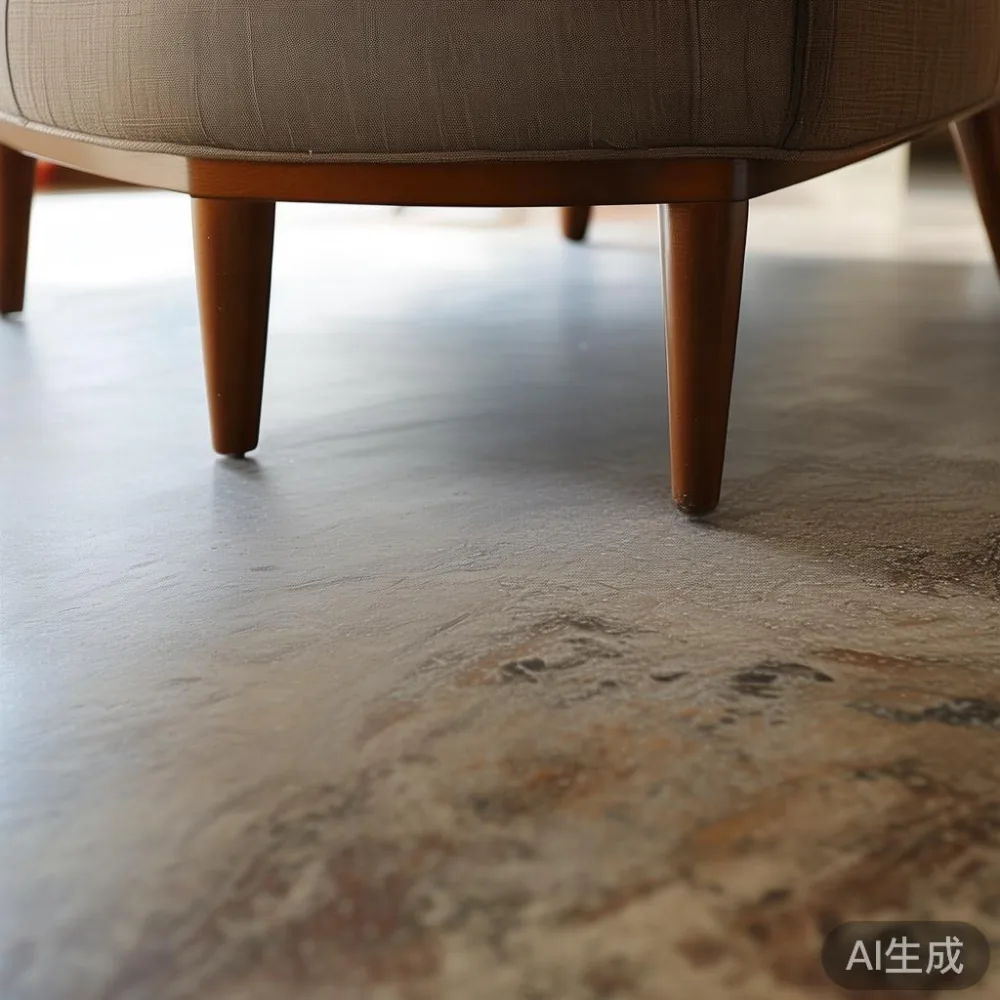
What does "delivery and assembly" look like for an online accent chair in Singapore?
In practice, an online accent chair purchase splits into four physical moments: warehouse pick, sea or air freight, last-mile courier, and on-site handling. The first three are the seller's problem. The fourth is yours. Most shoppers at Singapore suburb ung about the first three and underestimate the fourth. A typical accent chair from a Foshan solid wood maker like MIDHILL ships in a corrugated carton roughly 65 cm x 28 cm x 28 cm, weighing between 9 kg and 14 kg depending on the frame (rubberwood, ash, or oak) and whether the seat is fabric, leather, or a bouclé-style weave. Two chairs in one order usually means a single 70 kg consignment on a 120 cm x 60 cm pallet, which is the kind of thing that makes a standard HDB service lift feel suddenly small.
The sea route from Guangdong to Singapore takes roughly 12 to 18 door-to-door days for consolidated freight, or 6 to 9 days if the seller airships at a surcharge of around SGD 80 to SGD 140 per chair. MIDHILL consolidates most of its South-east Asia orders through a Tuas bonded warehouse, then hands off to a local 3PL for the final leg. From order confirmation to "the carton is at your door" the realistic calendar is 10 to 22 working days, and that is before you account for the optional white-glove service that adds another SGD 60 to SGD 120 per flight of stairs without a service lift access.
Will the box fit into my Tampines or Bedok lift access?
This is the single question I get asked most, and it is also the question the listing page almost never answers. A standard HDB passenger lift at a block in Bedok measures roughly 1.1 m wide by 1.4 m deep with a door opening of about 0.8 m. A service lift, where it exists, runs closer to 1.5 m by 1.8 m with a 0.9 m door. The carton dimensions I quoted above clear both, but only if the chair is shipped unassembled with legs detached. A pre-assembled accent chair can balloon the box to 75 cm x 75 cm x 80 cm, which still fits a passenger lift on paper but leaves zero margin for the second person who usually helps carry it.
Corridor turning radius is the hidden trap. HDB corridors at older blocks in Bedok and Tampines turn through a few tight bends before your unit entry door. I watched my colleague at MIDHILL try to wheel a fully assembled accent chair on a flat trolley through a 1980s corridor at Block 642 Tampines Street 62. The chair cleared every straight run, then refused to pivot at the 1.4 m inside bend outside the lift. They had to lift it, not wheel it, for about 6 metres. That is the moment when "two-person delivery" stops being a marketing line and starts being a physical need.
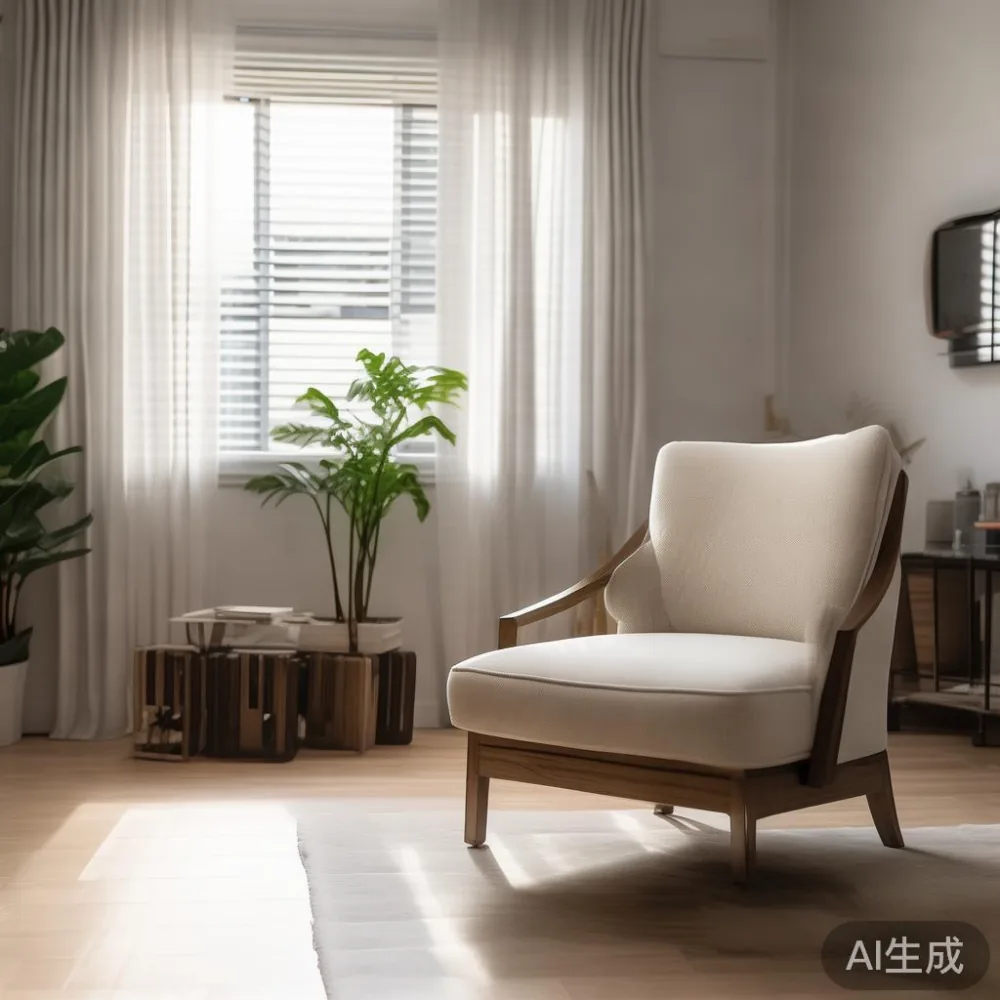
How is an accent chair actually assembled once it reaches my door?
Almost every modern accent chair ships in an "RTA-friendly" configuration: seat, backrest, two armrests, four legs, and a small hardware pack with four M8 bolts and an Allen key. Total assembly time for someone who has not done it before sits between 12 and 25 minutes. My Punggol friend did hers on a Sunday morning in 18 minutes flat, working on top of the cardboard so she would not scratch the parquet. Two things slowed her. The Allen key MIDHILL packs is 4 mm, which is the right size but quite slippery against the bolt head if your hands are oily from breakfast, so a cloth helps. And the legs are not pre-threaded; you have to spin each bolt about 14 turns by hand before the tool will catch.
For heavier pieces in the same shipment, the picture changes. A 1.8 m solid wood bed frame from the same maker usually arrives in two cartons totalling about 48 kg, and the slat-rolling part takes 35 to 50 minutes for two adults. A 1.4 m solid wood dining table can weigh 32 kg to 60 kg depending on whether the top is single-slab or finger-jointed, and it almost always needs two adults to flip it onto its legs without flexing the apron. If you are ordering multiple items together, ask the seller in writing whether assembly is free for every piece or only for the largest one. Several local 3PLs in Singapore charge SGD 25 to SGD 45 per additional item.
What does the price really look like once GST, delivery, and assembly are added?
Let us run a realistic Singapore basket. An accent chair with a solid ash frame and a linen-blend seat from a Foshan maker lists at around SGD 459 before tax. Add 9% GST (the prevailing rate for 2026 in Singapore) on the landed value and you are at SGD 500. Local last-mile delivery inside mainland Singapore is typically free above SGD 350, with a surcharge of SGD 30 to SGD 60 for Sentosa, Tuas shipyard addresses, or restricted-lift CBD towers. Two flights of stairs without a service lift at a walk-up in old Bedok add SGD 25 per flight, so SGD 50 round. Assembly is included at zero cost by most direct makers because the chair ships RTA. The same basket with a small marble table (around SGD 689) and a nightstand (around SGD 329) lands at roughly SGD 1,620 all-in, with marble-table assembly taking another 15 minutes because the top is bolted to the base via four threaded studs.
One thing worth flagging: GST is now collected on the full landed value including freight and any assembly fee, not only on the item price. That nudged my colleague's audit basket up by about SGD 38 on a SGD 1,580 order. It is a small number, but it is the kind of small number that, multiplied across a wardrobe, a bed frame, and a dining table, can shift your transit order by SGD 100 to SGD 180.
Is Italian light luxury sofa worth it when you live in a 4-room HDB?
This is the second question I hear most, and it has nothing to do with snobbery and everything to do with footprint. Italian light luxury for the dining room usually means a marble table on a slim metal or solid wood base, paired with chairs that have curved backs and tapered legs. The aesthetic translates cleanly to a compact dining zone in a Punggol BTO if you keep the table under 1.4 m and the chairs under 55 cm deep. The price premium for the look runs around 35% to 60% over a comparable post-modern light luxury piece in the same wood, mostly because the marble is real and the chair frames use solid ash or beech instead of rubberwood.
For an accent chair specifically, Italian light luxury for office and light-aux-home settings usually means a higher seat height (around 46 cm rather than 42 cm), a firmer seat fill, and a more architectural silhouette. Whether that justifies the premium depends on three numbers: how often you sit in it, how long you keep your furniture, and how the piece fits your broader bedroom or living-room scheme. A solid wood sofa in the same light luxury vocabulary sits at around SGD 2,400 to SGD 4,800 in the Foshan-to-Singapore market, against SGD 1,400 to SGD 2,200 for a similar Modern sofa frame in the same factory tier, which is exactly the kind of comparison people are making when they ask about American sofa vs Modern sofa frames for small living rooms. For a 4-room flat where the accent chair will see daily use for the next 8 to 12 years, the upgrade works out to under SGD 0.40 a day over its life.
How to choose Italian light luxury bed frames and dining tables without overpaying
Italian light luxury in a bedroom usually shows up as a low-platform bed frame in solid ash or walnut, with a channel-tufted headboard and brushed brass feet. In a 4-room HDB master bedroom at Punggol, the practical maximum is a 1.6 m queen, because a 1.8 m king consumes the wall-to-wall clearance that you need for a 60 cm nightstand on each side. A solid wood wardrobe of 1.8 m by 0.6 m by 2.1 m is the standard pairing, and it weighs around 95 kg fully assembled, which is one reason local 3PLs in Singapore charge a separate fee for wardrobes even when the bed frame is free-shipped.
How to choose Italian light luxury bed frames without overpaying is mostly a question of three trade-offs. First, real marble versus marble-look sintered stone: the former weighs 28 kg per square metre and the latter 18, which changes whether your existing floor can take the wardrobe and the marble table without point loads. Second, solid wood versus engineered wood for internal wardrobe panels: solid wood adds about SGD 600 to SGD 1,200 but pays you back across the 10-year warranty window because the panels do not sag under clothes weight. Third, post-modern light luxury versus strict Italian light luxury for dining room sets: the former typically uses sintered stone and engineered tops at SGD 1,400 to SGD 2,200 for a 1.4 m table, while the latter pushes into solid marble at SGD 2,600 to SGD 4,200 for the same footprint.
Modern sofas, accent chairs, and small living rooms: a sizing checklist that actually works
Modern for small living room is a phrase that gets thrown around, but the physical rules are simple. Your sofa bed, or in HDB-speak your 3-seater, should not exceed 2.1 m in outer width if you want a 90 cm walkway past it. A solid wood sofa in the American light luxury vocabulary typically sits at 2.0 m to 2.2 m, while a Modern sofa frame in the Foshan tier runs at 1.85 m to 2.05 m. The 15 cm difference is the difference between a clear corridor and a daily bruise.
For the accent chair, the same rule applies in miniature. Keep the chair under 75 cm wide, under 80 cm deep, and under 90 cm tall if you want it to read as an accent rather than a second seat. If you want a swivel accent chair for a corner, add 10 cm to every dimension and check that the swivel arc does not hit your TV console. My colleague from the Bedok delivery actually had to swap a swivel accent chair for a static one because the 360-degree arc clipped the marble table by about 2 cm, which sounds trivial until you realise the marble corner is the part that chips first.
What does the warranty actually cover once the carton is open?
A 10-year structural warranty from a Foshan maker like MIDHILL covers frame integrity: cracked rails, loose joinery, broken dowels, and sagging slats on a bed frame. It does not cover fabric pilling, leather fading, or marble staining. Lifetime refinishing is a separate service that usually means sanding and re-oiling a solid wood dining table or wardrobe at a fixed fee (around SGD 180 to SGD 320 per piece) every 7 to 10 years. Free shipping above a SGD 350 threshold is the norm at the direct-maker tier, while marketplaces often charge SGD 40 to SGD 90 for the same leg.
The 14-day return window in Singapore under most direct-maker policies lets you return an accent chair for a full refund if it has not been assembled and the carton is unopened. Once you have bolted on the legs, the chair is classed as "used" and the return drops to store credit. That is why the pre-assembly inspection matters: open the carton in the courier's presence, photograph the inner and the outside legs, photograph the seat pan, and photograph the bolt pack. It takes 90 seconds and saves you a SGD 60 to SGD 120 collection fee if something is wrong.
The honest timeline from cart to chair-in-corner
For an order placed on a Monday morning from Tampines, Bedok, or Punggol, expect the carton to reach your corridor around the second or third Monday after. Sea freight plus local 3PL inside mainland Singapore runs 10 to 14 working days for in-stock pieces. Custom pieces (a non-stock bouclé colour, a non-stock marble vein, a non-stock solid wood stain) add 18 to 26 working days. Air-freighted custom pieces land in 8 to 12 working days at a typical surcharge of SGD 90 per chair. Assembly, as covered above, takes 12 to 25 minutes for one adult on an accent chair and 35 to 50 minutes for two adults on a bed frame.
Total calendar from cart to chair-in-corner: 12 to 30 working days, with the realistic midpoint sitting at 18. Add a buffer of three working days for HDB corridor access permissions if your block requires a delivery slot booking through the town council, which several newer Punggol blocks now mandate. That buffer is the difference between a mover and a missed slot, and it is the kind of small detail that turns an accent chair delivery from a logistical headache into a half-hour Sunday project.