Caring for a Lacquered Accent Chair in Singapore's Tropical Climate
I delivered an ash-framed accent chair to a fourth-floor walk-up in Bedok last month, and the customer asked me the same question I hear almost every week in Singapore: "My balcony door is open eleven hours a day and my air-con runs at 24 degrees. Will the lacquer turn cloudy?" The honest answer is that a properly sealed solid wood accent chair will handle equatorial humidity, but only if the owner understands what the finish is doing and what the local environment is doing to it. After sixteen years of shipping lacquered seating from Foshan to Tampines, Punggol, and Bukit Timah, I have seen the same handful of avoidable mistakes cause the same handful of avoidable marks. This guide is written for Singapore owners of lacquered furniture — accent chairs, dining tables, nightstands, wardrobes, and bed frames — who want to keep that mirror-gloss surface looking factory-fresh without paying for a professional restorer every other year.
Why Singapore's Climate Is Harder on Lacquer Than London or Sydney
Singapore sits roughly one degree north of the equator. Indoor relative humidity in a non-air-conditioned HDB flat typically sits between 72% and 84% for most of the year; with a window-unit or a Mitsubishi Starmex running, you can pull that down to 55%–65%. Lacquer — whether it is the seven-coat piano-black finish on a Chinese-made accent chair or the open-pore matte finish popular in Japanese-influenced interiors — is a film-forming coating. The wood underneath expands and contracts as humidity swings, and the lacquer expands and contracts at a slightly different rate. In a temperate climate where indoor RH moves between 40% and 60% across the seasons, the stress is gentle. In Singapore, where afternoon thunderstorms can swing the room by 15 percentage points in an hour, that stress is constant. Add corridor AC drafts when the HDB lobby door is propped open, lift-well temperature changes between levels, and the daily UV load from a west-facing window in a Punggol EC, and you have a finish that is asked to do a lot.
I keep a hygrometer in every client's home during delivery. Last quarter, a customer in a 980-sqft condo near Tampines West was surprised that her bedroom read 78% at 11pm with the door closed and the air-con on. The wardrobe she had bought from us two years earlier was fine, but the lacquered nightstand next to her reading lamp had a faint dull patch — caused by a small humidifier she ran every night for her sinuses. The cure was not a new finish. The cure was moving the humidifier 2.5 metres away and dropping the bedroom target to 60% RH.
What "Lacquered" Actually Means on a Solid Wood Accent Chair
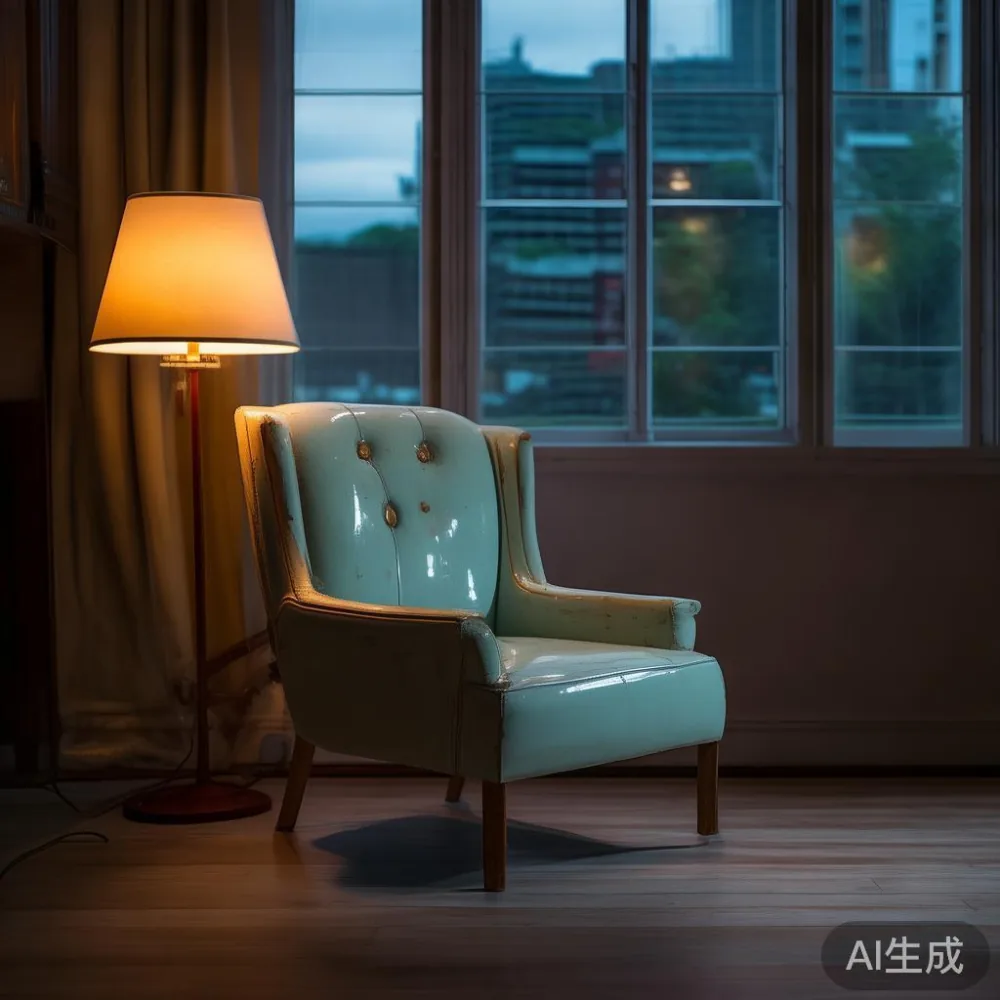
When MIDHILL lists an accent chair as "lacquered," the marketing language usually refers to one of three finishes applied over an ash, oak, or rubberwood frame:
1. Nitrocellulose lacquer — the traditional piano finish. Soft under fingernails, deep gloss, sensitive to alcohol and acetone. Common on French light luxury pieces with cabriole legs and curved backrests.
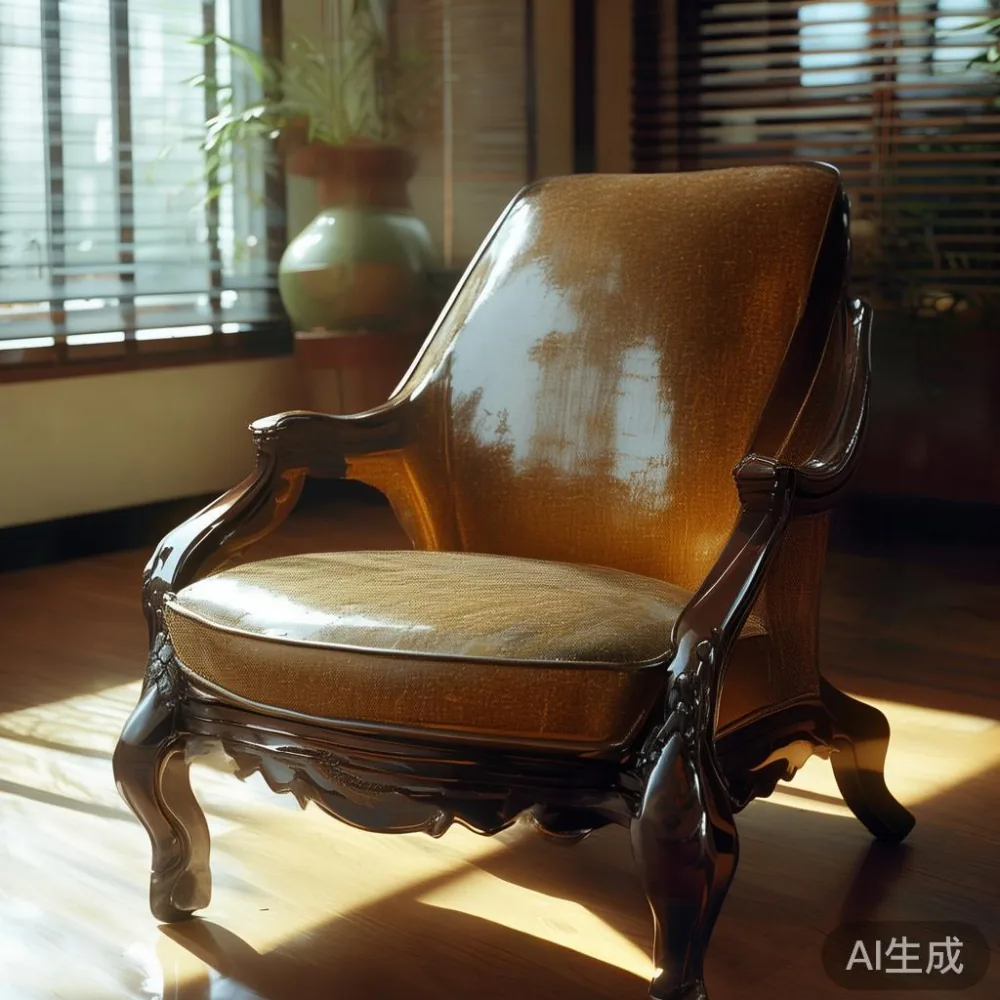
2. Polyurethane (PU) lacquer — harder, more chemically resistant, slightly less depth. The default for most American light luxury dining table and bedroom ranges shipped from Guangdong.
3. Acid-curing (conversion) lacquer — very hard, very glossy, often used on post-modern light luxury accent chairs where the brand wants a near-mirror reflection.
The solid wood underneath matters more than people think. A kiln-dried ash frame at 8%–10% moisture content will move less than a rubberwood frame at 12% in the same room. When you see a 10-year structural warranty on a piece of seating, the warranty is almost always on the joinery and the wood, not the lacquer film. The lacquer is a consumable. Treat it like the paint on a car: durable, serviceable, but eventually it will want a refresh.
The Singapore-Specific Care Routine: A 7-Day, 30-Day, and Annual Plan
For a lacquered accent chair in a Singapore HDB or condo, three time-frames matter.
Weekly (5 minutes): Dust with a dry, lint-free microfibre cloth, following the grain direction. A 30cm x 30cm microfibre cloth costs about SGD 4 at any neighbourhood provision shop. Do not use feather dusters — they redistribute dust into the joints and can leave tiny scratches on a high-gloss film. If the chair sits under a ceiling fan, the dust load is roughly double, so wipe twice a week.
Monthly (15 minutes): Damp-wipe with a cloth barely moistened with water and a single drop of pH-neutral dish soap (the kind that runs about SGD 6 for 800ml at FairPrice). Wring the cloth until no water drips from it — this is non-negotiable. Water that beads on a PU lacquer can leave a permanent ring in under forty minutes if the room RH is above 80%. Dry immediately with a second microfibre cloth.
Quarterly (30 minutes): Apply a wax-based furniture polish that contains no silicone. I prefer a paste wax in a tin — about SGD 28 for 200ml at a specialty hardware store in Jalan Besar — applied with a soft cloth, allowed to haze for eight minutes, then buffed off. Silicone polishes (the aerosol shine sprays) seep into the wood through micro-pores in the lacquer and create "fish-eye" the next time the piece is refinished. For an accent chair that costs SGD 850 to SGD 2,400, spending SGD 28 every three months on a real wax is the cheapest insurance you can buy.
Every 5–7 years: A professional refinish. MIDHILL ships every piece with a lifetime refinishing service — for a small logistic fee you can ship the chair back to the Foshan workshop, have the old lacquer chemically stripped, the wood re-sanded to 320-grit, and four fresh coats of PU applied. Customers in Singapore typically bundle three or four pieces (a bed frame, a dining table, two accent chairs) into a single container to share the freight cost.
Five Habits That Will Ruin a Lacquered Accent Chair in Under a Year
1. Placing the chair 30cm from an open balcony door. The direct path of a sea-breeze carries salt ions and water vapour. Salt crystals are hygroscopic — they pull moisture out of the air and onto the lacquer, accelerating micro-cracking. Keep lacquered seating at least 1.5m from any open balcony or window in a Punggol or East Coast unit.
2. Using a wet tea towel to wipe a spill. The single most common ring-mark on a Singapore accent chair is the kopi-O ring left by a well-meaning helper who grabbed a damp cloth. Use a dry cloth first, then a barely-damp cloth, then a dry cloth. Three-step, not one-step.
3. Letting a steamer or humidifier run within 2m of the chair. The hot vapour softens PU lacquer temporarily and embeds minerals into the film.
4. Sliding the chair on a marble table edge or stone floor. Stone is harder than lacquer. A single 4kg accent chair dragged 20cm across an unpolished marble surface can leave a 12cm scratch that buffs out only with 1500-grit paper and a fresh topcoat.
5. Storing the chair in a non-air-conditioned storeroom during a long renovation. I have visited three BTO renovation projects in Sengkang this year where the owners had parked their accent chairs in a ground-floor storeroom without AC for six weeks. Two of those chairs had to be stripped and re-finished.
What is the best bookshelf for a small apartment?
For a Singapore HDB or condo under 1,000 sqft, the most space-efficient bookshelf is a solid wood ladder-style unit between 140cm and 170cm tall, 60cm wide, and 30cm deep, with a 4° rear lean and wall-anchor hardware included — this configuration uses floor space efficiently, leaves the corridor walkways (typically 1.05m–1.2m wide in newer BTOs) clear, and resists tropical humidity better than flat-pack MDF because the timber can move without splitting the joints. If you already own a lacquered accent chair and want the bookshelf to match the finish, ask the supplier for the same colour code and sheen level rather than buying from a different batch.
How to Spot a Lacquer Defect Before You Accept Delivery
Singapore customers have the advantage of a 14-day return window. Use it. On the day of delivery, before the delivery team leaves, run a phone torch across the surface at a 25° angle. Look for:
• Orange peel — a dimpled texture caused by incorrect spray-gun pressure. Cosmetic, not structural. Often accepted with a 5% credit.
• Cratering — small circular depressions, usually from airborne dust during spraying. More visible on dark finishes.
• White blush — a milky haze on PU lacquer, almost always caused by humidity in the spray booth. Rare in factory-fresh pieces from established Foshan makers but worth checking on a unit that has been warehoused in Singapore for more than sixty days.
• Seam telegraphing — you can see the joint line of the underlying wood through the lacquer. This is normal on open-pore finishes and a defect only on high-gloss piano-black finishes.
Photograph any issue against a white sheet of A4 paper for scale, send it to the supplier the same evening, and keep the original foam wrap until the dispute is resolved. MIDHILL ships from Foshan with a paperless packing list and a ten-year structural warranty, and the warranty team responds to Singapore claims inside two working days.
Refinishing, Re-Lacquering, and When to Ship Back to Foshan
A common question from owners of older pieces is whether they can re-lacquer locally. The answer depends on the piece. A dining table or wardrobe top can usually be re-coated by a Singapore carpentry shop for between SGD 180 and SGD 420, depending on the surface area and the number of coats. An accent chair with turned legs, curved back splats, and joinery that has to be masked off is harder — labour often exceeds the cost of a factory refinish. That is why a lifetime refinishing service from the original maker makes economic sense: you ship a 6kg–9kg accent chair in a 70cm x 70cm x 80cm carton for about SGD 65 sea freight plus SGD 45 door-to-door handling in Singapore, and you receive back a piece that looks like new.
If you are buying a new lacquered piece and you intend to keep it for ten years, ask whether the maker offers a lifetime refinishing service and what the round-trip cost is. The answer will tell you more about the brand than any catalogue photograph. A solid wood sofa or bed frame from a maker who refinishes their own product is a maker who expects the product to last.
Pairing a Lacquered Accent Chair with Other Pieces in a Singapore Home
Design cohesion matters in compact HDB living rooms where the accent chair often sits within 2m of the dining table, the marble table by the entryway, and the nightstand in the adjacent bedroom. A lacquered accent chair in a warm tone pairs naturally with an oak dining table and a marble table top in cream or travertine; a black piano-lacquer chair reads as a deliberate accent against a light oak bed frame and a pale-walnut wardrobe. Post-modern light luxury styling — the look popular in newer Punggol and Tengah BTOs — favours mixed materials: a PU-lacquered accent chair next to a brushed-brass floor lamp and a boucle ottoman. American light luxury, by contrast, leans into deeper stains and matte lacquers, which hide Singapore dust better than high-gloss but show fingerprints more readily.
Whatever combination you choose, the rule is consistent: keep the lacquered surfaces at least 1.5m from any open window, run a dehumidifier in the living room during the November-to-January wet phase, and use coasters on every adjacent marble table. A 6-piece lacquered set (two accent chairs, a dining table, a bed frame, a wardrobe, and a nightstand) treated with this routine will outlast two cycles of air-con refurbishment and still command a resale price of 45%–55% of original after eight years.
Quick-Reference Checklist for Singapore Owners
• Indoor RH target: 55%–65%. Buy a SGD 18 hygrometer.
• Distance from open balcony: minimum 1.5m.
• Distance from humidifier or steamer: minimum 2m.
• Weekly dust: dry microfibre, with the grain.
• Monthly clean: damp (not wet) cloth, pH-neutral soap, dry immediately.
• Quarterly wax: paste wax, no silicone.
• Avoid: aerosol silicone polishes, wet tea towels, steam mops, direct sun between 1pm and 4pm.
• Return window: inspect on delivery day, photograph defects against white paper, email within 48 hours.
• Refinishing cycle: every 5–7 years, or sooner if cloudiness appears.
A lacquered accent chair is one of the few furniture purchases where daily habits matter more than the original price tag. Spend ten minutes a week on it, spend SGD 28 a quarter on real wax, and the finish that greeted you on the day the lift doors opened in Tampines will still be there the day you pass the chair on to a younger cousin in her first BTO.