Accent Chair: How to Match an Accent Chair to a Warm Minimal Interior
A warm minimal interior does not need to feel sparse. It needs balance: pale walls, restrained storage, clean circulation routes, and one or two pieces with enough character to hold the eye. In many Singapore homes, the accent chair is that character. Whether it sits beside a solid wood sofa in a Tampines HDB flat or frames a compact dining table in a Punggol condo, it can soften straight lines without adding visual clutter.
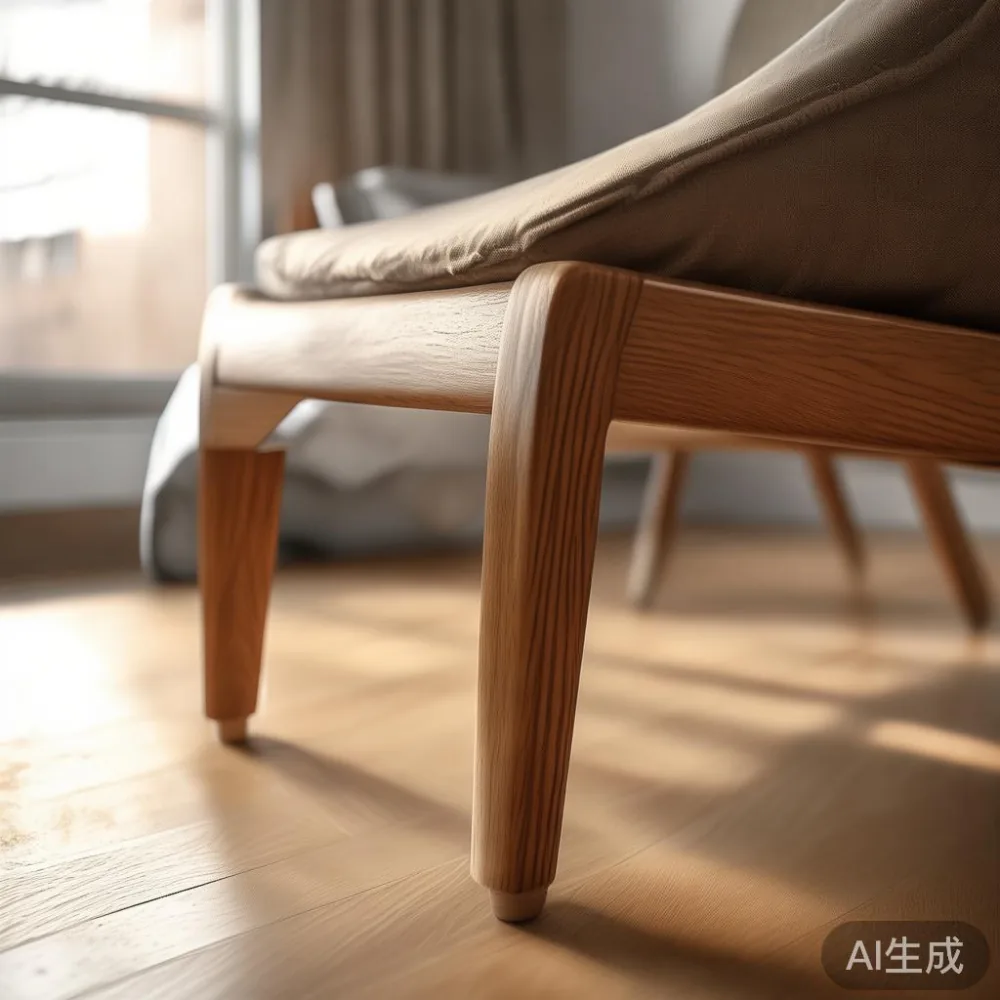
Singapore makes scale unusually important. A standard HDB living room may be only 25–35 sqm, while compact condo layouts can have a 180–220 cm living-room width. Lift doors commonly measure about 90–100 cm wide, and corridor clearances in older blocks can fall below 120 cm. That makes chair dimensions, weight, and removable legs practical matters, not afterthoughts. The goal is to select an accent chair that feels generous in the room but can still enter the building, turn through the corridor, and fit beside the furniture already there.
<What makes an interior feel warm rather than stark?
Warm minimalism is disciplined but not clinical. Begin with a limited palette of 3–4 colours: warm white, oatmeal, pale oak, soft taupe, muted clay, and charcoal. The accent chair should usually repeat one of these tones or introduce a single controlled contrast. A rust seat against a cream wall is more cohesive than a chair combining turquoise, orange, gold, and black.
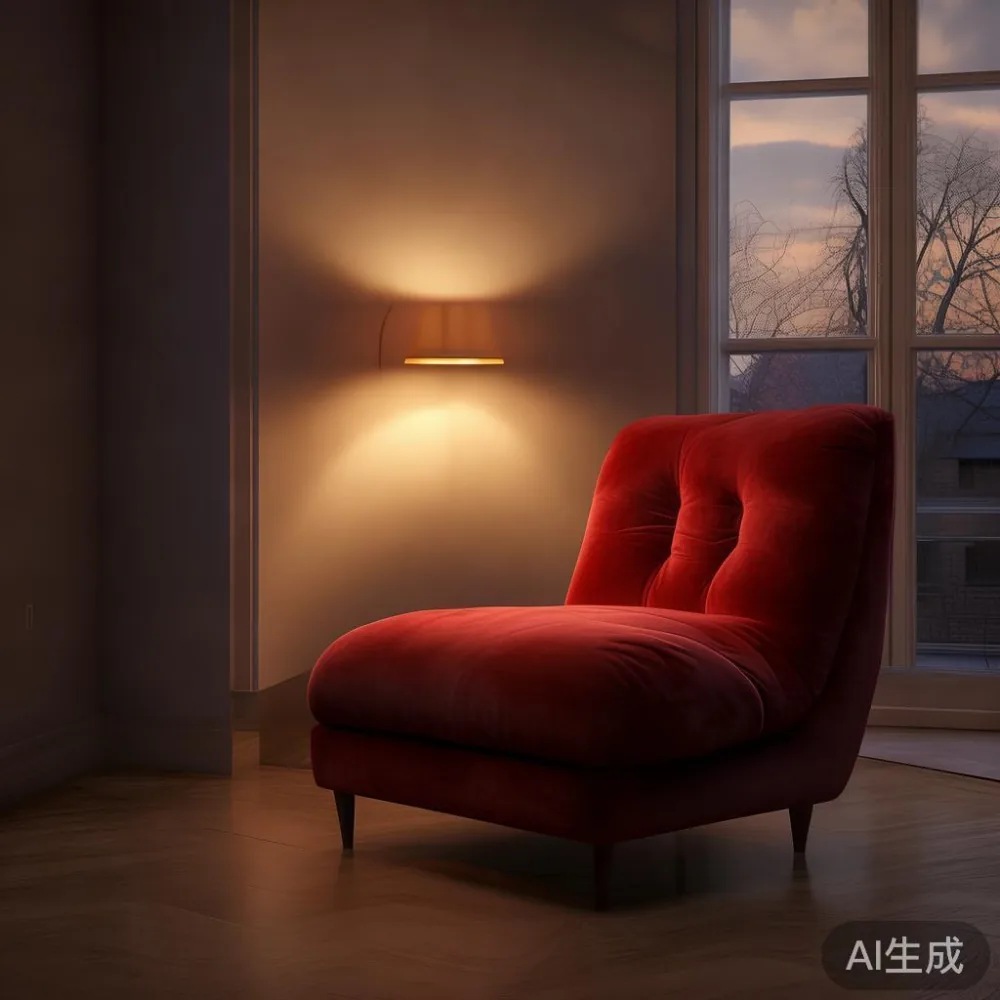
Material matters as much as colour. Solid timber, woven cane, linen, and matte ceramics introduce texture without demanding decorative objects. A room with a solid wood sofa, solid oak dining table, and a wool-blend accent chair can look restrained and still feel tactile. By comparison, too many glossy surfaces under warm-white lighting can make a modest flat appear visually harder.
Scale the chair to the seat it serves. As a general guide, an accent chair should be 42–50 cm wide, 78–92 cm high, and 40–48 cm deep. Lounge chairs may be 55–70 cm wide, while compact dining chairs are often 43–49 cm wide. The back should support the body rather than exist only for visual effect. Seat height around 43–46 cm also works well with most Singapore dining tables, whose tops commonly stand at 72–76 cm.
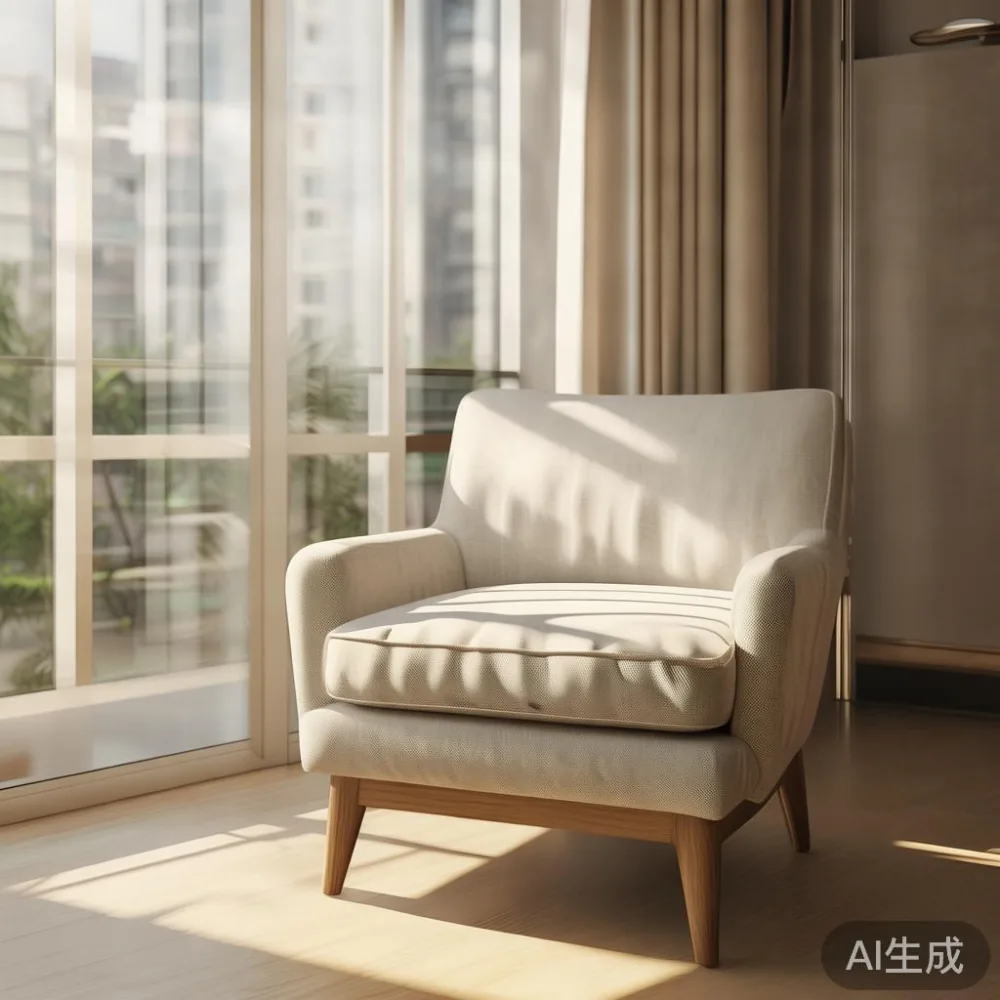
Keep visual weight low near windows and television walls. In a Bedok flat with a 3.2 m sofa, one 48 cm accent chair creates a useful rhythm without overwhelming the 3.2 m run. In a smaller 2.6 m room, choose a narrower chair around 42–46 cm and allow 10–15 cm of floor space on each side. That spacing prevents the chair from looking pinched and helps circulation through the main route.
Light-luxury design can support this effect. French light luxury often combines curved profiles, upholstered backs, and pale timber with subtle ornament. American light luxury tends toward deep comfort, clean upholstery, and substantial proportions. Post-modern light luxury suits a warmer minimal interior because it can mix a simple sculptural chair with softer curves and one deliberate accent colour. The labels should guide proportion and mood, not dictate a theme that ignores the room.
How do I choose the right accent chair for a small Singapore home?
Start with the chair's job. If it is primarily for reading, favour a supportive back, arm height near 58–65 cm, and a seat that does not compress too much. For occasional use beside a solid wood sofa, a slimmer frame can preserve space. For a dining setting, aim for a seat width of at least 43 cm and leave 60 cm of table edge space per person when possible.
Measure the room at three points: the longest wall, the narrowest approach to the chair, and the clearance beside the existing furniture. An armchair may fit easily across the room but fail if its 60–70 cm depth blocks a 90 cm corridor turn. A removable back or detachable legs can reduce the packed height and make transport easier, although it may limit the final recline or stability.
Weight is useful when a chair must be moved. A light accent chair around 12–18 kg can be repositioned by one person; a solid timber frame may weigh 18–28 kg. Confirm the floor condition and ask for felt pads, which reduce scratches and noise in an HDB bedroom. Near a balcony, choose moisture-resistant upholstery or a removable washable cover. Singapore humidity often ranges from 60–80%, so untreated solid wood should be protected from prolonged moisture.
Think about delivery before the final fabric choice. A compact boxed chair may fit a standard lift, while a fully assembled wide armchair may not. Measure the lift door, the lift car, the landing, and any tight turns. Allow at least 10 cm of manoeuvring margin around a bulky piece. If a chair is unusually wide, a knock-down frame with protected joints is often more practical than forcing a rigid frame into the building.
Which colours make an accent chair easiest to match?
Warm neutrals are the safest starting point because they bridge both natural timber and painted furniture. Cream, sand, mushroom, and light camel work with white walls and pale oak. A charcoal chair provides stronger contrast with a warm white room, while a muted olive or clay chair can make a beige-and-wood composition feel less predictable.
Avoid selecting the chair in isolation. Place a fabric sample beside the existing sofa, dining table, curtains, and floor. View it in morning daylight and under the room's evening lamp at roughly 2700K. If possible, compare the chair with 3–5 similar samples over 24 hours, since Singapore's light changes quickly. A colour that appears soft at noon can turn grey or yellow after sunset.
Pattern requires more restraint. One plain chair may carry stripes, checks, or a subtle woven texture. Two patterned pieces should share a common colour, scale, or background. In a compact living room, a 40–50 cm patterned chair can work near a plain sofa, whereas a large geometric pattern may dominate a 2.6 m wall. The simplest combination is usually the most convincing.
For shoppers researching broad categories, phrases such as best light luxury furniture can point toward design intent, but specifications matter more than marketing language. Ask whether “light luxury” includes solid timber, hardwood frames, detailed joinery, or simply a particular visual mood. Similarly, listings for for sale Vintage furniture may involve restored pieces with different tolerances, so construction condition and measurements should be checked closely.
Can an accent chair work with a solid wood sofa and dining table?
Yes, provided the timber tones and chair structure agree. A solid wood sofa with a light oak frame can be paired with an upholstered accent chair in oatmeal linen. A darker walnut sofa usually works better with cream, tobacco, or muted green upholstery than with another very dark chair. The contrast should be deliberate: pair warm timber with soft fabric, or repeat the same wood family and vary the shape.
The dining area needs a slightly different balance. If a solid oak dining table is 140–180 cm long, an accent chair can mark one end, but a low armchair may prevent comfortable access. Keep the chair’s maximum height below the tabletop or use it as a side seat rather than a dining chair. For regular dining, use a 43–49 cm seat width and allow about 60 cm per place. A 150 cm table comfortably seats 4 people at 75 cm per place, but 6 would require closer spacing.
Other large pieces should not compete with the chair. A solid wood sofa may define the seating zone, while a dining table anchors meals. Keep the accent chair visually lighter by using slim legs, a modest footprint, or a monochromatic upholstery. A marble table already introduces veining and visual movement, so a quiet chair beside it is usually easier to integrate than a heavily patterned one.
Storage should recede. A tall wardrobe and low bed frame establish different volumes, and a chair can bridge them if its colour repeats something in the adjacent pieces. A nightstand beside the bed frame should remain compact, perhaps 35–45 cm wide, while the accent chair needs enough clearance to pull out without hitting it.
How should I style an accent chair without making a warm minimal room feel busy?
Keep the chair mostly free of accessories. One lumbar cushion, one folded throw, or a small book is enough. If the upholstery is already textured, skip the cushion. The chair should act as a visual punctuation mark, not a display shelf. This is especially important in HDB flats where storage is already limited.
Use the chair to create a triangle with the sofa and table. In a living room, the three pieces should not form a rigid line. A small gap of 30–45 cm between the chair and sofa feels more connected than pushing both against the wall. If a round dining table is present, let the chair sit slightly pulled out by 5–10 cm to suggest use and maintain a natural rhythm.
Lighting can intensify warmth. A floor lamp around 145–165 cm high beside the chair should direct light downward rather than directly into the eyes. A 2700K bulb creates a cosy tone; 3000K remains useful for tasks. Keep cords out of circulation paths with clips or a slim cable channel. For an HDB corridor, avoid floor-standing pieces that reduce the clear width below the practical route.
Do not rely on matching every piece exactly. Repetition works better through colour, grain, or shape. One shared timber tone across a dining table, bed frame, and chair legs can look composed. An accent chair with a curved back can soften the rectilinear architecture common in new condos. An angular post-modern design can add focus to a very simple room. Either direction works when the rest of the palette remains restrained.
What should I check before ordering an accent chair?
Check the external dimensions first, then the usable seat dimensions. A chair listed at 52 cm wide may still be difficult beside a 48 cm sofa arm. Note the depth including the back, the armrest height, and the clearance needed to sit down. For a dining chair, the internal seat width should be at least 40–43 cm; for a lounge chair, 48–55 cm is more comfortable.
Inspect construction details such as solid timber versus timber veneer, joint reinforcement, corner blocking, and the quality of the finish. For a solid wood frame, look for a finish that can be maintained without immediately showing scratches. If you may want the chair refinished later, confirm the service terms in writing. MIDHILL offers a 10-year structural warranty and lifetime refinishing, which gives long-term ownership a clearer framework than a purely decorative purchase.
Upholstery should be tested for everyday wear. Request fabric composition, rub information where available, seam construction, and cushion filling details. Removable covers are useful in humid homes and for families with children. Keep a small allowance for dimensional tolerances of about 1–2 cm on assembled furniture.
Price should be compared with the complete specification rather than a single figure. A well-made chair may cost SGD 699–1,499 depending on timber, upholstery, and detailing. Check whether delivery, assembly, GST, and returns are included. Singapore prices normally include GST for consumer purchases, but the invoice should state this clearly. Keep the total, dimensions, finish, and warranty terms together when comparing options.
Delivery and access are equally important. Standard regional delivery may take 7–14 days after confirmation, while made-to-order upholstery can require 4–8 weeks. Confirm the exact lead time before paying a balance. MIDHILL provides free shipping above US$350, although this cross-border threshold should be converted or checked against the local quotation; do not assume a SGD purchase qualifies without confirmation.
How do returns work if the chair does not suit the room?
Measurements and samples can prevent most disappointments, but a clear return policy adds useful protection. Review the return window, condition requirements, and who arranges collection before ordering. MIDHILL offers a 14-day returns period, which allows time to assess the chair in daylight and under evening lighting. If the chair has been used beyond a simple inspection, deductions may apply, so ask what counts as fair wear.
Do not return a chair solely because its colour differs from a screen rendering. Screens are not calibrated to room lighting. Instead, request swatches, compare them with existing furnishings, and ask for a written colour description. For a distinctive configuration, photograph the room from the doorway and measure the actual route into its position.
Cost and effort also deserve attention. A local return may involve reverse logistics and a restocking charge for made-to-order pieces, while standard stock may be easier to return. Check whether original packaging is required and whether assembled furniture must be disassembled. For someone considering a larger sofa, a similar review of how to choose French sofa can help compare comfort, frame construction, and delivery access before making a larger commitment.
What is the practical Singapore checklist for a warm minimal accent chair?
A successful choice can be reduced to 6 checks. First, confirm that the chair measures no more than 42–50 cm wide for most compact living rooms. Second, check that its total depth leaves the main passage clear. Third, match the palette using 1 shared colour and no more than 2 strong contrasts. Fourth, confirm the timber or upholstery can withstand 60–80% humidity and occasional damp cleaning. Fifth, review the warranty and finish-care terms before ordering. Sixth, calculate the delivered cost in SGD, including GST, access, and any stairs or lift surcharge.
For a coherent room, repeat materials rather than buying isolated statement pieces. A solid wood sofa, solid wood dining table, and pale timber bed frame can form a stable background. The accent chair then contributes either softness or shape. Keep nearby pieces calm: a solid wood nightstand with a simple lamp, a wardrobe with flat fronts, and a marble table used in only one small area are easier to combine than several ornate items.
I tested this approach last month in my colleague's Tampines HDB flat, where the living area was roughly 3.0 m wide. We placed a 47 cm wide accent chair in oatmeal fabric beside a 2.6 m solid wood sofa. The chair projected 56 cm into the room, leaving about 78 cm beside the main walking route. Visually, the soft upholstery made the timber more welcoming; physically, the 16 kg frame was still easy to move for cleaning. That balance between occupied space and visual softness was the detail I would use to judge a warm minimal room.
The best-matched accent chair is not simply the most decorative option. It is the one that respects the room's measurements, echoes its materials, carries one clear note of colour or shape, and can be delivered into a practical Singapore home. Give it a visible but not obstructive position, check it in natural light, and allow the surrounding furniture to remain quiet enough for it to complete the composition.