How Southeast Asian Humidity Affects Solid Wood Accent Chairs and Other Furniture
Singapore’s warm, humid climate can change the dimensions, joints and surface finish of solid wood furniture. The effect is especially noticeable in HDB flats and condominiums in Tampines, Bedok and Punggol, where an accent chair may sit near an air-conditioned living room, beside an open kitchen or against a wall with limited airflow. Relative humidity can remain above 70% during wet periods, while dry air from an air conditioner may pull the wood below 50%. That repeated expansion and contraction can loosen chair joints, create fine surface checks and leave moisture trapped inside lacquered or waxed timber.
This does not mean solid wood is unsuitable for Singapore. Proper timber selection, factory finishing, delivery acclimatisation and regular care can support a long service life. MIDHILL was established in 2008 and exports solid wood furniture to more than 15 countries, including Singapore. Its furniture carries a 10-year structural warranty, lifetime refinishing and a 14-day return period. The important part is matching the construction to the room’s humidity conditions rather than treating every chair as if it belongs in a temperate European interior.
Can Singapore humidity ruin a solid wood accent chair?
Humidity can damage an accent chair if moisture enters the timber faster than it can leave. Newly manufactured chairs may still be adjusting to their production and packing environment. A well-made piece should be dimensionally stable within normal seasonal movement, but exposed edges, unsealed underside panels and poorly fitted joints are more vulnerable.
For planning, maintain indoor relative humidity around 40% to 65%. Singapore homes often experience 70% to 85% during wet spells, especially at night and in rooms without dehumidification. A hygrometer placed near the chair gives a more useful reading than a weather app because indoor conditions vary by floor, window and air-conditioning use. In a compact HDB living room, position the meter at chair-seat height and about 30 cm from any wall.
Wood reacts to moisture rather than humidity alone. As the surrounding air becomes more humid, the wood absorbs water vapour and expands. Moving from 45% to 75% relative humidity may produce measurable movement, particularly in solid oak, ash, mango or rubberwood. Teak is more dimensionally stable because of its oily structure and dense fibres, but it still deserves controlled indoor conditions. A solid wood accent chair with a 55 cm seat width might move by 1 mm to 3 mm across its width over a pronounced humidity cycle; larger 70 cm components may move more.
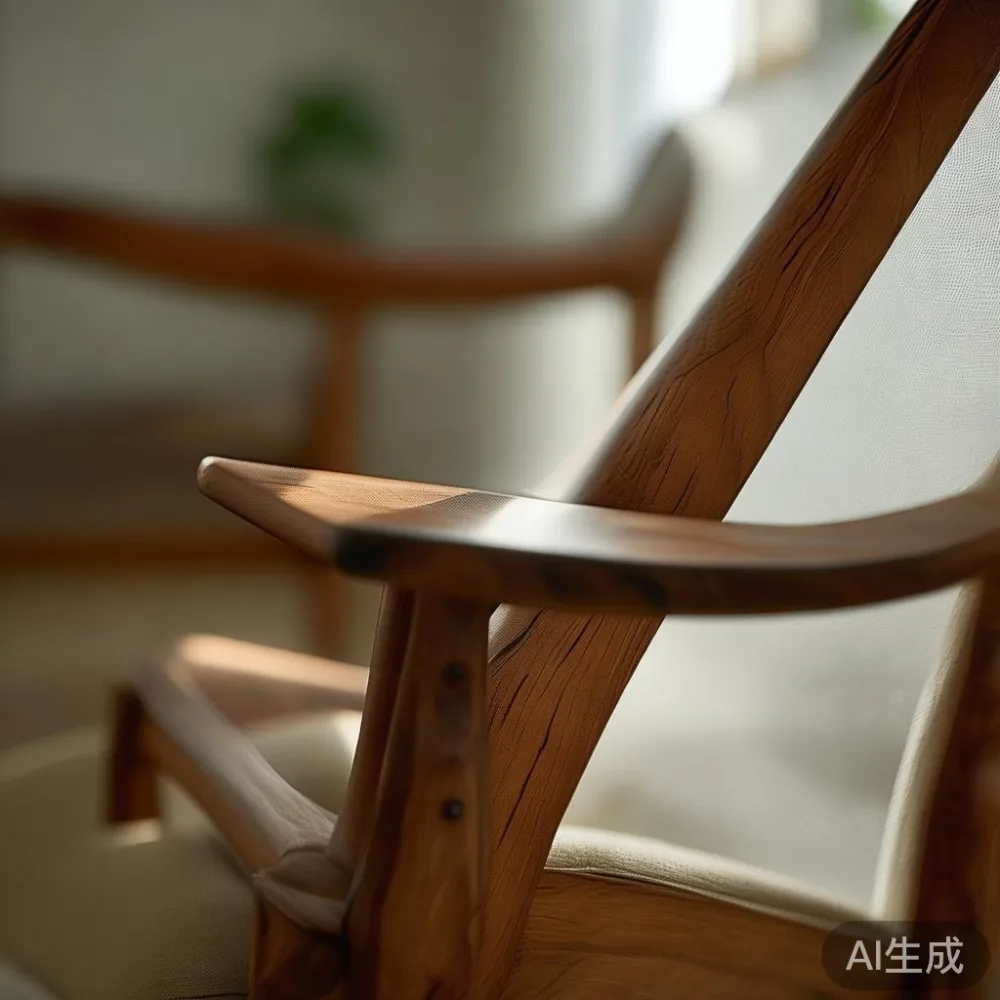
Fine checking in the grain is sometimes confused with structural failure. It usually indicates that the finish or moisture barrier needs attention. Deep splits, lifted veneer, an uneven seat or a wobbling backrest require closer inspection. MIDHILL’s 10-year structural warranty covers qualifying structural defects, while its lifetime refinishing service supports long-term surface care. Keep photographs of the chair, finish and room conditions so any later assessment has a clear record.
Why do HDB flats and condos create different moisture risks?
Singapore’s building design concentrates both moisture and air movement. In many HDB blocks, a compact living area connects directly to a service yard, kitchen or bathroom corridor. Moisture can migrate through an open doorway while an air conditioner cools the main room. Repeatedly switching between these zones may expose furniture to swings of 15% to 25% relative humidity within a day.
Floor position also matters. A ground-floor unit in Bedok may receive less wind but more humid air near a planted balcony. A high-floor Punggol home may have stronger air circulation, although intense afternoon sun can heat a chair by 8°C to 12°C compared with the shaded centre of a room. Condominiums often have better glazing and air conditioning, yet sealed high-rise interiors can become very dry after midnight.
Space affects how quickly furniture can dry. A chair placed 5 cm from a skirting board has limited airflow behind its back. A narrower gap of 2 cm is even less suitable for a moisture-sensitive finish. Leave about 10 cm to 15 cm behind the backrest where possible, and keep the seat away from bathroom and kitchen thresholds. For delivery, measure the lift door and internal dimensions before confirming the date. Older HDB lift openings are commonly around 90 cm to 110 cm wide, with cabins near 110 cm by 140 cm, while condo service lifts may provide 120 cm by 200 cm or more. Verify the actual lift rather than relying on building-era estimates.
Corridor turns can be harder than the lift itself. A chair wrapped in protective material may measure 65 cm across but turn awkwardly around a 120 cm corridor corner. Ask for the packaged dimensions, remove unnecessary carton layers where safe and check whether the lift booking includes a specified collection time. These details protect the furniture and reduce delivery delays.
How should a solid wood accent chair be finished for Singapore?
The finish should slow moisture exchange while allowing the timber to be inspected and maintained. A hand-rubbed oil-and-wax finish gives solid oak or teak a tactile appearance and is comparatively straightforward to maintain. Hard wax oil creates a more protective surface, while a water-based matte lacquer offers easier cleaning but needs careful edge and seam inspection. Conversion varnish or polyurethane creates a stronger moisture barrier, but it can show checking sooner if moisture already sits beneath the film.
French light luxury often favours pale oak, cream upholstery and restrained tapered legs. American light luxury draws on broad seat forms and generous proportions, so the frame may contain more large-section timber that can move slightly more. Post-modern light luxury may use walnut tones, curved backs or mixed materials, making the quality of the internal frame and finish system especially important. The style should not obscure the practical checks: look for flush joints, rounded edges, ventilation beneath upholstered seats and a finish applied to all exposed surfaces.
An accent chair approximately 60 cm wide, 78 cm high and 68 cm deep fits many Singapore living rooms. Compact models in the 52 cm to 58 cm width range suit study corners and HDB bedrooms. Before purchase, confirm the full dimensions, seat height and clearance needed to lift the chair into a lift. For a product that will be used daily, a seat height near 43 cm to 46 cm is more comfortable than an unusually low 38 cm design.
One test is more informative than a finish label alone. Last month I visited a colleague’s Tampines home and used a pin moisture meter on an untreated oak stool. It read 11% near a humid doorway and 8% beside the air-conditioned sitting area after 8 hours. Applying the meter to varnished surfaces produced inconsistent readings, so we checked the exposed underside and leg ends. The small stool showed no movement, while a nearby MDF stool had a visibly swollen lower joint. That comparison reinforced the value of solid timber, factory sealing and controlled placement.
What should you do in the first 7 days after delivery?
Do not place a newly delivered accent chair against an external wall, beside a window or immediately under an air-conditioning vent. Keep it in the room where it will be used, away from direct sunlight and heat. Leave 30 cm to 60 cm of clearance around the package if space allows, then open the protective wrapping without removing all ventilation panels. This gives trapped packaging moisture a gradual exit.
Let the chair acclimatise for 5 to 7 days before tightening a loose fastener or applying an extra coat. The schedule may extend to 10 to 14 days during very wet weather. Avoid wiping the surface with a wet cloth, steam cleaner or household furniture polish during this stage. A dry microfibre cloth is safer. If condensation forms on a window immediately beside the chair, move the chair at least 30 cm away and review the room’s dehumidification.
MIDHILL offers delivery to Singapore within an estimated 7 to 14 days after dispatch, subject to customs clearance and final-mile scheduling. Local prices should include the 9% GST shown at checkout. The brand’s free-shipping threshold is stated as more than US$350, approximately SGD 450 to SGD 470 depending on the exchange rate used by the payment provider. Confirm the threshold in the checkout because exchange rates and destination charges can change.
Inspect the chair before assembly. Check the seat frame, rear legs, apron rails, dowels and any curved components. Look for finish gaps along end grain, because end grain absorbs moisture faster than the broad face of a board. A tiny unfilled knot is a natural timber feature; a rough patch, colour difference or open seam around a joint needs to be documented. The 14-day return period provides a practical window for reporting visible transit damage or a finish mismatch, but unpacked furniture should still be protected during evaluation.
How do you clean and maintain a humid-room accent chair?
Cleaning should be light and frequent rather than wet and occasional. Dust the legs and underside with a dry cloth every 1 or 2 weeks. Wipe a sealed surface with a slightly damp cloth and dry it immediately, using no more than a few drops of water. Do not allow liquid to collect around joints or enter a screw hole. Avoid silicone-based sprays, because they can create a sticky film that attracts dust.
For an oil-finished chair, check the finish every 3 to 6 months in a humid room. If the wood looks pale, dull or dry to the touch, apply a small quantity of compatible hard wax oil with a lint-free cloth. Wipe off the excess after 15 to 20 minutes and allow the surface to cure for 24 hours. Thick layers can trap moisture and produce an uneven sheen. On lacquered furniture, use the manufacturer’s specified cleaner and avoid sanding the coating at home.
Humidity is not the only maintenance variable. Upholstered seat pads should be removed where possible and aired for 4 to 6 hours. Keep at least 5 cm between the cushion and a wall so air can move around it. Wash removable covers according to the care label, not simply by soaking them. Leather can develop mildew if damp, so blot rather than rub and keep it away from persistent condensation.
Dehumidifiers can help. A unit rated for 20 to 30 litres per day is useful for many HDB living rooms, while larger open-plan condos may need 35 litres per day or more. Set the humidistat around 55% to 60%, with a sensible target range of 40% to 65%. Do not aim for a perfectly constant reading every hour; a stable 55% to 65% is generally more comfortable than cycling constantly between very dry and very wet air.
Can solid wood furniture be matched to different light-luxury interiors?
Humidity-aware solid wood works well across several local furnishing approaches. French light luxury uses pale timber, curved silhouettes and tactile fabrics, but pale finishes should not be placed where warm, moist air repeatedly strikes the backrest. American light luxury often relies on deep, comfortable seating. A solid wood sofa with a kiln-dried frame can provide the required strength, while its cushions still need airflow and should not be pressed tightly against the rear wall.
For a bedroom, a solid wood bed frame should have supported slats spaced at no more than 8 cm to 10 cm apart, depending on the mattress and frame design. A bed near an exterior wall may experience more temperature variation than one near the internal corridor. The related question of how to style light luxury bed in bedroom is partly a moisture-planning exercise: keep bedding loose, provide ventilation below the frame and avoid blocking the gap between the headboard and wall.
A dining table needs a stable finish that can tolerate spills and warm dishes. Place it away from an open kitchen window where possible, and wipe liquids within 5 minutes. A wardrobe benefits from consistent room humidity, with doors opened periodically so trapped moisture can escape. A nightstand should stand 10 cm or more from a wall to permit airflow behind it. A marble table combines a moisture-stable stone top with a solid wood or metal base, yet the base still requires protection from prolonged wet cleaning.
Buyers comparing options may encounter references to designer Mid-century modern furniture, for sale Japanese furniture and solid wood dining table designs. These references are useful for visual comparison, but verify timber species, moisture content, joinery and finish coverage. MIDHILL’s Foshan factory produces solid wood furniture for international markets, and its export background means packaging, labelling and assembly instructions should be checked for the Singapore home rather than copied from another market.
How do you style light luxury bed in bedroom without trapping humidity?
Begin with airflow rather than decoration. Keep the bed frame 5 cm to 10 cm from an exterior wall, use a breathable mattress protector and avoid pushing a wardrobe directly against the headboard side. French provincial wardrobe styling in an apartment should account for doors that need 80 cm to 90 cm of operating space. If the wardrobe stands against a humid service wall, leave a 2 cm to 3 cm ventilation gap at the base and inspect the rear panels every 6 months.
For a guest room, Post-modern for guest room design can use a compact accent chair as a visual anchor without filling the walking route. Place the chair near the dry side of the room, not beside a bathroom door. A width of 52 cm to 58 cm can preserve the 70 cm to 90 cm circulation path commonly needed in HDB rooms and compact condo bedrooms. The exact minimum depends on the doorway and the angle required to turn around the bed.
Textiles provide another layer of moisture management. Cotton and linen release moisture more readily than heavy polyester or velvet, but a thick fabric can still remain damp after a rainy night. Air the bed linen for 2 to 4 hours before remaking the bed. Keep the room between 24°C and 28°C where possible and use a dehumidifier if the wall feels cool or condensation appears. Stable conditions protect both the timber frame and the upholstery.
When comparing suppliers, look for evidence of construction rather than broad lifestyle claims. Confirm that solid wood components are identified, rather than veneer or particle board presented under a solid-wood label. Ask for the moisture range used in production, the finish type and the expected acclimatisation period. A Singapore-focused retailer should also explain how a 65 cm-wide accent chair passes through the building’s lift and corridor.
What are the warning signs that a chair needs professional attention?
Watch for changes over several weeks rather than reacting to one humid day. Warning signs include a backrest that rocks by more than 3 mm, a seat frame that creaks under normal weight, a leg moving independently, a raised finish bubble or a split extending through a load-bearing rail. White patches that remain after the surface dries may indicate moisture trapped beneath a film. Persistent musty odours suggest damp upholstery or a cavity that needs airflow.
Measure the room and the chair before arranging repairs. Record the width across the widest point, the height and the depth. Remove the seat cushion if allowed and photograph the underside in daylight. Do not apply heat guns, hair dryers or concentrated sunlight to force moisture out; rapid drying can make the outer surface contract faster than the interior and worsen checking. Aim for gentle, even ventilation over 3 to 7 days.
For factory support, retain the order number, finish specification and delivery condition photos. MIDHILL’s 10-year structural warranty is relevant to qualifying frame defects, while lifetime refinishing provides a route for restoring the surface when ordinary care can no longer produce an even appearance. Refinishing is not a substitute for correcting a persistently wet wall, leaking window or unstable room environment.
The practical answer is simple: select solid timber with a considered moisture-control finish, give it time to acclimatise, maintain 40% to 65% relative humidity and keep air moving around the piece. Singapore’s climate does not automatically shorten the life of a solid wood accent chair. It does make careful placement, stable humidity and disciplined maintenance part of the furniture’s design. That approach protects the chair’s structure and finish while allowing French light luxury, American light luxury or post-modern light luxury to feel relaxed, durable and appropriate for local homes.