How Southeast Asian Humidity Affects Solid Wood Accent Chairs in Singapore
Singapore’s climate can change the way solid wood behaves in an HDB flat, a private condominium, or a compact landed home. Humidity is not simply a comfort issue. It affects the moisture inside timber, the tightness of joints, the finish on a chair, and the way furniture sits in a corridor or beside an air-conditioning vent. For a dining table, bed frame, wardrobe, nightstand, or marble table, the same basic rules apply: stable indoor conditions protect appearance and structure.
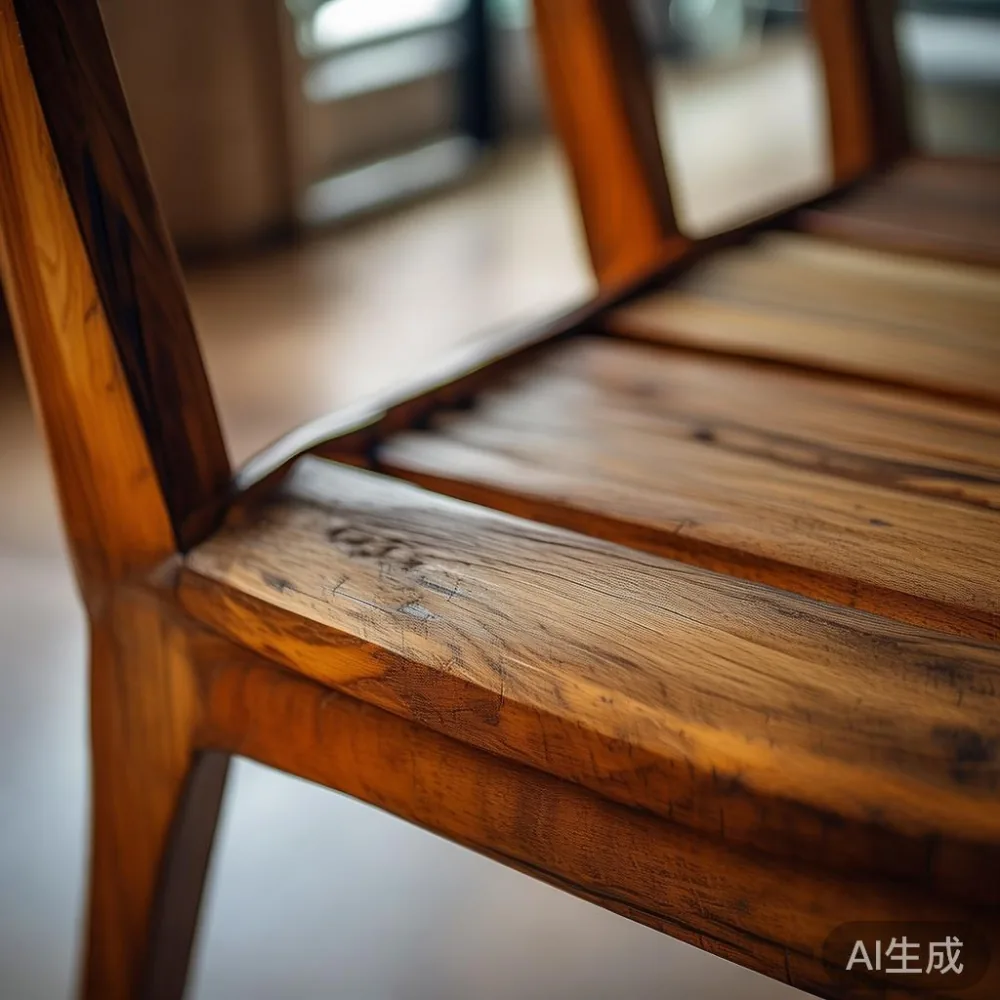
This guide focuses on accent chairs, the small seating pieces that often make a room feel considered but are easily overlooked when measuring humidity risk. An accent chair may weigh 8–18 kg, stand 78–105 cm high, and sit in a high-traffic corner where temperature and moisture shift through the day. It may also need to pass through a common HDB lift or a condo corridor before it reaches its final position.
MIDHILL makes solid wood furniture in Foshan and has supplied 15+ countries since 2008. Its pieces carry a 10-year structural warranty, with lifetime refinishing available. That does not mean wood can ignore humidity. It means the furniture should be made well, cared for properly, and placed sensibly.
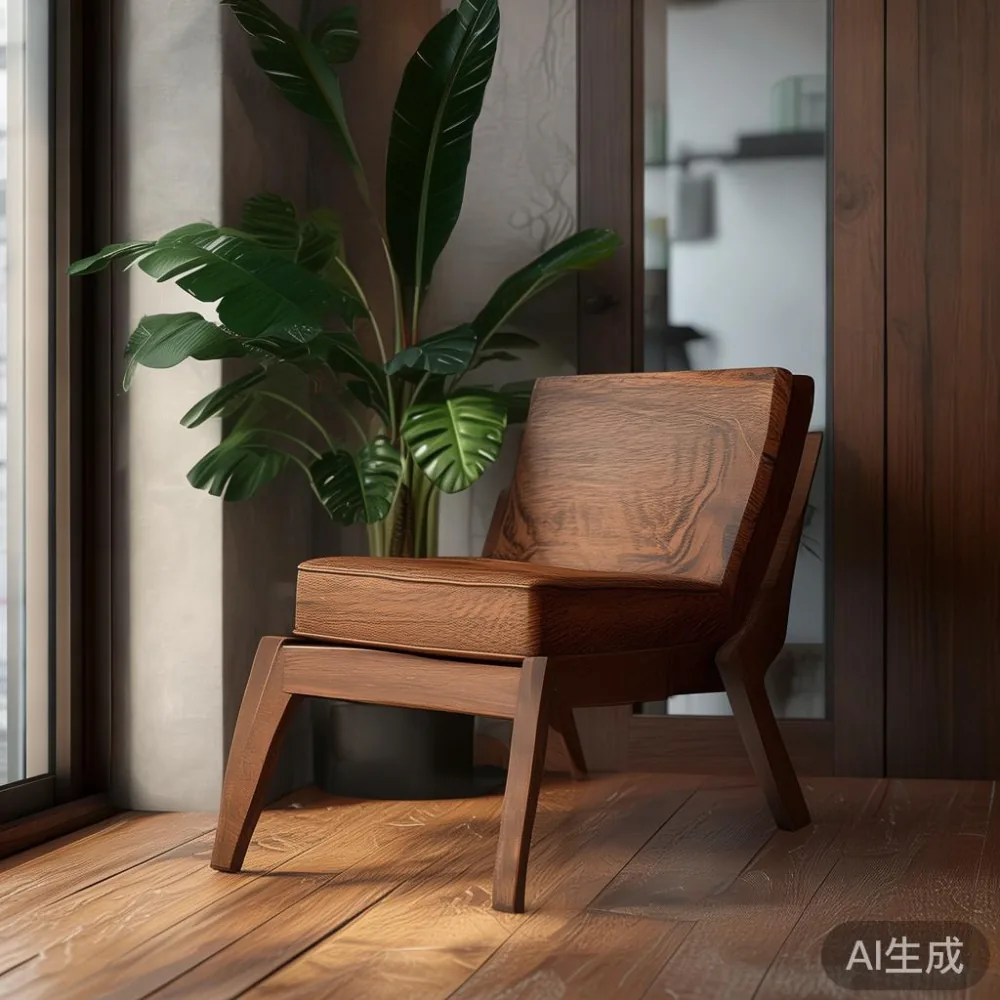
What does humidity do to solid wood furniture?
Wood contains moisture. When the surrounding air is humid, wood can absorb moisture and expand. When air becomes dry, it can lose moisture and contract. These dimensional changes are usually modest in a well-made chair, but repeated cycles can cause joint movement, small surface marks, or finish clouding. Solid wood reacts differently from metal and plastic, and it is not as dimensionally stable as a fully sealed composite panel.
Singapore’s relative humidity commonly ranges from about 60% to 85% during wet periods, while air-conditioned interiors may fall to 40%–60%. In an HDB flat in Tampines or Bedok, a room without external wall insulation can experience noticeable daily movement. A Punggol condo near the coast may face the same pattern, especially if windows are frequently open during brief showers.
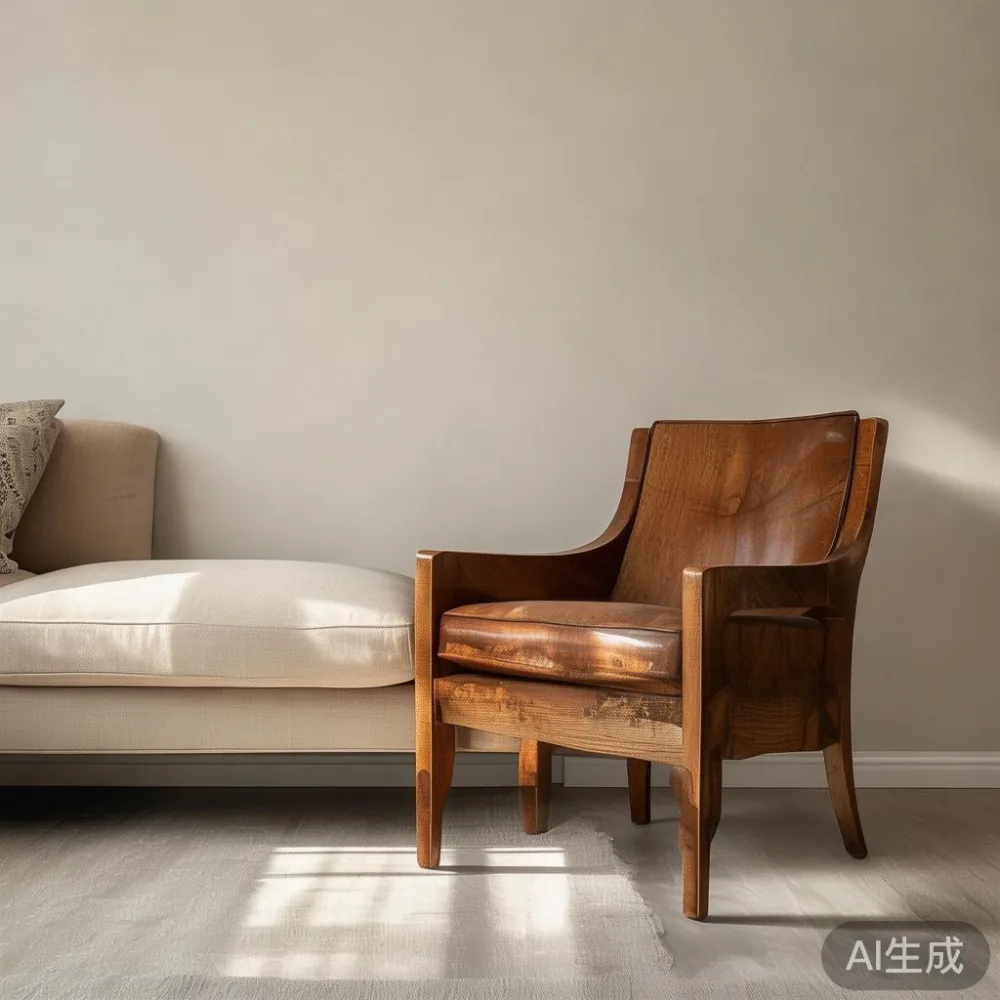
Temperature matters too. Warm humid air can hold more moisture than cooler air. A chair beside a window may therefore expand during the afternoon and contract at night. A piece near a draft from an air-conditioner can lose moisture quickly. The target is not a perfect number every hour; it is fewer abrupt changes over a 24-hour period.
For solid wood, a practical indoor target is roughly 45%–65% relative humidity, with room temperature around 20–27°C. Use a hygrometer, not guesswork. Place it at chair-seat height and check it at 8 a.m. and 8 p.m. for 7 days. If the daily swing exceeds 10%–15%, relocation or humidity control is usually more effective than repeatedly wiping the chair.
Why are HDB lift and corridor widths part of the humidity story?
A furniture purchase should be planned from the street entrance onward. Many older HDB blocks have lift cars around 100–140 cm deep and 80–110 cm wide, with door openings of about 80–90 cm. The chair itself may be only 55–68 cm wide, but a rigid carton, protective foam, and turning space still count. A 105 cm-tall accent chair may need to be tilted, although its dimensions should be checked before delivery is scheduled.
Condo corridors can be narrower than they appear in listing photographs. Measure the tightest point from the lift lobby to the unit door, including door closers and turns. Add 5–10 cm of working clearance where possible. If the packaged chair exceeds the available width, the delivery crew may need to carry it vertically or remove a detachable cushion. Stairwells and escalators can require more turning space than a straight corridor.
This matters beyond convenience. Forcing a heavy chair through a tight opening can damage legs, backs, or joints before the piece ever reaches the home. Ask for the chair’s outer carton dimensions, not only the product dimensions. A compact package of 62 × 62 × 98 cm, for example, can be manageable in many blocks, whereas a 75 cm-wide package may not suit an older lift.
Before delivery day, photograph the route and keep at least 1.2 m of clear landing space near the lift. Remove shoes, boxes, and floor mats. For a high-rise move, reserve a service slot and confirm whether the building requires a moving-in form or an additional SGD 10–30 facility charge. Planning the route does not reduce humidity directly, but it prevents the physical damage that makes a solid wood accent chair less stable later.
How should an accent chair be placed in a Singapore home?
Begin 30–60 cm away from a wall or window. Keep it out of direct sunlight and away from bathroom doors, kitchen steam, wet laundry areas, and air-conditioner outlets. A chair beside a sunlit window in Punggol may see more temperature fluctuation than one deeper inside the living room. If the chair must sit near a window, use curtains or UV film and maintain a steady air-conditioning setting.
Do not place a solid wood accent chair directly against a cold exterior wall during a thunderstorm. Condensation can form where warm indoor air meets a cooler surface, creating a local humidity spike. In a typical HDB flat, position the seat near the dining area or bedroom doorway, where airflow is regular but the chair is not exposed to dampness.
Legs should sit fully on the floor. Small felt pads can reduce scratches and make future movement less likely, but they should not be so thick that the chair rocks. A dining table, bed frame, wardrobe, nightstand, or marble table should also receive level support. Check that the floor is flat and that the chair does not bridge the junction between tiles and a skirting board.
For airflow, leave 10–20 cm around upholstered sections where possible. Solid timber backrests and legs do not need artificial ventilation, but cushions should not be pressed tightly into a corner. After a rainy evening, open a window for 15–30 minutes if outdoor humidity is lower, or run the air-conditioner for 20–40 minutes. Sudden short cycles are generally less useful than steady conditioning.
What is the safest way to clean and protect an accent chair?
Dust weekly with a soft microfibre cloth. Wipe the frame with a lightly damp cloth, then dry it immediately with a clean cotton cloth. Avoid soaking joints, applying cleaner along seams, or spraying polish directly onto the timber. If a damp cloth leaves a visible streak, it has applied too much water; use a second dry pass.
For an upholstered accent chair, follow the textile label. Many polyester or linen-blend covers can be vacuumed with a 100–150 W suction setting using a brush attachment. Test any spot cleaner on a hidden area measuring about 5 × 5 cm. Allow at least 24 hours before judging colour change or staining. Blot spills rather than rubbing them.
Keep the chair away from damp cleaning tools and wet towels. Do not steam-clean the timber or use household bleach, ammonia, alcohol, or oil-based solvents unless the manufacturer confirms compatibility. Oils can temporarily deepen the colour, but they do not waterproof the wood and may complicate future refinishing.
Maintain the finish every 12–24 months, depending on exposure and use. A paste wax designed for solid wood can help repel minor moisture, although it does not replace stable humidity. Apply a thin coat after cleaning, let it cure for the label’s stated time—often 12–24 hours—and buff with a soft cloth.
MIDHILL offers lifetime refinishing for qualifying pieces. That service can restore a scratched or dulled surface, but regular care still prevents avoidable damage. For pale oak and ash, lift any damp marks promptly. For darker walnut, inspect the underside of the seat rails and the rear legs every 3 months for early changes in sheen.
Can air-conditioning alone prevent humidity damage?
Air-conditioning helps because it cools the room and lowers relative humidity as moisture condenses on the cooling coil. Running it at 24–26°C can be useful during humid afternoons. Leaving a door or window open while the unit operates makes the system work harder and can increase indoor moisture.
Use a dehumidifier when a hygrometer repeatedly records above 65% in spaces without regular air-conditioning. A model rated for 10–20 L/day is suitable for many bedrooms, while a larger unit may be needed for open-plan living areas. Set the target at 55%–60%, not 40% in a naturally humid climate. Excessive drying can cause contraction and may make leather or some fabrics feel brittle.
Portable dehumidifiers work best with closed doors and windows. Empty the tank every 1–3 days during heavy rain if it lacks a continuous drain. Position it at least 20 cm from walls so air can move through the intake and outlet. Avoid directing airflow straight at an accent chair because rapid local drying is less desirable than balanced room control.
For a home occupied by residents, pets, or elderly family members, a hygrometer with a digital display and min–max memory is more informative than a basic dial. A model costing SGD 20–60 can record the daily range. A temperature and humidity data logger costing SGD 40–120 can be useful if furniture occupies a corner with known condensation.
How do French light luxury and American light luxury styles fit Singapore apartments?
Humidity affects every style, but the materials and visual details change the care routine. French light luxury often uses pale timber, soft upholstery, curved profiles, and refined metal accents. An accent chair with an oak frame and cream fabric may brighten a compact HDB living room, yet the light finish will reveal water marks sooner than a dark stain. Wipe it carefully and keep drinks on a side table.
American light luxury tends toward generous proportions, clean geometry, and comfortable seating. In a Tampines flat with a 2.8–3.2 m living room, a chair around 72–80 cm wide can still balance a sofa without crowding the walkway. In a larger condo, a 85–95 cm chair can act as a reading seat. For anyone comparing an American sofa vs Japandi sofa, the frame material and cushion treatment matter as much as style: solid wood rails can be stable, while loose covers require more moisture control.
Post-modern light luxury mixes visual contrast with restrained detailing. A solid wood accent chair may combine a sculptural back with a compact footprint. Its appeal depends on clean joints and an even finish, which become easier to inspect when humidity remains stable.
Material planning is broader than seating. A French provincial dining table may suit a sheltered dining corner in Bedok, while a marble table should be kept away from prolonged window condensation because stone and timber react differently to moisture. If you are learning how to style light luxury sofa in bedroom, treat the sofa as part of the room’s climate system: maintain airflow, avoid damp bedding, and use a tray or side table for condensation from cold drinks.
How do you know when an accent chair needs professional attention?
Minor surface marks do not always indicate structural damage. Look, however, for a persistent gap of more than 2–3 mm, a leg that no longer sits flat, a cracked joint, or a backrest that moves under gentle pressure. Test by placing the chair on a level surface and applying light pressure to each corner. Do not force a stuck leg. A skilled furniture maker can assess whether the joint has loosened or the timber has split.
Clouding or hazing in a lacquered area may be moisture-related, especially if the mark returns after drying. A tiny swelling around a screw or dowel can suggest that the joint was exposed to damp conditions. Photograph the affected area with a ruler for scale and record the room’s humidity at the same time. This information helps distinguish a finish issue from a structural issue.
Solid wood furniture can be repaired because it can be worked on. MIDHILL’s 10-year structural warranty provides reassurance for covered defects, while its lifetime refinishing service supports long-term appearance. Singapore’s 14-day return policy also gives buyers time to check a chair at home, although furniture should be checked for visible damage and access issues promptly.
What should you check before ordering a humid-climate accent chair?
Ask for solid wood species and the finish type, not merely “wood” or “wooden frame.” Common choices include oak, ash, rubberwood, and walnut, depending on the design and budget. Check the chair’s assembled dimensions, packaged dimensions, and weight. A practical accent chair may weigh 8–18 kg; solid timber and thicker joinery can push it above 20 kg. The delivery crew should know whether the route involves a lift.
Confirm that the frame uses sound joinery appropriate to its construction. Screws alone are not a fault when used within a designed system, but exposed fixings should not have loose movement. For mixed-material designs, ask how the timber meets upholstery, metal, or marble-like elements. At joints, trapped water and frequent hand contact deserve attention.
Plan maintenance as part of the purchase. Keep a hygrometer in the room, reserve 15–20 minutes for weekly cleaning, and inspect the underside twice a year. Leave 30–60 cm between the chair and exterior walls where layout permits. During monsoon months, check the unit after breakfast and dinner rather than relying on a single morning reading.
Storage matters too. If the chair will stay in a corridor or utility room, avoid concrete floors with known seepage and keep it on a raised platform. Do not wrap an unused chair in plastic for months, because trapped moisture can do more harm than open storage.
For larger projects, the same measurements and environmental checks apply to a dining table, bed frame, wardrobe, nightstand, or marble table. If you are considering how to style Japandi wardrobe in apartment, include ventilation around the side panels and leave enough space for doors to open without striking humid walls.
What is the best routine for an accent chair in Singapore’s humidity?
A practical routine combines stable placement, measured humidity, gentle cleaning, and timely attention. Keep the chair between roughly 45% and 65% relative humidity where possible, away from direct rain, strong sunlight, damp laundry, and abrupt air-conditioner drafts. Measure the route before delivery, protect the finish, and inspect joints twice a year.
Singapore’s humidity does not make solid wood furniture unusable. It makes placement and care more important. Whether the piece is a compact accent chair, part of a solid wood sofa arrangement, or paired with a bed frame and nightstand in a bedroom, good habits can preserve its shape and appearance for many years.
MIDHILL publishes product and ordering information at m.midhill.co. For projects that include hospitality interiors, light luxury for hotel spaces should also account for cleaning schedules, room-temperature stability, and the need for furniture that can be serviced without replacing entire pieces. Local delivery and access planning are equally important: shared lifts, narrow condominium corridors, and level changes can add several days to a delivery schedule.
Before selecting a piece for a home in Tampines, Bedok, or Punggol, request the outer carton measurements, confirm the lift dimensions, and compare the finish with your lighting. If your question is whether a mid-century modern silhouette is right for the room, the answer should include footprint, humidity care, and access—not appearance alone.
For shoppers comparing broad material options, a French provincial dining table, a solid wood dining table, and a marble table each bring distinct care needs. If you are deciding whether is Mid-century modern wardrobe worth it for your apartment, consider storage capacity, wall clearance, and moisture exposure along the exterior wall.
For a narrower search, compare an accent chair of 52–60 cm width for an HDB reading corner with an 68–78 cm chair for an open condominium living room. Allow 45–75 cm of circulation space around it, keep the rear clear of damp walls, and confirm that the packaging can pass through the lift. A careful 20-minute measurement can prevent both delivery problems and long-term moisture issues.