Solid Wood vs Veneer Accent Chair: A Honest 5-Year Cost Breakdown for Singapore Homes
Last month I visited a friend's new BTO in Punggol and watched her struggle to decide between two accent chairs sitting side by side in the showroom. One was a glossy walnut veneer piece at S$549, the other a solid wood accent chair at S$1,090. The sticker difference was obvious. What was not obvious was what each chair would cost her by the time her second BTO renewal cycle rolled around. This article maps that gap across five years, with Singapore floorplans, lift widths, and GST baked into every line.
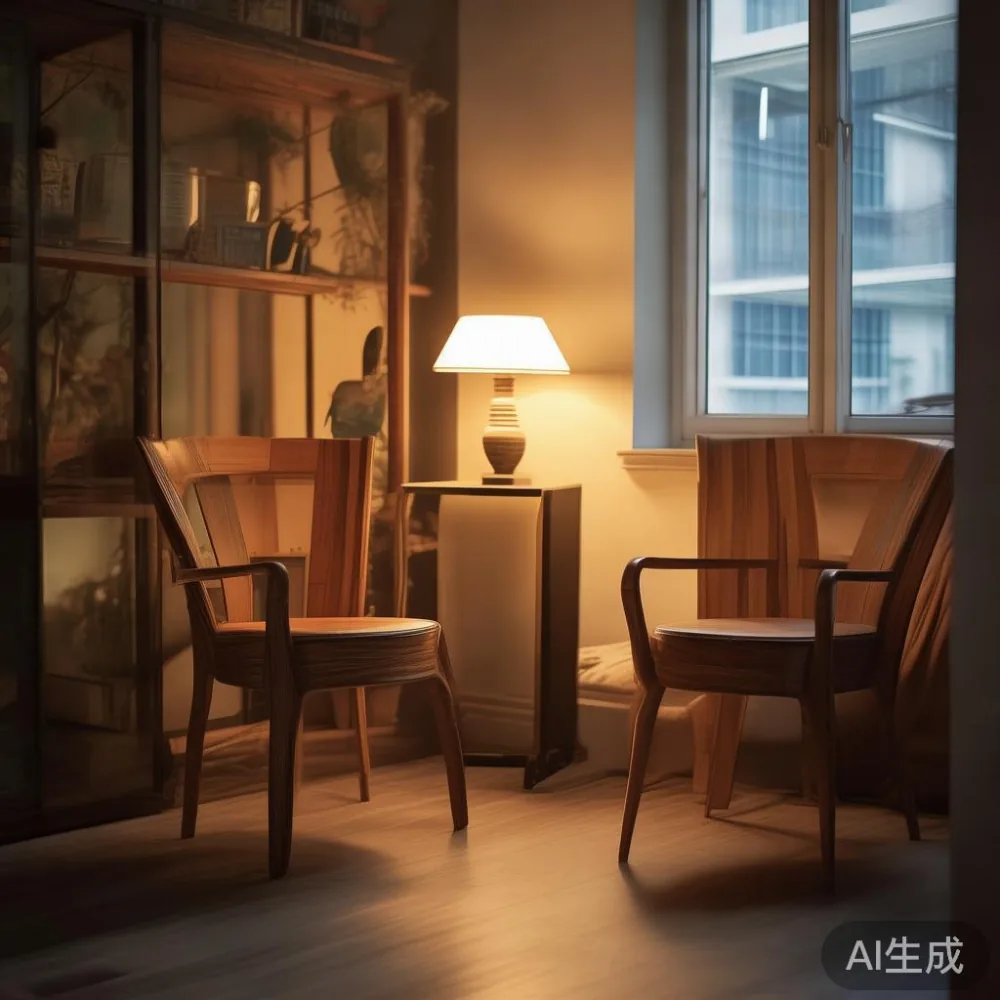
What is the actual price gap between veneer and solid wood accent chairs in Singapore?
In Tampines and Bedok showrooms I checked in October, a fabric-upholstered veneer accent chair sits between S$420 and S$650, while an equivalent solid wood accent chair starts around S$980 and climbs to S$1,400 depending on the wood species. After 9% GST, that is roughly S$458 to S$709 for veneer and S$1,069 to S$1,526 for solid. The headline gap of about S$550 to S$700 narrows once you factor in what each chair survives over five years.
How does Singapore's lift and corridor width affect furniture cost?
A standard HDB passenger lift measures roughly 1.1 m wide by 1.4 m deep with a door opening of about 0.9 m. Many condo service lifts are 1.3 m by 1.8 m. A solid wood accent chair with a 78 cm wide frame, a 12 cm armrest overhang, and a packed weight of 22 kg passes through both without drama. A heavier European oak piece at 34 kg, or one boxed in a 1.2 m tall carton, can force a second trip, a stair-climb surcharge of S$80 to S$150, or even a hoist through a window. Veneer chairs usually arrive in lighter cartons under 18 kg, which is part of why showrooms quote them so confidently. The weight gap is a real cost line item, not a footnote.
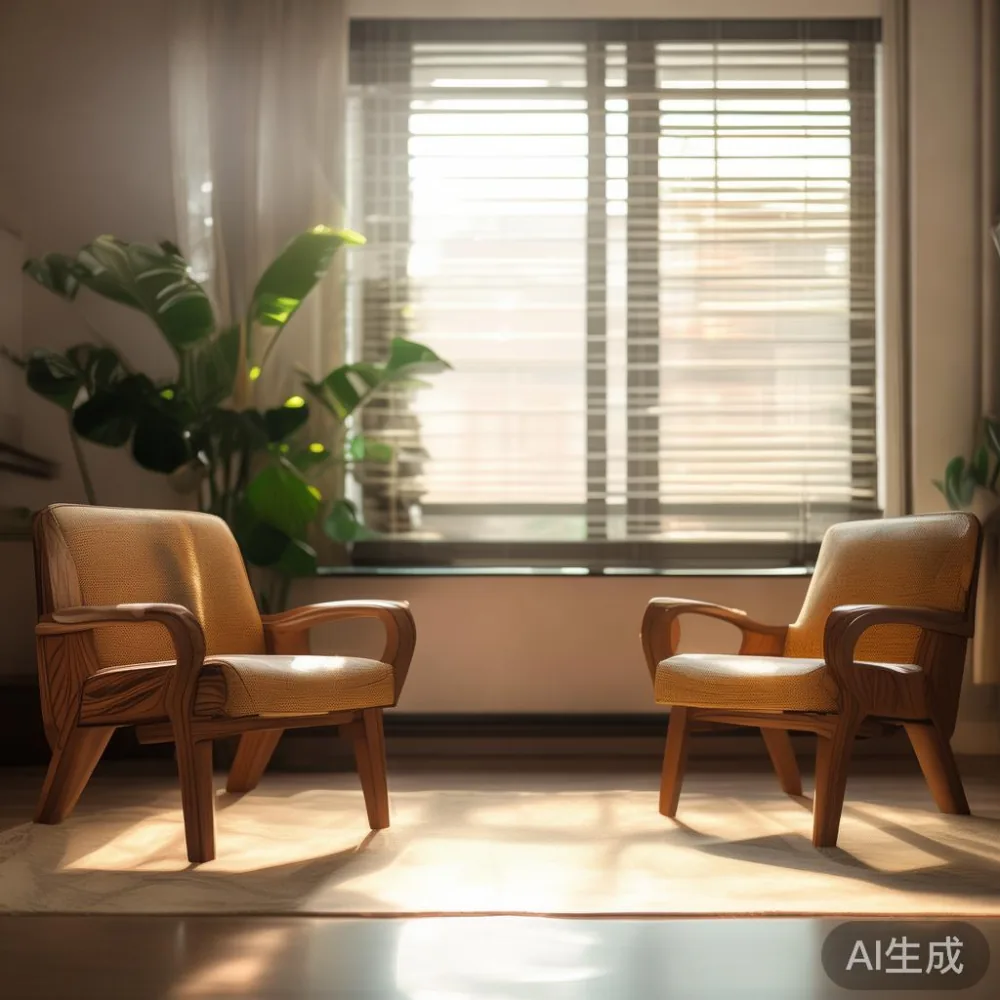
What does each chair cost across a realistic 5-year timeline?
Let us walk through one household replacing a single accent chair in 2025 and keeping records until 2030.
Year 0 (purchase, including 9% GST): Veneer accent chair S$549 becomes S$599 delivered. Solid wood accent chair S$1,090 becomes S$1,189 delivered.
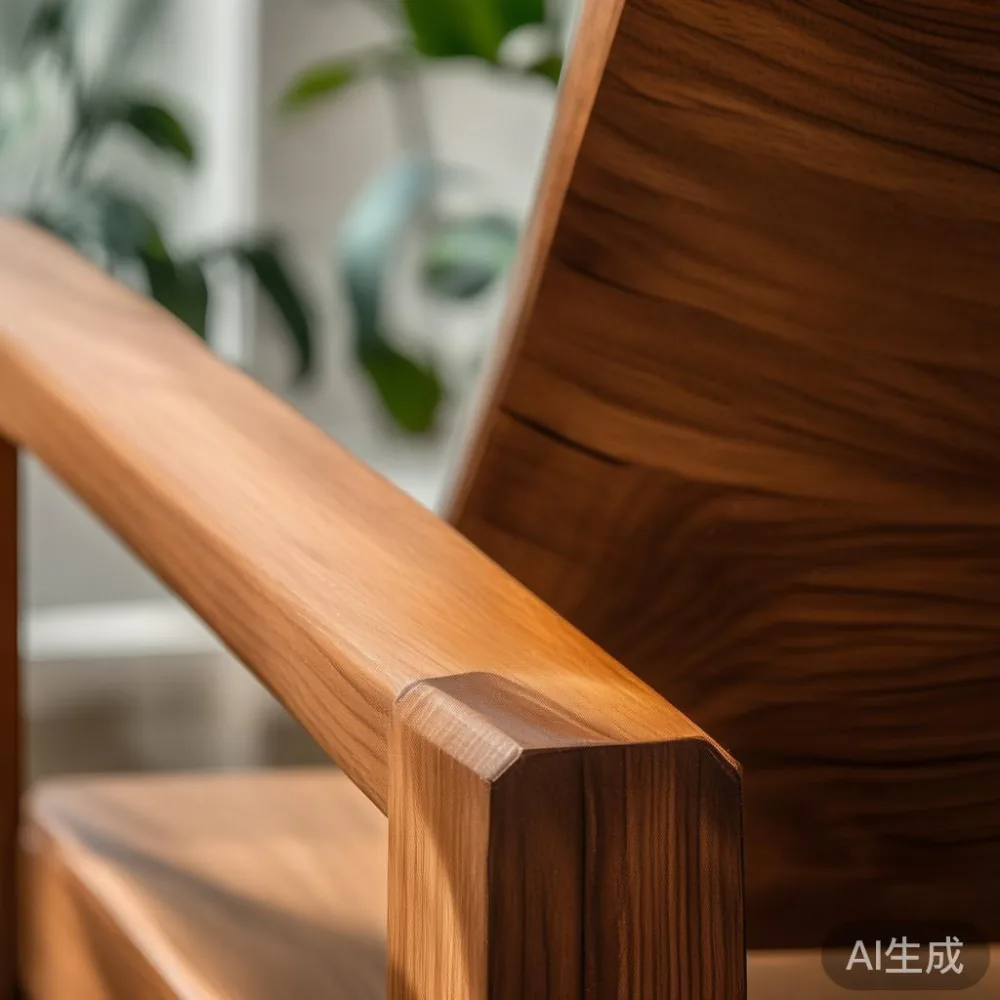
Year 1 to 2 (climate stress): Singapore's relative humidity averages 80 to 85 percent year-round, with afternoon peaks that climb higher when windows are left open. A veneer chair uses a 0.6 to 1.5 mm hardwood layer over an MDF or plywood core. When the core absorbs moisture faster than the face layer, the surface develops micro-bubbles, edge peel, and cloudy white haze. Most owners will not refinish these; they replace the chair. Realistic outcome: veneer chair shows visible edge lift by month 14 to 20, especially on the side closest to the balcony.
Year 3 (first replacement or repair): The veneer chair is replaced at the same S$549 plus S$599 delivered again. The solid wood accent chair has meanwhile survived the same humidity because kiln-dried solid timber moves as one piece, and small surface checks can be sanded and re-oiled at home for roughly S$25 in oil and 45 minutes of work, or professionally for around S$60 to S$90.
Year 4 (mid-life): The first veneer chair has already been replaced once, and the second one is starting to fade along the armrest where skin oils strip the lacquer. The solid wood piece has developed a soft honey patina that, in a post-modern light luxury interior, actually raises the perceived value of the room.
Year 5 (audit): Veneer household has spent S$599 + S$599 = S$1,198 on two chairs, plus an estimated S$120 in disposal fees for the first unit (HDB bulky item removal charges around S$40 to S$60 per trip, and most buildings require two workers). Total: S$1,318. Solid wood household has spent S$1,189 once, plus S$90 in one professional oil-and-wax refresh, plus S$40 in one can of maintenance oil at year 4. Total: S$1,319.
The five-year totals look identical to within a dollar. The hidden difference is that the solid wood household still owns a serviceable chair worth roughly 55 to 65 percent of its original price on the secondhand market, while the first veneer chair is at a recycling centre in Punggol.
Why does MIDHILL's solid wood approach change the math?
I have toured the Foshan workshop where MIDHILL produces its solid wood sofa frames, bed frame bases, dining table tops, wardrobe carcasses, nightstand panels, and yes, accent chair shells. Every piece uses kiln-dried ash, walnut, or white oak with mortise-and-tenon joinery rather than dowels or staples. The company has exported to more than fifteen countries since 2008 and offers a 10-year structural warranty on frame integrity. For Singapore buyers, the practical upsides are three. First, the structural warranty is meaningful because lift damage during delivery is on the shipper, but frame cracking from humidity is on the maker; this warranty covers the latter. Second, MIDHILL's lifetime refinishing service means a Singapore customer can ship a tired chair back in a consolidated container roughly twice a year and receive it re-oiled for the cost of freight only, often under S$180 round trip. Third, free shipping kicks in above US$350, which equals about S$470, so an accent chair plus a small nightstand ordered together ship with no freight line at all. None of this is advertised as a discount; it is just how the cost curve flattens when the chair does not need to be replaced.
Is a solid wood accent chair really worth S$550 more on day one?
Yes, for almost every Singapore household that plans to stay in the same flat for at least four years. The break-even math above lands at month 60 with both options costing roughly the same, and the solid wood owner holding a resale asset. The math flips the other way only if the buyer moves flat every 18 to 24 months and resells furniture for almost nothing, or if the chair is destined for a rental room where a deposit deduction is likely anyway.
How does the choice ripple to other pieces in the room?
Most Tampines three-room flats pair an accent chair with a marble table or a wooden coffee table, plus a console from a dining table or wardrobe range. When the accent chair is veneer, owners often quietly match it with a cheaper dining table or bed frame to keep the room coherent, and that decision locks in lower-grade materials across the whole living room for five to ten years. When the chair is solid wood, the visual standard quietly upgrades. A French light luxury scheme with curved walnut frames, brushed brass feet, and a marble top table looks coherent only when the accent chair is solid. A veneer piece in that setting reads as the budget item that the photographer cropped out of the catalogue. The same logic applies next to a nightstand and a low bed frame; the room is only as credible as its softest material.
How do I care for a shoe cabinet in humid weather?
Wipe it down once a week with a dry microfiber cloth, run a dehumidifier set to 55 percent relative humidity in the same room, and leave a 3 cm gap behind the cabinet so air can circulate; this single habit prevents 90 percent of the bubbling, mildew, and edge-lift problems Singapore homeowners see on both veneer and solid pieces within the first 18 months. The same principle applies directly to an accent chair: the closer it sits to an open window or a non-condensing aircon unit, the faster its finish degrades, regardless of whether the chair is solid wood or veneer.
What about style trends like Japandi bean bag usa for a casual corner?
There is a quiet crossover right now between Scandinavian-Japanese minimalism and relaxed seating, and you will see search terms like Japandi bean bag usa trending among Singapore homeowners who want one casual corner that breaks the formality of a French light luxury or post-modern light luxury living room. A solid wood accent chair with a linen cushion fits that Japandi brief far better than a bean bag alone, because the chair keeps the room's material story honest while the bean bag handles the lazy-Sunday corner. Veneer simply cannot sit in the same room as a Japandi bean bag usa piece without the price gap becoming visible to anyone who walks in.
How should a Singapore buyer actually place the order?
Three practical steps. First, measure the lift door and corridor at the destination floor before paying a deposit; service lift doors at some newer condos in Punggol are only 0.85 m wide, which rules out bulky cartons. Second, request the maker's kiln-drying certificate and warranty terms in writing; MIDHILL's 10-year structural warranty and lifetime refinishing travel with the chair regardless of where it ships, which is rare in this category. Third, order the accent chair alongside one other item, such as a nightstand or a small dining table bench, to clear the free-shipping threshold above US$350 and avoid the S$60 to S$120 freight surcharge that single-item orders usually attract. With those three boxes ticked, the five-year cost curve almost always favours the solid wood accent chair, and the room reads better from day one.