Veneer or Solid Wood? A 5-Year Cost Comparison for Singapore Homes
Choosing an accent chair for a Singapore home is rarely just a choice of appearance. A 48 cm-wide seat may suit a Tampines HDB living room, while a 62 cm chair can make a Punggol condo feel more relaxed. The material also affects weight, humidity resistance, repairability and the cost of replacing the chair after 5 years. The comparison below assumes one accent chair, delivered to Singapore, with GST at 9% included where stated.
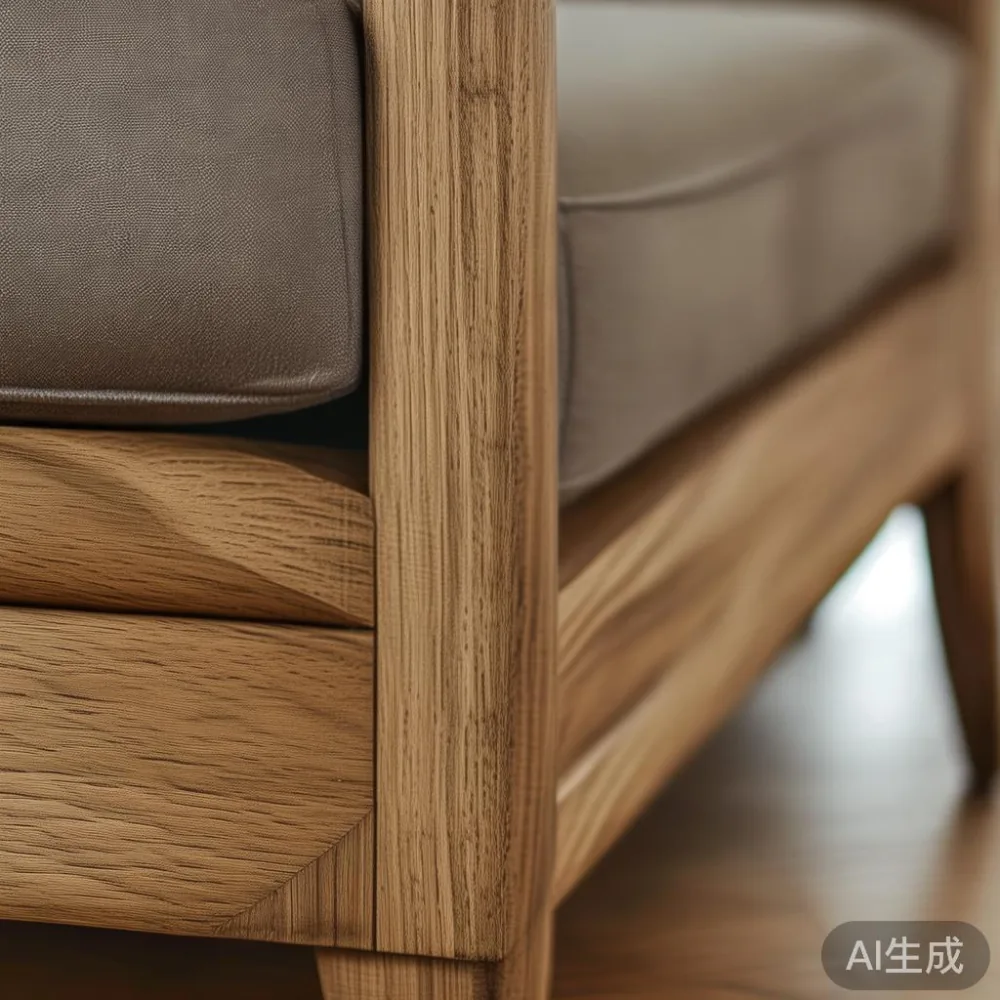
For context, I last month visited a colleague in Bedok who had moved a 27 kg solid oak accent chair between a HDB flat and a rental unit. The lift opening measured 81 cm by 210 cm, and the common corridor narrowed to 112 cm at a service junction. A veneer version was 11 kg lighter, but the solid chair survived the move with only two small marks on the floor pad. That experience helped me compare purchase price, ownership costs and practical resale implications rather than treating veneer as a shortcut or solid wood as an automatic answer.
What does a veneer accent chair cost over 5 years?
<A realistic veneer accent chair in Singapore may cost S$420 before GST, or S$457.80 after 9% GST. A comparable solid oak accent chair may cost S$680 before GST and S$741.20 with GST. Over 5 years, the solid version starts S$283.40 ahead in purchase cost. That is the number most shoppers notice, but it does not describe the full ownership cost.
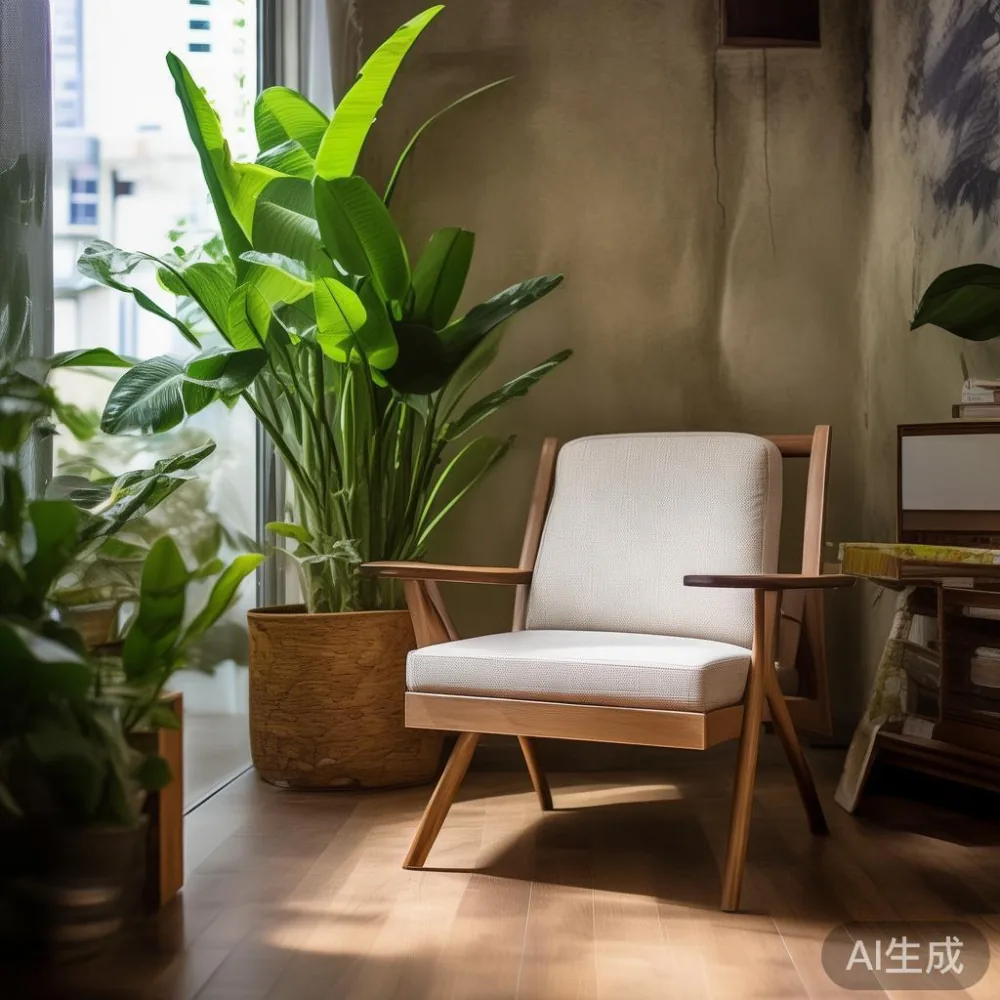
For the calculation, I use delivery charges of S$35 for the veneer chair and S$45 for the solid chair because a heavier, rigid carton occupies more freight space. Local delivery takes 7 to 10 working days after the Singapore order is confirmed. Both purchases receive a 14-day returns window, so no disposal cost is assumed. I also assume 2.5 hours of assembly and care per year for each chair, valued at S$30 per hour.
After 5 years, a well-maintained veneer accent chair may retain 35% of its resale value, while a solid wood chair may retain 45% if its joints and surface remain sound. On an initial value of S$457.80, that is S$160.23; on S$741.20, it is S$333.54. The solid chair therefore has a potential resale advantage of S$173.31, although actual proceeds depend on condition, styling and whether the chair is sold as part of a larger group.
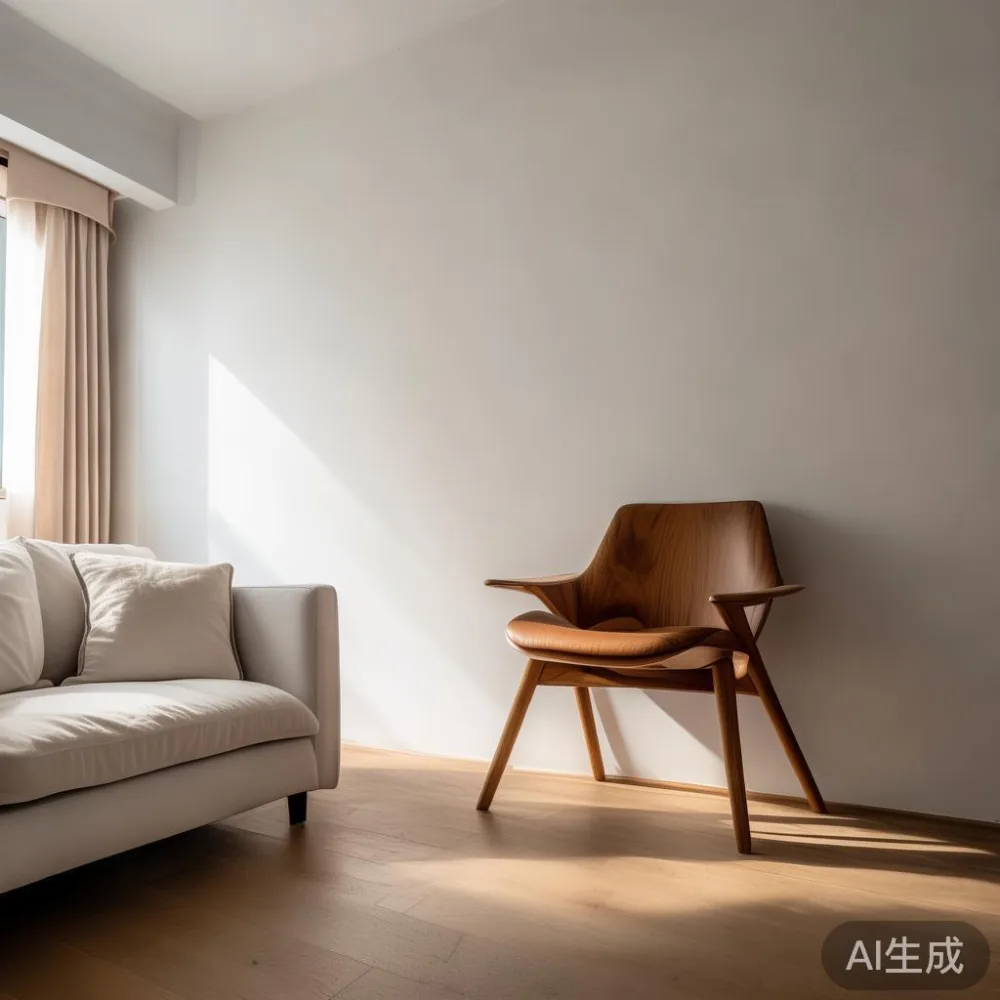
Annual care is modest. Veneer may require S$45 for 2 polishing sessions and replacement edge banding at 2 years, compared with S$30 for an oil refresh on solid wood. Applying a 9% GST to those services gives S$49.05 and S$32.70 respectively. Over 5 years, I allow S$125 for veneer care and S$85 for solid wood care. Labour at 2.5 hours a year adds S$375 to either model, which keeps the comparison focused on material-related expenses.
On those assumptions, the 5-year cost is approximately S$1,117.08 for veneer: S$457.80 purchase, S$35 delivery, S$125 care, S$375 labour and S$124.28 foregone resale value. Solid wood totals about S$992.84: S$741.20 purchase, S$45 delivery, S$85 care, S$375 labour and S$249.66 foregone resale value. The solid chair is ahead by S$124.24 in this scenario. If the buyer expects to keep the chair for 12 years instead, the advantage can narrow because solid wood can usually be refinished while a thin veneer surface may need replacement sooner.
Is a solid wood accent chair worth the higher price for HDB flats?
For many HDB homes, the value of a solid wood accent chair lies in its usable life and repairability rather than in its purchase price. Singapore’s relative humidity, usually around 55% to 80% across different homes and seasons, can cause inexpensive engineered panels to move or develop surface marks. A kiln-dried solid wood frame, finished with a breathable coating, is better suited to repeated movement between a living room and bedroom.
Measure the route before ordering. A common HDB lift opening may be 80 cm wide and 210 cm high, while a chair carton could be 58 cm by 62 cm by 48 cm. A solid wood chair weighing 27 kg will need 2 people on a staircase, but it can fit through an 80 cm lift opening if turned correctly. A 14 kg flat-pack veneer chair is easier for 1 person to manage, yet its assembled dimensions may be wider than the carton suggests. Check the actual chair width, not just the shipping box.
Corridors can also affect the delivery surcharge. A lift served at level 3 in Tampines may attract a S$35 charge, while a Bedok unit requiring corridor carry through 2 bends may add S$20. For a Punggol condo, a loading bay and lift booking can usually keep the charge near S$45. The delivery time remains 7 to 10 working days for stocked or standard configurations, with 14 to 21 days for made-to-order timber.
The term “solid wood” should be checked carefully. A chair may combine a solid oak frame with plywood or veneer panels. That is not automatically poor construction, but the replacement cost differs. A fully solid seat and back can be planed and refinished; a veneered face may require a specialist patch. Ask for the timber species, finish type, joint construction and panel specifications in writing.
Which material handles Singapore humidity with less maintenance?
Veneer is a thin layer of real wood bonded to a panel. Its surface can look convincing because it is real timber, but the layer may be only 0.3 mm to 1 mm thick. It can be stable in a conditioned home and offers a lighter weight of approximately 11 kg to 16 kg. The trade-off is repair depth: a deep scratch may reach the substrate, and edge lifting can require replacement.
Solid wood typically weighs 20 kg to 30 kg for a dining-style accent chair. Its grain movement is more visible, and a humid room can cause small changes in dimension. Quality solid wood is joined and finished to accommodate that movement. In practical terms, it gives a family more options after 5 years: tightening a joint, sanding a scuff, applying oil or replacing a loose seat fixing.
Neither material should sit against a wet bathroom wall or directly beside an air-conditioning condensate leak. Keep it at least 30 cm from a window drip line and use coasters or a protective mat if a drinks table sits nearby. For daily use, wipe veneer with a slightly damp cloth and avoid silicone sprays. Clean solid wood with mild soap, then dry it within 10 minutes. Re-oil a solid chair every 8 to 12 months, depending on use.
Weight also changes how a chair feels. A solid oak model at 27 kg may resist sliding and create a stable, grounded appearance, while a 14 kg veneer version is easier to reposition in a compact 9 sqm HDB living room. The aesthetic is part of the decision: French light luxury often uses curved walnut tones and softened forms; American light luxury favours broad seats and clean lines; post-modern light luxury can pair a solid timber frame with a restrained upholstered pad.
How much do refinishing and repairs add to the 5-year bill?
Allowing for one local repair makes the comparison more practical. Suppose the veneer chair receives a minor edge repair costing S$80 with GST, while the solid chair needs a sanding and refinishing service costing S$120 with GST. Those amounts move the 5-year total for veneer to S$1,197.08 and solid wood to S$1,112.84, giving solid wood a S$84.24 advantage.
The repair assumption is intentionally ordinary. A deep veneer tear, water stain or delamination may cost S$220 to S$450 to address and can reduce resale value further. A solid chair with a damaged joint may cost S$150 to S$300 to repair by a local workshop, depending on the timber and hardware. Major structural damage is uncommon in both categories when the chair is used as intended.
Warranty terms should be read as part of the financial calculation. MIDHILL offers a 10-year structural warranty on its solid wood products, which covers relevant structural failures under the stated terms. That support can reduce the risk of paying for a failed frame, although it does not cover accidental damage, ordinary surface wear or misuse. Its lifetime refinishing service also changes long-term economics: where the design and timber permit refinishing, wear becomes a maintenance event rather than a replacement event.
For comparison, a replacement solid wood accent chair at current prices would require another S$741.20 plus S$45 delivery. Replacing a veneer chair would require S$457.80 plus S$35 delivery. Over a 5-year period, one unplanned replacement makes either purchase more expensive. A solid frame is easier to maintain because refinishing can restore its appearance without replacing every component.
Can a light luxury accent chair fit a condo without looking too heavy?
Yes, if scale is handled with care. An accent chair with a 44 cm seat width and 78 cm height fits beside a 150 cm sofa in many condo living rooms. A 62 cm-wide chair works better with a 170 cm sofa or in a corner beside a 120 cm console. Visual weight can be reduced with tapered legs, a 42 cm depth and a back that stops 10 cm above the sofa seat.
For Singapore, I often see requests related to how to style light luxury bed in room when the accent chair shares a room with a bed frame. Place the chair 45 cm from the bed corner, angled at 30 degrees, rather than directly opposite the footboard. The 60 cm clearance allows dressing space and avoids a pinched route to the ensuite.
Material choice should follow the room’s existing products. If the home already contains a solid wood sofa, bed frame or dining table, a solid accent chair can create continuity; veneer may be more practical where lighter visual weight and easier moving matter. If the room centres on a marble table, solid timber provides warmth against the stone, while pale veneer can echo the marble’s cooler tones.
Those references can influence colour, but an accent chair should not imitate a whole room. French light luxury works with cream upholstery and walnut; American light luxury often uses oatmeal fabric and broad oak profiles; post-modern light luxury allows a curved back or one contrasting upholstered detail. Keep the palette to 3 main colours and avoid more than 2 mixed-metal finishes in a compact room.
How do delivery, GST and returns change the calculation?
GST changes the comparison by 9%. On a S$680 solid wood chair, tax is S$61.20, bringing the price to S$741.20. On a S$420 veneer chair, tax is S$37.80, bringing the price to S$457.80. Delivery is S$45 for solid wood and S$35 for veneer in the sample. Across 5 years, these are small numbers beside purchase cost, but they should not be omitted from a household budget.
Singapore delivery usually takes 7 to 10 working days for stock, while a custom finish can take 14 to 21 days. A 14-day returns period gives buyers time to check comfort, dimensions and corridor access. Assembly may add 20 to 30 minutes for either chair. Measure doorways: an 80 cm residential door, a 75 cm bathroom door and an 80 cm lift opening can each become a restriction.
For those comparing wider furniture, under 2000 Nordic furniture is a useful budget lens for an entire room, not just one chair. A Nordic-style solid wood bed frame may use S$900 to S$1,500 before GST, leaving S$300 to S$500 for an accent chair. A wardrobe can consume S$1,200 to S$1,900, so material savings on 1 chair may be less significant than avoiding a rushed replacement later.
Owners researching best Italian light luxury bed for 2026 should check whether “Italian” refers to design, manufacture or material sourcing rather than assuming every component came from one country. Similarly, how to style French provincial sofa in bedroom can be paired with a solid wood accent chair that introduces a cleaner, architectural note. And a Modern light luxury TV console with closed storage often benefits from a chair nearby, provided at least 75 cm of circulation space remains.
What should a buyer check before ordering an accent chair?
Check 8 points. First, confirm the width and depth against the intended position. Second, ask whether the visible surfaces are solid wood, veneer or a mix. Third, compare frame weight: 11 kg for veneer versus 20 kg to 30 kg for solid wood affects moving. Fourth, review the finish warranty and care instructions. Fifth, confirm the delivery date, lift fee and corridor surcharge. Sixth, ask whether refinishing is available throughout ownership.
Seventh, test the seat if possible. A good accent chair usually has a seat height of 43 cm to 46 cm, enough to support the feet while allowing a relaxed lounge posture. Eighth, inspect the joinery and underframe. Look for solid wood sofa, bed frame, dining table, wardrobe or nightstand construction principles: stable joints, properly aligned panels and finishes applied to more than just the visible face.
Buyers looking at for sale American furniture may find solid oak accent chairs with a substantial American light luxury profile, but origin alone does not answer durability questions. Confirm the actual timber, joint method and warranty. Buyers connecting a Foshan factory with a Singapore retailer should also request clear after-sales terms instead of relying on production scale alone.
MIDHILL was established in 2008 and exports to more than 15 countries, so its production experience is relevant to a Singapore purchase. The important local questions remain delivery timing, GST, lift access, returns and long-term service. A retail operation with free shipping over US$350 may simplify international purchasing, but the buyer should still confirm the Singapore landed price, because GST, import treatment and local delivery are separate entries.
After 5 years, veneer can be the lower-commitment choice when the chair is inexpensive, moved frequently or likely to be replaced as décor changes. Solid wood can cost less over the ownership period when its repairability, stronger resale position and refinishing support are used. The most suitable accent chair is not simply the one with the highest initial quality or the lowest ticket. It is the one that fits the 80 cm lift, suits the room’s light-luxury language and still makes financial sense after 5 years of Singapore living.