What Actually Drives the Price of a Solid Wood Accent Chair (And Why Two Chairs at S$1,200 Can Feel Nothing Alike)
I learned this the hard way last month when I walked into a Tampines HDB showroom with a friend who was choosing between two accent chairs that both had a S$1,199 price tag. Same number, completely different chairs. One was a light, slim-lined seat with a bent ash frame and a linen-blend cushion; the other was a heavier, blocky chair with a chunky rubberwood frame wrapped in bonded leather. After sitting in each for ten minutes and lifting each off the floor, my friend could not believe they cost the same. The price tag told her almost nothing about what she was actually paying for.
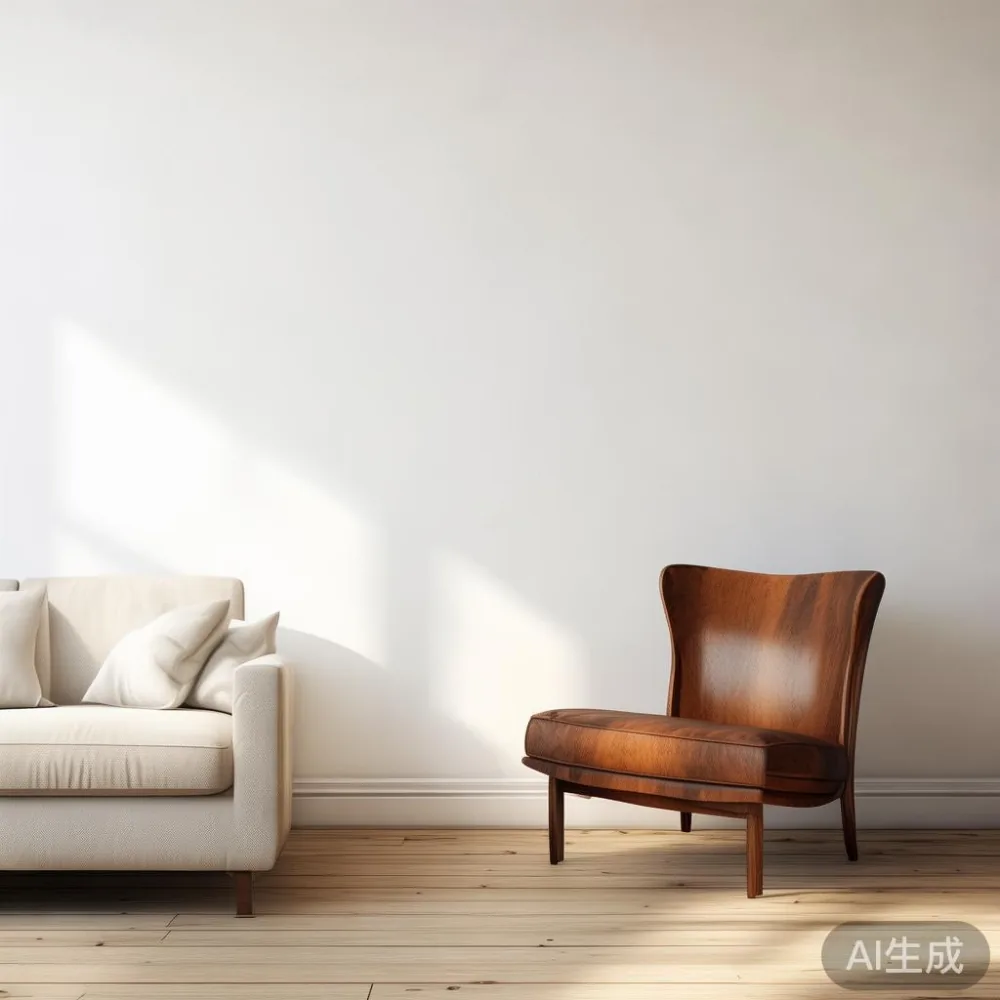
That afternoon is a useful starting point for almost every conversation about solid wood furniture pricing in Singapore. Whether you are browsing for an accent chair, a solid wood sofa frame, a bed frame, a dining table, a wardrobe, or a nightstand, the sticker price is the sum of a handful of concrete decisions made long before the piece reaches your lift lobby in Bedok or your condo corridor in Punggol. Below is what those decisions actually are, and how to read them.
1. The Wood Species: Why a Walnut Frame Costs Roughly Twice a Cherry Frame
Wood species is usually the single largest swing factor in the price of an accent chair, a light luxury dining table, or any other solid wood piece. Not all hardwoods behave the same way, and not all hardwoods are equally available.
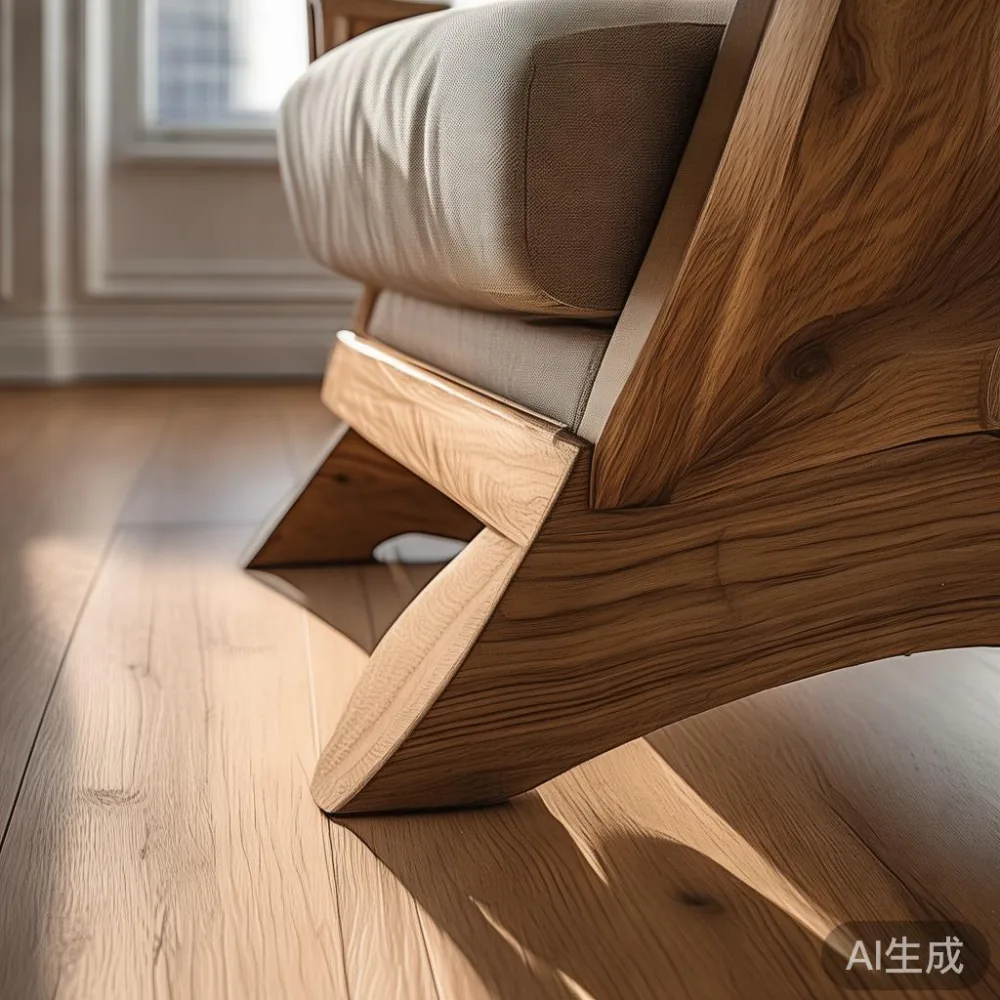
At the entry level you will see rubberwood (hevea) and poplar. These are plantation-grown, fast-maturing species, typically harvested in 8 to 15 year cycles. A rubberwood accent chair frame can be produced in volume for roughly S$280 to S$450 in raw frame cost, which is why you see so many sub-S$800 accent chairs on Singapore e-commerce portals. The wood is technically solid, it machines cleanly, and it takes paint or veneer well. It is also noticeably lighter (a rubberwood frame in a typical accent chair weighs 6 to 8 kg versus 11 to 14 kg for ash or beech), which is something you can feel the moment you try to move one across a HDB living room.
In the middle band sit ash, beech, and Chinese ash (tallowwood). These run at a kiln-dried board price roughly 1.8 to 2.5 times that of rubberwood. Frames built from these species feel denser, hold joinery tighter, and respond better to a clear oil or lacquer finish. For a European light luxury for dining room look — where you want visible grain, soft curves, and a warm honey tone — ash is usually the species behind the rendering.
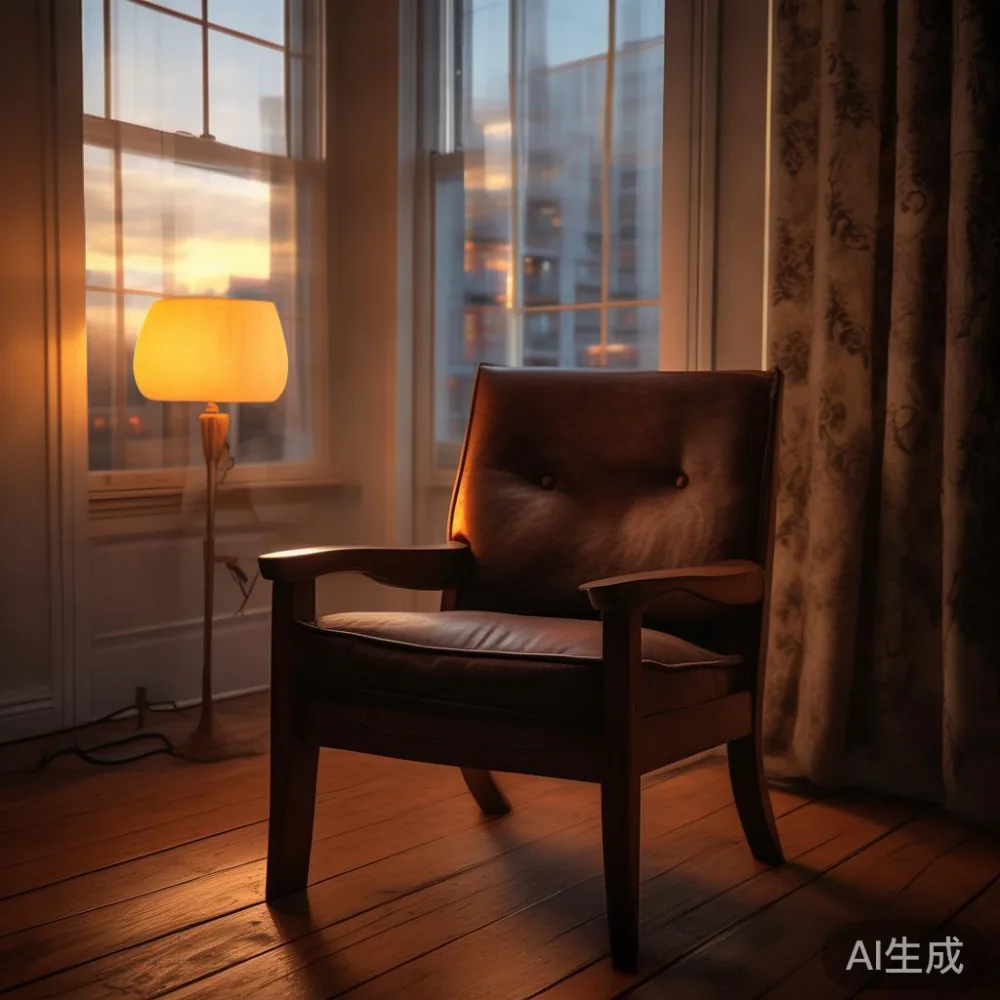
At the top band sit European oak, American walnut, and teak. Slow-grown, often 40 to 80 years to maturity, with board prices running 3 to 5 times that of rubberwood. A genuine walnut accent chair with a sculpted back and steam-bent arms will retail in Singapore for S$1,600 to S$2,800, even before upholstery is factored in. Teak, while more associated with outdoor and Peranakan pieces, also appears in solid wood sofa frames at the upper tier.
A practical note for HDB and condo buyers: heavier hardwood frames also mean heavier delivery. A solid oak accent chair around 14 kg is a two-man carry up a typical 4 m wide HDB corridor and into a lift with internal dimensions of roughly 1.1 m wide by 1.4 m deep. Your courier's willingness to work through tight turns on the 12th floor of a Punggol Build-To-Order block often depends on frame weight more than anything else. I have watched a delivery team refuse three flights of stairs for a 16 kg piece without an elevator booking, and accept a 9 kg piece on the spot.
2. Joinery and Internal Structure: What You Cannot See From the Showroom Floor
This is the part of solid wood pricing that the in-store tag almost never explains. Two accent chairs built from the same ash boards can differ in price by 30 to 40 percent based purely on how the wood is joined and how the corners are reinforced.
Mortise-and-tenon joinery, dovetailed seat rails, and corner blocks glued and screwed at the stress points all add labour time. A chair built with dowel-and-glue construction at every joint can be assembled in roughly 25 minutes. The same chair with hand-cut mortise-and-tenon joints takes 90 to 110 minutes per chair, plus a skilled joiner. Multiply that across a small-batch production run of 200 chairs and the labour bill climbs quickly. This is one of the quieter reasons that a hand-joinery piece from a recognised maker carries a higher sticker price than a flat-pack competitor that looks similar in a 2D product photo.
Frame thickness is another quiet driver. A typical mass-market accent chair uses legs in the 35 mm to 40 mm range with a stretcher thickness of around 20 mm. A higher-end chair tends to step up to 45 mm to 55 mm legs with 28 mm to 32 mm stretchers. The board volume per chair moves from about 0.012 cubic metres of wood to 0.020 cubic metres. On ash at current kiln-dried pricing, that is a raw-material jump of roughly S$45 per chair, which then propagates through the suggested retail.
Reinforcement under the seat matters as well. A solid wood sofa or accent chair with a webbed jute or Pirelli rubber suspension beneath the cushion will outlast a chair sitting on a thin plywood deck. The cost of that suspension is modest in raw terms (about S$18 to S$35 per chair) but it is one of the clearest markers of a maker who is thinking about decade-level durability rather than a two-year replacement cycle.
3. Upholstery, Foam Density, and Why the Cushion Feels Different Three Months In
Most accent chairs sold in Singapore are sold as half-fabric, half-wood constructions: the frame is solid wood, the seat and back are padded. The textile side of the bill can quietly equal or exceed the wood side.
Fabric grading is the first variable. A standard polyester-blend upholstery fabric runs around S$8 to S$14 per metre. A Belgian linen or a textured boucle in the European light luxury register runs S$38 to S$75 per metre. A single accent chair can consume 2.5 m to 3.8 m of fabric depending on the silhouette and tufting. The fabric bill alone can move from roughly S$25 to over S$200 per chair.
Foam density is the second variable, and it is the one customers most often underestimate. A seat cushion using 28 kg per cubic metre (kg/m³) high-resilience foam feels soft out of the box and starts to sag within 12 to 18 months. A 35 kg/m³ foam with a 40 kg/m³ wrap around a Dacron top layer holds its shape for 5 to 7 years of daily use. The material cost difference is about S$22 per cushion, but the perceived quality difference on day one and day 365 is enormous. If you are trying to work out how to style European sofa in room settings where the seating faces a window half the day, this density question matters even more — softer foams break down faster under heat cycling.
Leather, when offered, introduces a third tier. Top-grain Italian leather for a fully upholstered accent chair can run S$380 to S$720 just for the hide, which explains why full-leather light luxury pieces sit in the S$2,800 to S$4,500 bracket at Singapore retailers. Bonded leather, by contrast, is priced per metre like fabric and keeps an accent chair affordable on the ticket, though it peels within 3 to 5 years in our humidity.
4. Finish, Lacquers, and the Hidden Cost of Low-VOC Compliance
Finishing is another pricing layer that rarely shows up in the marketing copy. The two questions worth asking are: what is the finish chemistry, and how many coats are applied?
A conventional nitrocellulose lacquer applied in three coats with hand sanding between coats is the workhorse of the industry. A water-based low-VOC polyurethane in five to seven coats is the European standard. Both can look excellent; the second is more expensive by roughly 40 to 60 percent in finishing labour and chemistry. For Singapore parents and pet owners in compact HDB spaces where windows stay closed during the afternoon heat cycle, the low-VOC route is also a sensible health decision.
Pigmented finishes, which produce the chalky pale tones you see in French light luxury and Japanese for small living room styling, require an additional sealing coat and a tinted topcoat. Expect another 10 to 15 percent in finishing cost versus a clear natural finish on the same chair.
The Italian light luxury for hotel aesthetic that has migrated into residential showrooms — deep walnut tones, soft-close hardware, tight tolerances on door and drawer faces — depends on a multi-step hand-rubbed conversion varnish. That finish alone can add S$90 to S$180 per piece.
5. Shipping, GST, After-Sale Care, and the Singapore-Specific Surcharges
Once the chair is built, a Singapore buyer is paying for the journey from the workshop floor to your corridor. Most quality solid wood pieces sold locally originate in Foshan or the surrounding Guangdong cluster. A standard 40-foot high-cube container holds roughly 220 to 260 assembled accent chairs, depending on box dimensions. Sea freight from Yantian or Shekou to Singapore runs around US$8 to US$14 per cubic metre at 2025 rates, which adds S$4 to S$9 per chair at landed cost.
GST at 9 percent applies on top of the CIF value plus duty. Solid wood furniture carries a 0 percent customs duty into Singapore under the right HS codes, but GST is unavoidable and priced in. For a chair landed at S$700, that adds S$63. For a chair landed at S$1,400, it adds S$126 — so the absolute GST bill on a premium accent chair is meaningfully higher than on an entry-tier one.
Delivery up the lift and into the unit is the other Singapore-specific line item. A doorstep delivery to a ground-floor HDB in Bedok might be included. A same-day white-glove carry into a 22nd-floor Punggol unit with a 1.1 m lift and a tight 90-degree corridor turn can add S$60 to S$140. Some makers that operate direct from Foshan, including MIDHILL furniture, offer free shipping above a configurable order threshold and a flat-fee white-glove option below it, which is often more transparent than tiered couriers.
After-sale care is the last pricing layer, and the easiest one to overlook when comparing two stickers. A 10-year structural warranty, lifetime refinishing access, and a 14-day return window are not free for the maker to provide. They are priced into the chair at roughly 4 to 7 percent of the retail ticket in actuarial terms. The reason to value them is not goodwill — it is that a maker willing to refinish a S$1,800 accent chair ten years from now is also usually the maker who built the chair with replaceable seat cushions and standard-sized bolts in the first place.
6. Does a Higher Price Tag Always Mean a Better Accent Chair?
Not automatically, and this is the question worth pressing on. Price correlates with the factors above — wood species, joinery, foam density, finish chemistry, warranty infrastructure — but the mapping is imperfect.
A S$2,400 accent chair from a designer label with thin retail margins and a glossy showroom at Ion Orchard can be built on the same ash frame and 35 kg/m³ foam as a S$1,400 chair from a smaller workshop in Foshan selling directly. The difference in price is overhead, marketing, and lease, not necessarily materials. Conversely, a S$1,100 chair with rubberwood legs and a plywood seat deck will always be a worse long-term purchase than a S$1,600 ash chair, regardless of branding.
The most reliable test is the weight-and-spec test. Pick up the chair. Lift the seat cushion and feel the foam. Open the back of the skirt and look for mortise-and-tenon, a webbed suspension, and a solid wood rail running under the seat. If you can see all three, the price is probably defensible. If you can see none of them, the price is probably subsidising something other than the chair itself.
7. Is It Worth Paying S$1,800 for a Solid Wood Accent Chair When a S$600 One Looks Similar Online?
Yes, for most Singapore households who plan to keep the chair for more than five years, and no, for anyone furnishing a short-stay rental or a room they expect to repurpose within two years. The break-even math is straightforward.
A S$600 accent chair with a rubberwood frame and 28 kg/m³ foam, used four to five evenings a week, typically needs replacement or reupholstering within 30 to 40 months. Landed cost over ten years: roughly S$1,500 to S$1,800 if you replace once or reupholster.
A S$1,800 accent chair with an ash frame, mortise-and-tenon joinery, and 35 kg/m³ foam will look presentable at year ten and can usually be re-cushioned for S$120 to S$180 at that point. Landed cost over ten years: roughly S$1,950 to S$2,000.
The gap closes dramatically once you factor in the hassle cost of two replacements and the landfill cost of the discarded chairs. It also closes further when you consider a modern light luxury sofa or dining table purchase built on the same maker's standards, since the warranty and care infrastructure is shared across the catalogue.
8. What Should I Ask Before Clicking "Add to Cart" on a Solid Wood Accent Chair?
Seven questions, in this order, will surface most of what the price tag hides.
Ask what species of wood is used for the frame and whether it is solid throughout or solid with engineered panels in non-visible areas. Ask whether the joinery is mortise-and-tenon, dowel-and-glue, or a mix. Ask what the foam density is on the seat cushion, and whether the suspension is webbing or a thin deck. Ask whether the fabric is a single piece or a panel construction, and what the rub count is (a household-grade upholstery should be at minimum 30,000 rubs, ideally 50,000+). Ask how many lacquer coats are applied and whether the finish is water-based. Ask what the warranty covers and what it excludes. And ask whether the chair will fit through your lift and your corridor — a chair with a 78 cm wide frame cannot enter a lift with a 70 cm clear opening, no matter how good the price is.
Once you have those answers, the price difference between the S$600 chair and the S$1,800 chair becomes legible. You are no longer guessing; you are reading a specification sheet that was always there, just not printed on the product page.
The Tampines friend, by the way, went with the heavier ash-framed chair. She sent me a photo of it six weeks later, parked next to a floor lamp in her living room, and told me it had already become the seat everyone fights for at dinner. She still occasionally looks at the cheaper chair in the showroom across the street and wonders how anyone can charge S$1,199 for it. The answer, of course, is in the wood, the joints, the foam, the finish, and the long quiet list of decisions you never see on the price tag.