What Actually Drives the Price of Solid Wood Furniture?
Solid wood furniture is often sold as a simple material choice: pay more, receive something made from real timber. The real pricing story is more specific. Board species, grade, thickness, construction, hardware, finishes, tolerances, packaging and delivery all affect the final figure. For Singapore buyers, those details also have to work within HDB flats, condo corridors and lift limits.
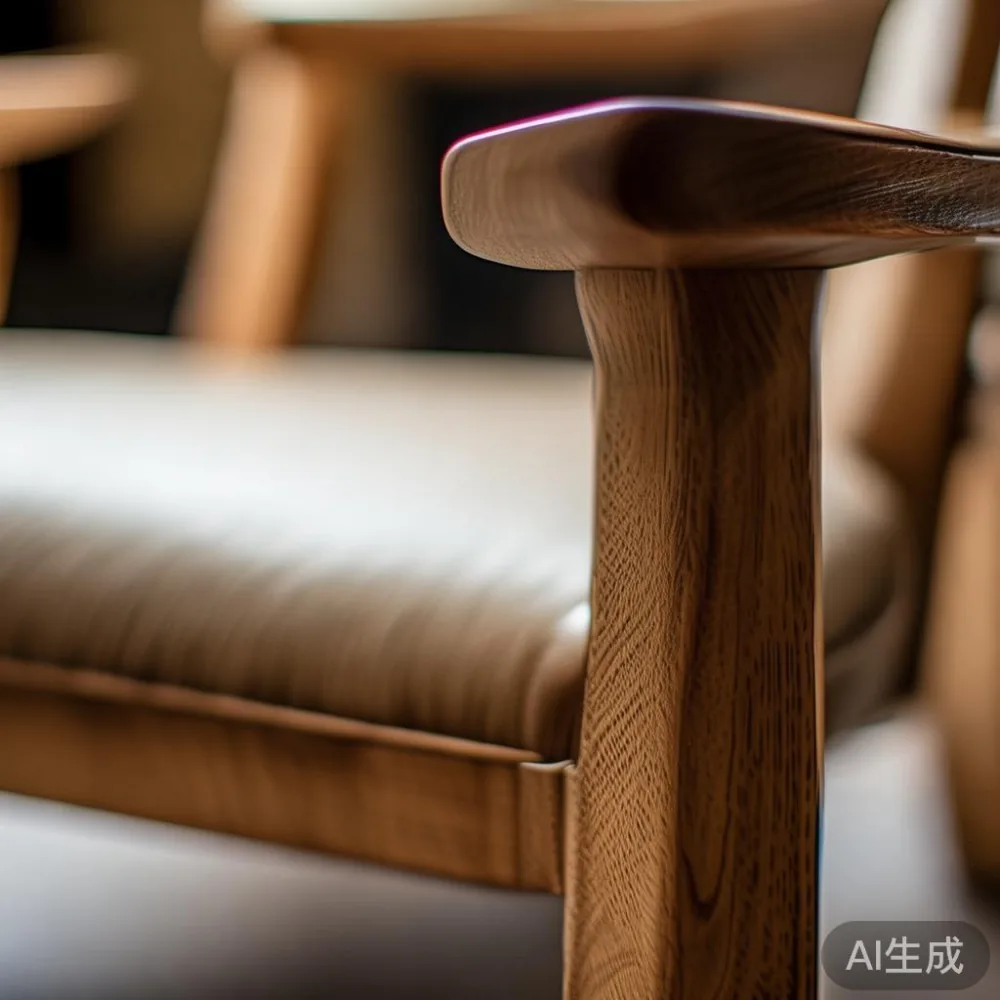
This guide focuses on solid wood accent chairs, while comparing the same pricing logic across a solid wood sofa, bed frame, dining table, wardrobe, nightstand and marble table. That comparison matters because a low chair price can disappear once delivery, access or finish upgrades become expensive.
MIDHILL has made solid wood furniture since 2008 and exports to more than 15 countries. Its 10-year structural warranty and lifetime refinishing policy reflect a different promise from disposable furniture: the piece should remain usable after years of daily contact. A light-luxury design can still be practical, but its price should be explained by measurable decisions rather than vague prestige.

Why do solid wood furniture prices differ so much?
The largest driver is often the timber itself. Oak, ash, beech, walnut, cherry and teak have different supply levels, growth rates, working properties and market demand. A 45 cm-wide solid oak accent chair may use about 8–14 kg of timber, depending on its construction. A hollow plywood version may weigh only 5–7 kg, yet use less wood. Lower weight alone does not mean inferior engineering; it means the material budget is different.
Species must also be separated from product grade. “Solid wood” describes the main structural material, not one uniform appearance. Furniture-grade boards selected for colour, grain matching and defect control can cost more than boards with stronger knots or irregular grain. For a single accent chair, a small colour difference may be acceptable. For a 200 cm dining table, matching the grain across several components takes more selection and machining.

Thickness changes both cost and perception. A 20 mm tabletop, 25 mm rails or 35–40 mm legs require more timber, more drying time and heavier handling. A 180 cm solid wood dining table in ordinary timber might weigh 45–65 kg. A thicker European oak design can reach 75–90 kg. Those kilograms affect workshop handling, protective packaging and the vehicle needed for delivery to Singapore.
Joinery is another price driver. Mortise-and-tenon joints, dowels, bridle joints and carefully fitted solid wood components take more setup than simple screws into concealed panels. Dowelled chairs can remain sturdy, but the joint design still influences labour. Hardware matters too: a basic undamped hinge may cost less than a soft-close mechanism, while solid brass or metal fittings can add another SGD 20–180 per unit.
In a solid wood bed frame, stability depends on the leg-to-rail connection, not just the visible wood. A queen bed with rails and slats may weigh 55–90 kg. Slat spacing can affect load distribution; wider unsupported gaps may create movement. In a wardrobe, drawer runners, hanging rails and door alignment affect daily use. In a nightstand, a small 45 cm cabinet can contain the same hidden complexity as a larger piece because the fittings consume space inside the carcass.
How much should a solid wood accent chair cost in Singapore?
A practical solid wood accent chair commonly falls between SGD 280 and SGD 1,200 before delivery. A simpler 50–55 cm-wide chair using beech or rubberwood may sit around SGD 280–500. A shaped oak design with a upholstered seat can range from SGD 500–850. A hand-finished walnut chair with a more demanding frame and detailed joinery may reach SGD 850–1,200.
The accent chair is a useful case because it is compact but still exposes material decisions. Seat width, seat height, arm shape and back angle determine how much timber is needed. A 48 cm-wide chair with solid side panels can use more material than a 52 cm-wide chair made with slender spindles. Comfortable armrests at 62–66 cm above the floor may require thicker components and reinforced joints. A padded seat adds foam, fabric and sewing work; a fully upholstered back also adds labour and shipping volume.
For a Singapore home, the chair must fit the route as well as the room. HDB lift doors may be around 80–90 cm wide, while corridor turns can be tight. A chair boxed at 60 × 60 × 82 cm will not necessarily pass if the lift car or corridor corner is narrower. Measure the narrowest door, lift door, lift car, hallway turn and final doorway before ordering. A chair that is comfortable at 55 cm wide may still be impossible to move upstairs in a compact lift.
Compare the delivered price, not only the catalogue price. Delivery to a Singapore address may add SGD 40–120 for a normal urban drop-off, while carrying a chair up several flights without a suitable lift may cost SGD 80–250. GST at 9% must also be included in the final budget. Over US$350 in eligible orders, MIDHILL offers free shipping, but the threshold should be checked against the live order terms because destination and item conditions can affect eligibility.
What does finish quality really add to the price?
Finish is not a single bucket labelled “wood colour”. It can include sanding, stain, filler, primer, topcoat, dry film thickness, colour matching and hand rubbing. An unfinished chair may cost less because the buyer accepts sanding and coating. A factory-finished chair is easier to place, but a hard, thick finish can look less tactile if the surface is overbuilt. A low-sheen finish that preserves the grain may require more careful preparation and correction.
Stain is usually cheaper than a multi-coat painted finish, but that is not a rule for every design. Covering a strongly figured grain can require several additional coats. A painted French provincial wardrobe may therefore cost more in labour than a stained oak wardrobe of similar board volume. The keyword how to choose French provincial wardrobe is useful for buyers comparing colour, proportion and construction, but the finish specification should be requested in writing.
For a marble table, the material story changes. A 120 cm marble dining table may weigh 65–110 kg, depending on slab thickness and whether the base is stone, wood or metal. Marble costs reflect slab selection, cutting, edge work, reinforcement and packaging. A marble top with a simple rectangular edge may be less expensive than a bevelled or irregular edge. The solid wood dining table beside it may weigh 45–75 kg, but its grain, joinery and finish can carry a different labour cost.
Ask what coating is being used, how many coats are applied and whether the surface can be repaired. A clear lacquer, oil and wax are not interchangeable. Oil can make maintenance straightforward but may need periodic reapplication. Wax offers a different tactile result and maintenance rhythm. Lacquer can resist spills but needs careful repair if scratched. MIDHILL’s lifetime refinishing service is meaningful because a solid wood piece can be restored rather than replaced, subject to the stated service terms.
Does solid wood mean luxury, or is it only a material?
Solid wood gives a piece a material identity, but luxury positioning comes from proportion, silhouette, tactile finish, detailing and restraint. French light luxury often uses curved profiles, pale finishes and elegant upholstery. American light luxury frequently balances solid timber with comfortable cushions and generous scale. Post-modern light luxury may pair clean geometry with a contrasting leg, back or edge treatment. The label is useful only if it explains what the buyer is receiving.
For example, a compact 54 cm accent chair with a shaped ash back, a 4–6 cm seat and a matte oil finish could support a French light luxury direction without filling a small room. A wider 60 cm chair with a low, relaxed back might read as American light luxury. A blackened rear rail against natural oak could create a post-modern light luxury detail. Those choices affect labour and perceived quality, but they should still match how the chair will be used.
Search phrases such as luxury Mid-century modern furniture or Mid-century modern dining table can help identify visual references, yet they do not establish a maker’s quality. Check the actual dimensions, timber species, board thickness, connection method and warranty. A chair called “Scandinavian” can still be assembled with weak screws and uneven spacing. A dining table called “Mid-century modern” may have a beautiful top and an undersized base.
For the best Scandinavian sofa for 2026, the relevant comparison is not only appearance. Inspect the frame, seat support, cushion density, fabric specification and removable-cover arrangement. A solid wood sofa may combine a timber frame with upholstered seating rather than solid wood cushions. That distinction should be stated clearly. Likewise, a solid wood bed frame may be paired with a mattress and fabric headboard that account for a large share of the price.
How do room size and Singapore delivery affect the final cost?
Size is a price factor because wood, labour and freight rise with volume, but bigger is not always more comfortable. A 220 cm solid wood dining table may suit a larger condo dining area, yet a 160–180 cm table can provide better circulation in an HDB flat. European for dining room is a broad design phrase, but the local question is more practical: can chairs pull back, can serving staff move, and can the table remain clear of a corridor?
A 150 cm dining table may fit 4–6 people, depending on chair clearance. A 200 cm table may fit 6–8, but it needs more floor area. A typical chair requires roughly 75–90 cm of pull-back space. In a compact HDB dining area, even a 10 cm measurement error can make a room feel crowded. If a Japanese for small living room layout is being considered, a smaller round dining table may preserve circulation better than a rectangular design.
Delivery can become the largest surprise when access is complicated. A lift with an internal height of 198 cm may not accept a 210 cm wardrobe even if the door width is sufficient. A 220 cm bed frame may need to be carried in sections. A marble table may require two people and a rated trolley. A 90 kg solid wood dining table is not an ordinary parcel, so protective packaging and proper lifting matter.
Ask for packed dimensions and weight, not just the assembled dimensions. Confirm whether delivery includes unpacking, carrying, stair climbing and assembly. In Singapore, GST at 9% should be calculated separately. Some suppliers quote a low product price and add a substantial remote-area or extra-carry fee. Clear delivery terms are part of a fair price, not an afterthought.
What questions should I ask before paying for solid wood furniture?
Ask whether the main frame, rails, legs and visible panels are solid wood. Some products use solid wood only on the visible surface while the hidden structure uses plywood or engineered board. That can be acceptable when the construction is disclosed, but it should not be presented as solid wood throughout. Request the timber species, dimensions, finish type and expected weight.
Ask how joints are made and whether they can move with seasonal wood movement. A small amount of movement is normal in solid wood furniture. Tight, short-screw attachments can be less forgiving than properly fitted joints. Check whether drawer boxes are solid wood or birch plywood, and whether runners are damped. For a bed frame, ask about centre support, slat spacing and the load rating. For a wardrobe, check hanging-rail height, shelf spacing, door swing and anti-tip provisions.
Ask what happens if a component arrives damaged. A 14-day return policy can provide a defined period for assessment, but a furniture maker should also explain damage claims, packaging standards and replacement components. A 10-year structural warranty is useful only if the scope is clear. Confirm whether it covers frame failure, joinery failure and approved use, and whether finish or accidental damage is excluded.
Last month I visited a supplier’s workshop in Foshan and watched a solid wood bed frame being assembled. The frame looked ordinary at first: four legs, side rails and a centre rail. The important difference was in the corner joint. The craftsman checked each shoulder, fitted the tenon, tested alignment and then marked the joint before final assembly. The same timber could have been screwed into a weaker frame in half the time, but the service life would have been very different.
That experience is a useful reminder to price the invisible work. An accent chair may reveal gaps at the joints, uneven arm heights or a loose back. A dining table may rock because the legs were not aligned. A wardrobe may close unevenly because the doors were not fitted under controlled conditions. A nightstand can look finished until the drawer catches. Price should include inspection and correction, not only the wood itself.
Which price range fits each product type?
A solid wood accent chair may range from SGD 280–1,200, with upholstered and finely finished designs above that. A solid wood bed frame may range from SGD 700–2,500 depending on size, timber, slat system and headboard design. A solid wood dining table may range from SGD 1,200–4,500 for ordinary residential sizes, while elaborate solid wood and marble versions can exceed SGD 6,000. A wardrobe may range from SGD 900–4,000, with tall fitted storage, premium finishes and interior fittings changing the figure. A nightstand may fall between SGD 180–800.
A marble table may range from SGD 1,800–7,000 depending on slab, dimensions, edge treatment and base. A solid wood sofa may range from SGD 1,500–6,500, but the frame and upholstery specification should be checked separately. These figures are guides rather than promises; Singapore GST, delivery and access charges can alter the final amount.
The most useful comparison is value per use. If an accent chair costs SGD 600 and lasts 15 years with refinishing, its annual ownership cost is about SGD 40 before maintenance. A SGD 250 chair replaced every 4 years costs about SGD 62.50 per year over that period. This is not an excuse to buy anything expensive; it is a reason to consider longevity, repairability and fit.
For a small Singapore home, start with measurements. Record the room, lift, corridor and doorway. Choose a solid wood accent chair that fits the chair pull-back space, has a comfortable seat height around 43–47 cm and uses a finish you can maintain. Add a dining table only after checking circulation. Consider a bed frame that enters the bedroom in manageable sections. Specify a wardrobe that opens without colliding with a wall or another cabinet.
Solid wood furniture earns its price through controlled material use, accurate construction, durable hardware, thoughtful finishing and delivery planning. The species name matters, but so do thickness, joinery, tolerances, repair policy and fit. For light-luxury design, French, American and post-modern influences can be expressed without excess if the silhouette is intentional and the details are coherent. Pay for the construction you will live with every day, not for a label on a product page.