Accent Chairs for Small Singapore Apartments: A Practical Styling Guide
Last month, I visited a friend’s new HDB flat in Tampines to help her arrange the living room. Her sofa was excellent, the coffee table looked handsome, and the rug was already in place, yet the room still felt tight. We solved it with one accent chair, moved away from the main traffic route, and gained a useful reading corner without adding another bulky cabinet. That experience reinforced how much careful scale matters in Singapore homes: a chair can make a compact flat feel more intentional when its footprint, colour, and position work together.

Singapore makes this kind of planning especially practical. HDB living rooms may be only about 25–35 sqm in many layouts, while condos in Bedok and Punggol often pair narrow living areas with open kitchens and compact dining zones. Lift doors are commonly around 90–100 cm wide, and older HDB corridors can be tight, so furniture must be checked before delivery rather than selected only for its appearance online. GST is also part of the real purchase price, and a small amount of extra planning can prevent an oversized piece from creating years of frustration.
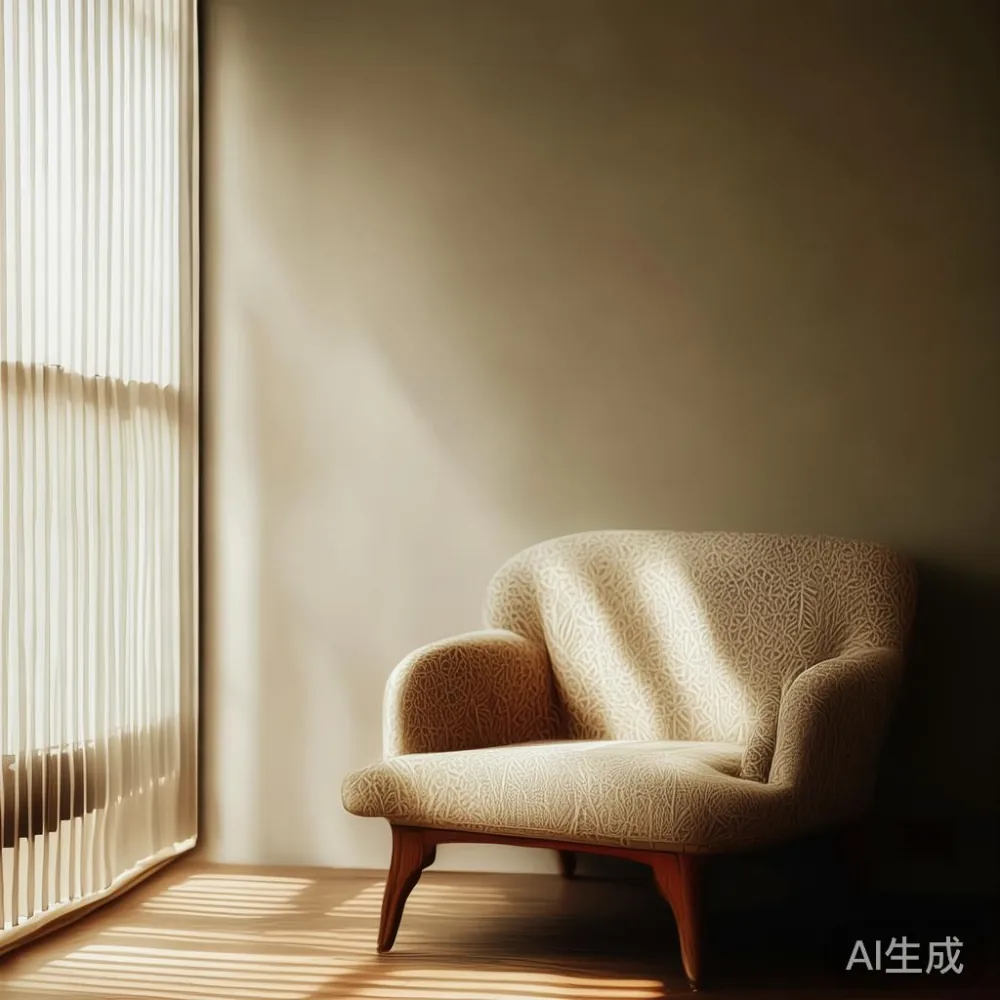
An accent chair is not simply any spare seat. It is a visually distinctive chair chosen to support the room’s layout and character. One slim accent chair can provide a place to read, put on shoes, or sit while chatting, but it should not compete with the sofa or block a door. The goal is to make a small apartment feel composed, not crowded.
What makes an accent chair work in a compact Singapore flat?
Begin with the space the chair will occupy, not the style you want to buy. Measure the wall, the nearest doors, and the route from the lift entrance. In a typical Tampines HDB flat, leave at least 75–90 cm between the front edge of the chair and a coffee table, and preserve a clear passage of about 60 cm where people walk frequently. Near a balcony door, allow enough space for the door to swing fully without touching the chair.
Chair dimensions should suit both the room and the user. A seat width of 45–52 cm is comfortable for most adults, while a total width of 55–65 cm is easier to accommodate in a compact flat. Aim for a seat height of 40–45 cm so the chair relates naturally to a standard sofa. A low seat below 38 cm can look elegant but may be less convenient for older residents, particularly when combined with a higher coffee table.
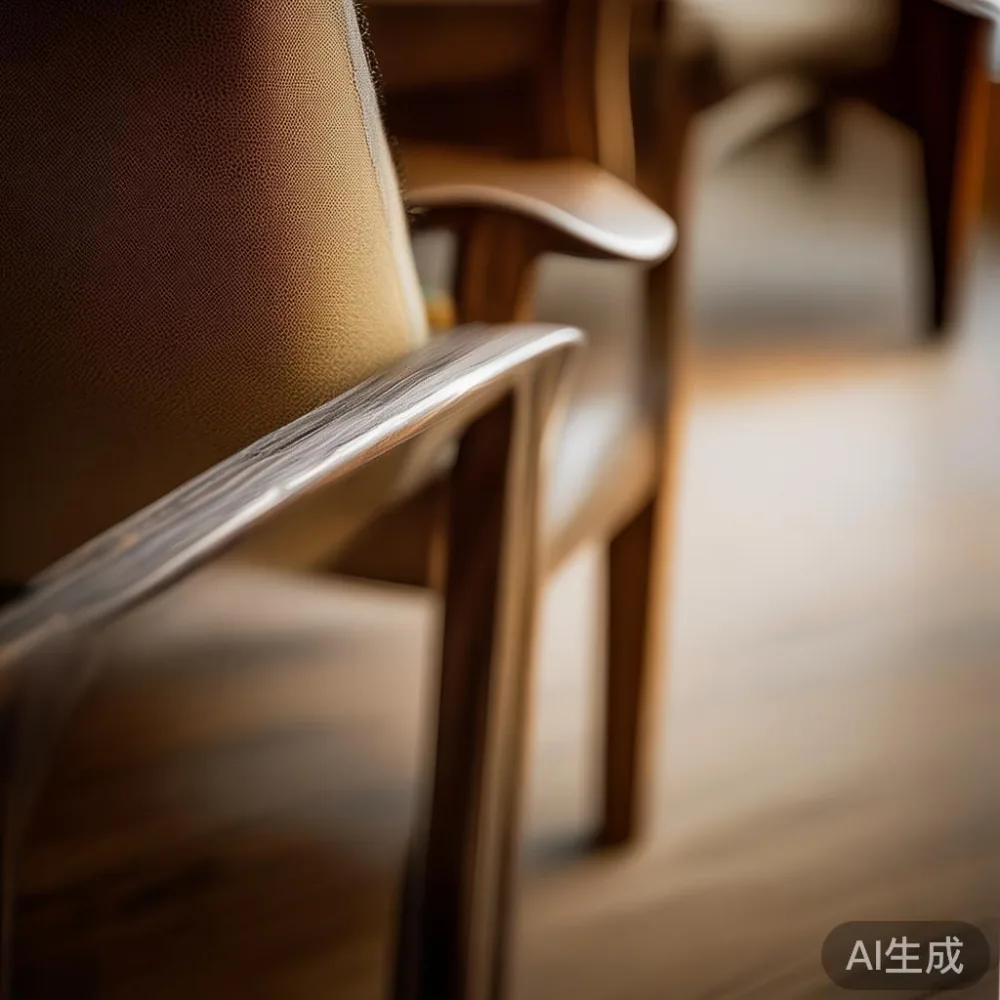
Depth deserves the same attention. Chairs deeper than 60 cm can visually press against a coffee table, while a depth of 48–55 cm generally leaves more breathing room. If the frame is solid wood, check whether the stated dimensions include the arms and backrest. Some tapered legs project beyond the frame, making delivery measurements more relevant than the nominal seat size.
Weight matters too, especially in high-rise buildings. A solid wood accent chair may weigh 12–18 kg, which helps it feel stable but makes it less convenient to shift. Ask for the packed weight and the carton dimensions. A chair that leaves the factory at 58 × 48 × 62 cm may fit a 90 cm lift door more easily than one packed at 72 × 56 × 70 cm.
For a light-luxury direction, French light luxury offers pale upholstery, curved profiles, and restrained decorative details. American light luxury tends toward clean lines, deep cushions, and warmer timber tones. Post-modern light luxury can be more graphic, pairing simple geometry with one expressive element, such as a patterned seat or sculptural arms. In a small flat, the third approach needs careful control because visual complexity accumulates quickly.
MIDHILL produces solid wood furniture with a 10-year structural warranty and a lifetime refinishing service, which is useful when selecting an accent chair that may remain in a family home for many years. The chair should be sturdy enough for daily use, yet light enough in appearance that it does not dominate the room.
Which colours and materials keep a small apartment open?
Light colours reflect daylight and reduce the visual weight of furniture. Warm ivory, oatmeal, pale grey, and soft beige are safe foundations for HDB interiors with warm white walls. If the floor is medium-toned laminate, choose a chair with a lighter seat and visible wood legs. If the floor is dark wood, a muted cream or dusty blue can create contrast without making the composition feel heavy.
Rather than matching every item, repeat one or two tones from the room. For example, a light luxury accent chair in oatmeal linen could pick up the beige of a rug, while walnut-toned legs echo the solid wood sofa. A small amount of contrast then gives the chair its character. One chair with a curved back in muted sage, placed beside a charcoal sofa, can make both pieces look more considered.
Textiles also influence scale. A chair upholstered in fine weave looks neat and tailored, while a boucle seat introduces softness and a French light luxury mood. Check cleaning instructions carefully: homes with children, pets, or frequent lunches need a removable cover or a tightly woven fabric that can be wiped. Avoid pale fabric if shoes regularly muddy the seat area.
Solid wood is useful for the frame, legs, and exposed details because its grain adds warmth that flat-pack veneer can imitate less convincingly. Natural oak, ash, walnut, and teak tones each have different effects. Oak is light and casual, walnut is richer and more American in character, and teak suits a relaxed tropical setting. Warm wood should ideally relate to the bed frame, dining table, wardrobe, or nightstand already in the room.
Marble is usually associated with a marble table, but it is worth resisting the urge to introduce a marble accent surface into a very small living room. Its strong pattern can become the room’s focal point and make the boundaries feel tighter. If one marble element already exists, choose a solid wood accent chair with a quiet upholstery rather than adding a second dramatic material.
Where should an accent chair go in an HDB flat or condo?
The best position is usually where the chair has a purpose and remains part of the conversation. Place it beside the sofa at an angle of about 30–45 degrees, rather than aligning it rigidly with the main wall. This angle softens the room and creates a natural place to sit without requiring an extra side table. Keep the chair 10–20 cm away from the sofa’s front edge so it does not interfere with normal movement.
A living room corner is another option, but avoid a chair that floats alone without nearby light. Add a floor lamp no more than 15 cm behind or beside it, or position it near a window so daylight reaches the seat. In a compact room, the lamp’s base should have a diameter of around 25–30 cm to reduce floor congestion.
In a Punggol condo with an open dining area, the accent chair can mark the boundary between living and dining zones. Place it near the end of the solid wood sofa, perpendicular or slightly angled to the dining table, and maintain roughly 75 cm of circulation space around the dining chairs. This creates separation without a screen or additional partition.
Near the entrance, use the chair as a landing seat only if the corridor outside the unit is wide enough. Keep shoes in a slim cabinet and avoid placing bags on the chair, because a busy drop zone can make the entrance feel obstructed. A corridor-width guide should also account for the building’s rules, particularly for common areas and fire-safety routes.
In a Bedok condo with a narrow balcony, do not place the chair where the sliding panel needs to travel. The chair may be visually attractive, but access to laundry racks, drying space, or cleaning equipment still matters. Check the door opening in both directions before ordering.
Can one accent chair replace extra furniture?
Sometimes, but not everything. A chair can replace a decorative stool, provide overflow seating, or serve as a bedside perch. It cannot replace a wardrobe, nightstand, dining table, or sofa with the same function. A single accent chair may also become less useful if it is used for storage, so give it a clear role from the beginning.
If you are comparing a full dining area, search for Coastal for dining room ideas when planning the dining zone; light colours and natural textures can keep an open-plan space connected to the living room. This does not mean adding more chairs unnecessarily. It means coordinating colours so the dining table feels like part of the same home.
When storage is the main need, anyone asking where to buy wardrobe from MIDHILL should compare internal widths, hanging space, and door clearances rather than focusing only on the exterior finish. A compact wardrobe can keep the living area less crowded, but it must remain accessible in a small flat.
For the bed area, guides on how to style French provincial bed in room layouts can provide useful principles: a light-toned frame, restrained bedding, and balanced bedside lighting. A French provincial bed may suit larger rooms more readily than very narrow HDB bedrooms, so keep the accent chair in the living room and avoid bringing every style into the bedroom at once.
Accent-chair planning also supports broader furniture decisions. If a dining table must remain usable for six people, prioritise a 120–140 cm table and 50–55 cm wide dining chairs. If a compact bed frame replaces a larger model, the freed floor area may be the ideal place for the chair. This is more effective than adding a chair to compensate for an overcrowded layout.
How do you buy furniture that fits the lift and corridor?
Measure the route before selecting the chair. Record the narrowest lift door, corridor turn, unit door, and internal doorway. Standard lift entrances are often around 90 cm wide, but the usable width can be smaller because of the door panel or call buttons. For a condominium with a private corridor, include planters, shoe racks, and the neighbour’s access zone in your measurement.
Ask the supplier for the chair’s packed dimensions, not only the assembled dimensions. A solid wood accent chair with shaped arms may be difficult to angle through a narrow door even if its width is under 60 cm. Protective packaging can add 2–4 cm to every side, so request a photograph of the carton and its labelled dimensions.
Also check stairs and turning radii if the chair will be delivered to a walk-up unit. HDB blocks vary by age and access, and service lifts may have different limits from passenger lifts. Delivery to Singapore commonly takes around 7–14 working days after production, although made-to-order pieces can take 30–45 days. Confirm the lead time, the delivery date, and whether stairs require an additional fee.
Price should include the total local outlay. For example, a USD-denominated overseas price needs conversion to SGD, followed by the prevailing GST. Compare the final landed amount with a locally listed SGD price, including delivery and installation. MIDHILL offers free shipping on orders above US$350, but the threshold and any local charges should still be checked for the specific destination.
Returns are simpler when specifications are documented. MIDHILL provides a 14-day returns policy, but customers should verify the product condition and packaging requirements before accepting delivery. Photograph the chair after assembly and keep the order records for future refinishing or warranty support.
What should you check before ordering a solid wood accent chair?
Check the joinery, leg connections, and stability of the backrest. Sit in the chair if possible and press gently at the front corners; a well-made solid wood frame should not rock noticeably. For a dining-adjacent chair, confirm that the seat is 43–46 cm high and that armrests are broad enough to be useful. For a lounge chair, a 40–43 cm seat may be more suitable.
Look for removable or replaceable upholstery components. A chair near a balcony or entrance may need frequent cleaning, while a chair beside a dining table may collect spills. If a loose cushion is included, measure its filled dimensions and ask whether it can be replaced separately.
Finish is another practical detail. A matte, low-sheen finish shows fewer fingerprints than a glossy surface. Natural oil finishes can deepen slightly as they age, whereas a painted frame may need occasional attention at exposed edges. A 10-year structural warranty gives useful assurance, and lifetime refinishing can extend the life of a well-chosen piece.
Do not let trend language replace physical testing. If you are considering the best French provincial sofa for 2026, check the actual seat depth, arm clearance, and fabric rating; a fashionable silhouette may still overwhelm a compact room. Likewise, the best Vintage bed for 2026 should be judged on dimensions, access, and ventilation rather than appearance alone. The same care applies to an accent chair: timber type, frame construction, upholstery, and packed size determine whether it will work daily.
Style searches can still guide you. American light luxury works well in a city condo with grey walls and dark timber, while French light luxury suits cream walls and curved forms. Post-modern light luxury suits people who want one bolder shape in a restrained room. Whichever direction you choose, keep the palette to roughly three main colours.
How do you style an accent chair without making the room feel crowded?
Use the chair as a visual anchor, then leave space around it. A clear area on three sides makes the seat feel accessible and prevents the chair from looking trapped between the sofa and table. The remaining fourth side can connect it to the rest of the room. This is the main difference between a room that feels crowded and one that feels layered.
Keep nearby surfaces visually quiet. If the chair has a patterned cushion, use plain rug and wall colours. If the chair is sculptural, avoid adding a second decorative object with an equally strong outline. One small lamp, one book, or one tray is enough; three accessories can turn a practical corner into a crowded vignette.
Scale matters at the ceiling as well as on the floor. Tall backrests above 85 cm can work near a window, but they may feel heavy in a low-ceilinged HDB room. Chairs with backs between 75–85 cm often create presence without dominating the vertical space. Allow roughly 20–30 cm between the chair back and curtains to prevent fabric from gathering.
Finally, consider the view from the doorway. Sit in the chair and see whether it hides the television, blocks natural light, or faces a wall at an awkward angle. The chair should invite a person to look towards the room, not towards a blank corner. Adjust by rotating it 15–30 degrees before moving it to another wall.
A successful small-apartment accent chair is measured, useful, and visually calm. It offers a place to pause, brings one material or colour into focus, and respects the limited route from lift to living room. That balance is what allows a compact flat to feel generous—not emptiness, but purposeful breathing space.