Optimal Accent Chair Sizes for Singapore HDB Living Rooms
Choosing an accent chair for a Singapore HDB flat is mostly a matter of measuring the room, the lift, the corridor, and the chair itself before spending a cent. A 72 cm-wide seat may look modest in a showroom and still dominate a compact living room once a 90 cm walkway, a coffee table, and the daily movement of several family members are taken into account.
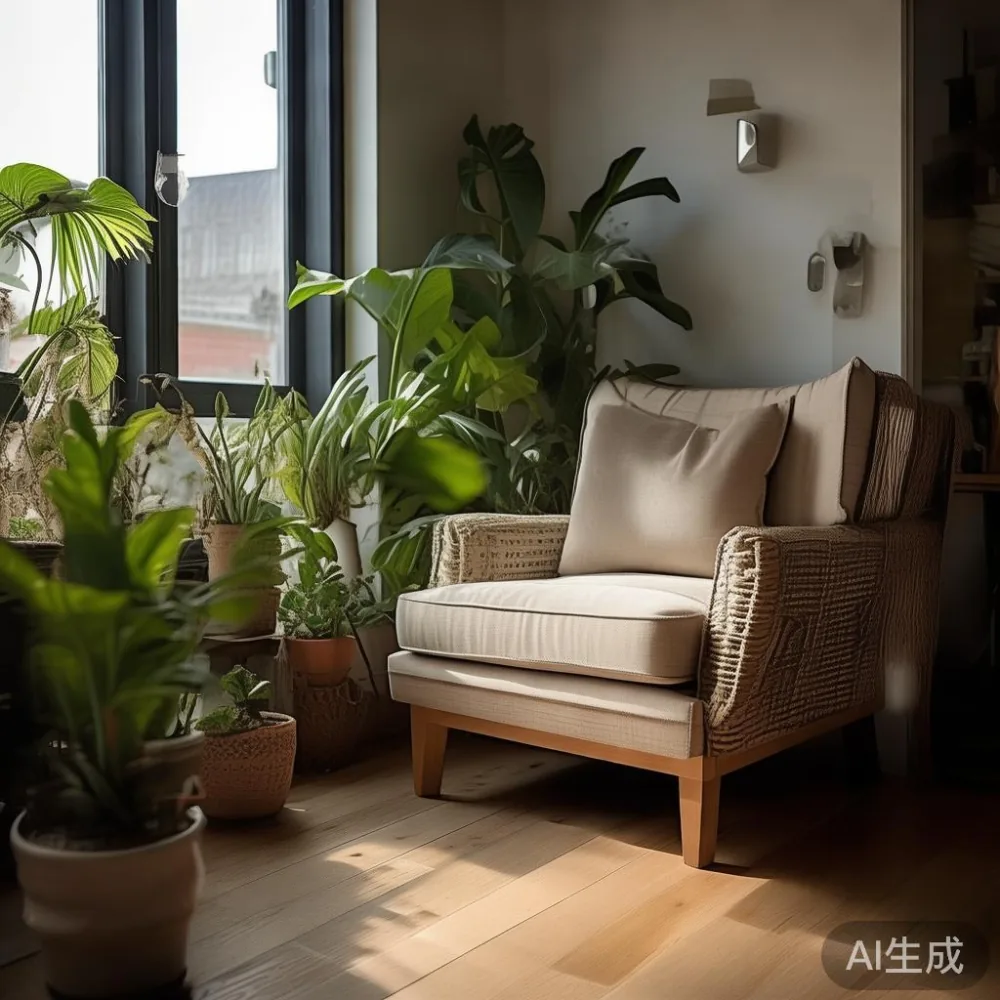
This guide focuses on one piece of furniture: the accent chair. It explains how to judge scale in HDB homes and condos across Tampines, Bedok, and Punggol, how solid-wood construction affects weight and delivery planning, and how to balance French light luxury, American light luxury, and post-modern light luxury without overcrowding the space. Prices are shown in SGD and include GST, as required for Singapore purchases.
What size accent chair fits a typical HDB living room?
Most Singapore HDB living rooms measure about 280 cm to 360 cm wide, although the usable footprint can be much smaller once the sofa, television console, dining table, and side tables are positioned. An accent chair should normally leave at least 75 cm of clear circulation space along its main approach, 60 cm between the chair and a coffee table, and 40 cm behind it for pulling the chair out to sit down.
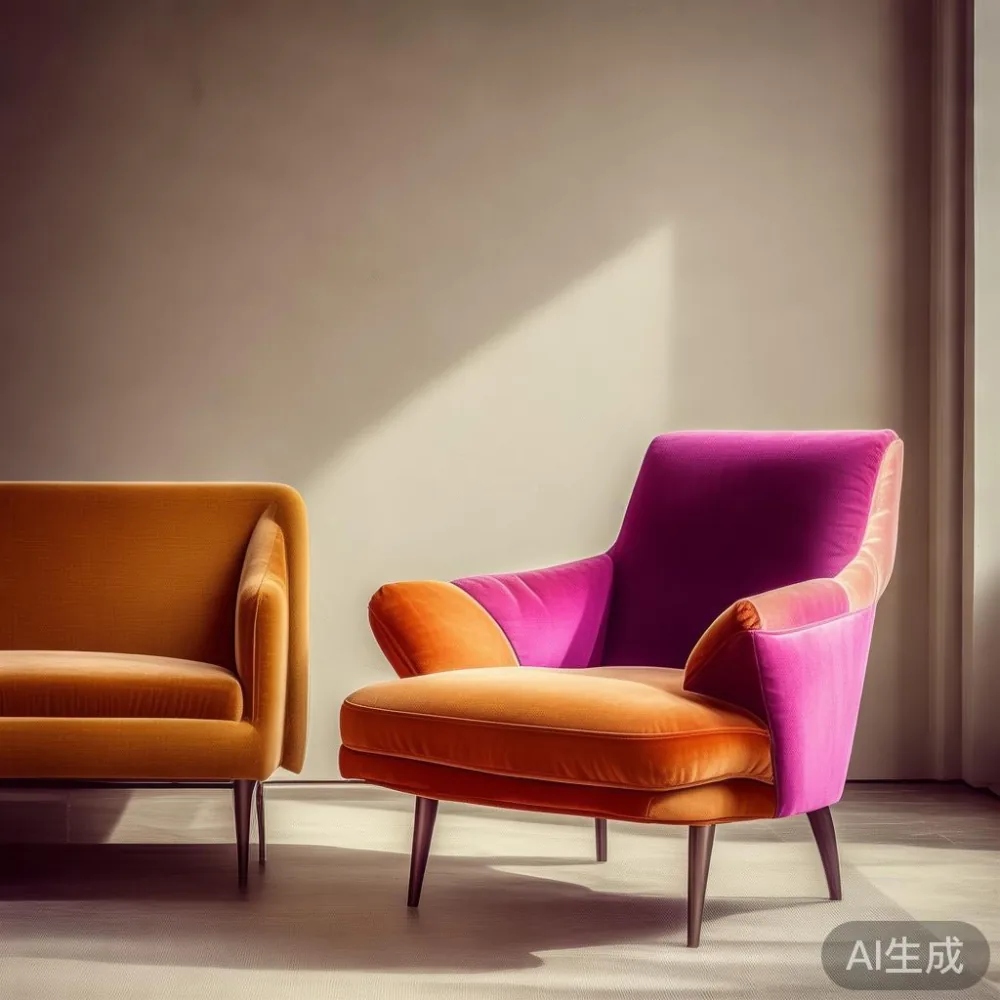
For a room under 300 cm wide, start with a chair no wider than 65 cm and no deeper than 70 cm. For a 300 cm to 360 cm room, a width of 68 cm to 76 cm is usually manageable. Larger rooms can accept an 80 cm to 90 cm chair if the seating arrangement still provides an 80 cm route from the entrance to the balcony or kitchen.
Seat height matters too. Choose approximately 40 cm to 44 cm for standard HDB coffee tables, especially if the chair will be used regularly by adults. A 46 cm to 48 cm seat works with a higher table but can make a compact arrangement feel less relaxed. Arms that extend beyond the stated seat width should also be included in the measurement.
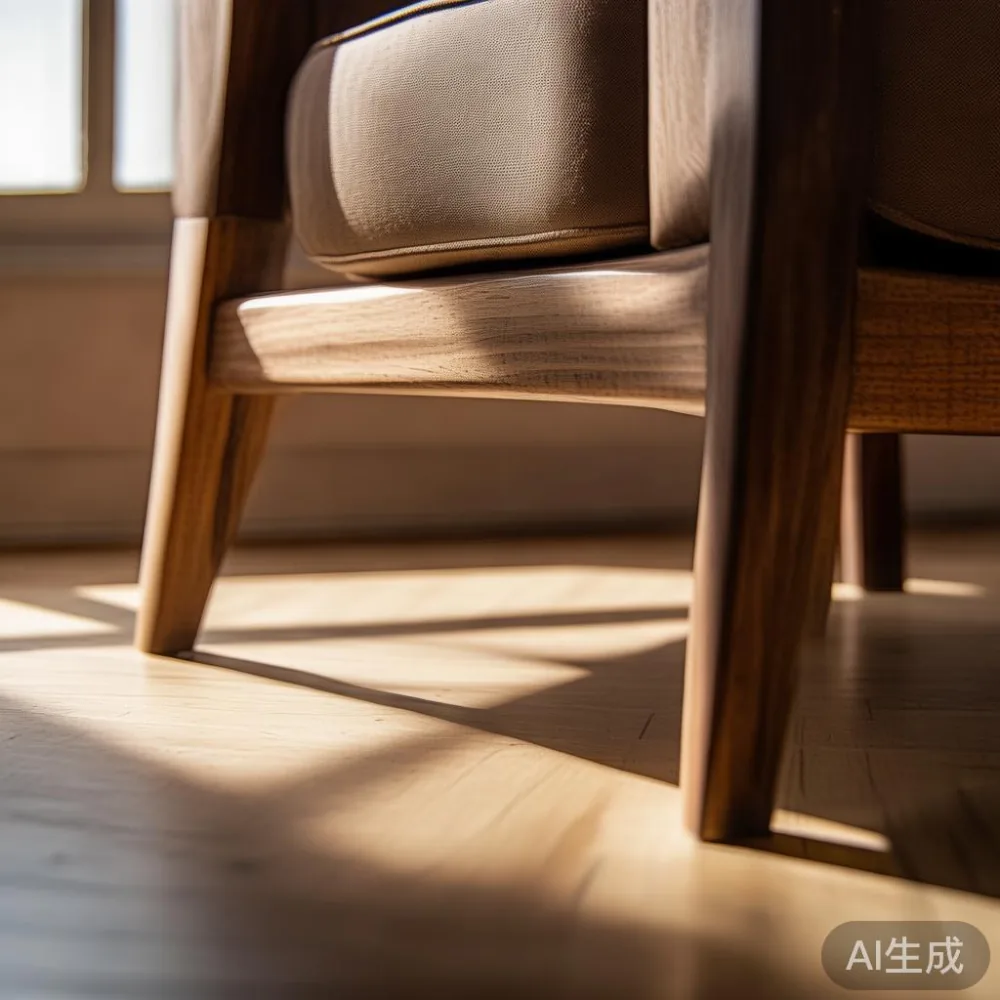
Do not judge scale from the chair’s front elevation alone. Look at the occupied zone: the physical chair plus roughly 30 cm of leg room in front and the movement space required to sit down. A narrow frame with slender arms can preserve visual space, while a deep cushion and wide arms can make even a 68 cm chair feel substantial.
How do I measure a chair before it reaches my HDB block?
Record the chair’s width, depth, height, seat width, seat height, and weight. A practical compact accent chair might measure 62 cm wide, 68 cm deep, and 78 cm tall, with a net weight of 11 kg to 14 kg. A broader solid-wood version could measure 76 cm wide, 74 cm deep, and 82 cm tall, weighing 16 kg to 21 kg.
Next, measure the route from the delivery lorry to the living room. Older HDB blocks often have corridor widths around 90 cm to 110 cm, but turns and fire doors can reduce the effective clearance. Newer lifts may provide an internal depth of 110 cm to 140 cm and a door opening of about 80 cm to 90 cm, with usable dimensions varying by block. Check the lift’s load limit as well; a 20 kg chair is rarely a load issue, while a large flat-packed carton may still be difficult to angle through the entrance.
I tested this process last month at a Bedok HDB flat during a colleague’s delivery. The chair fitted through the lift, but the 106 cm corridor became tight at the corner. Rotating the carton from diagonal to upright created enough clearance without scraping the handrail. That experience confirmed why delivery staff should measure the route in advance rather than assume that a building with a working lift means an easy move.
For stairs-only access, ask whether the chair is assembled or flat-packed. A flat-packed chair may fit through a 75 cm doorway more easily, but the carton can be 85 cm long. Confirm whether the box can be opened outside the flat and whether assembly can be completed inside the living room. Keep 5 cm of clearance below a closed HDB door if the delivery team also needs to manoeuvre around the main entrance.
Which measurements should I compare with my coffee table and sofa?
The accent chair should relate to the seating group, not float in an unused corner. Measure from the front edge of the sofa to the front edge of the chair. A distance of 35 cm to 45 cm feels conversational when the coffee table is compact. If a 90 cm to 110 cm marble table occupies the centre, the chair may need to sit 5 cm to 10 cm farther away.
A 60 cm-wide coffee table usually allows 40 cm between its edge and the chair’s front edge. For a 70 cm marble table, allow about 30 cm to 40 cm. These are usable clearances, not decorative gaps. In smaller HDB layouts, replacing a bulky centre table with a 45 cm round side table can create more freedom without changing the sofa.
The chair should also align visually with the sofa. A seat 5 cm to 10 cm above the sofa seat can create a deliberate hierarchy, but a 20 cm difference may make the chair look disconnected. A chair 6 cm to 10 cm narrower than the sofa’s single-seat section often looks balanced. In an open-plan unit, repeat the sofa’s wood tone in the chair frame or pick a textile colour already used in the curtains to make the accent chair feel intentional.
Keep the arrangement practical for Singapore’s humid climate and frequent shoe traffic. Leave at least 60 cm beside a main passage, avoid placing the chair where wet umbrellas drip onto its seat, and consider a washable loose cushion. For a home office corner, confirm that the chair can be tucked under a desk with a 72 cm surface height without striking the frame.
Are HDB lift and corridor widths enough for a solid-wood accent chair?
Often, yes, but the largest box dimension matters more than the chair width. A chair 70 cm wide may arrive in a carton 80 cm wide by 85 cm long by 24 cm deep. If the lift door is only 80 cm wide, the carton cannot pass through squarely and must be tilted. That is manageable with a light chair, but a rigid solid-wood construction needs careful handling.
Ask the supplier for the packed dimensions and gross weight. Allow the delivery team to check the route before unloading. A chair weighing less than 15 kg is usually easier to turn in a corridor; one weighing 20 kg or more may require two people. Carton protection should include corner guards, moisture-resistant wrapping, and a clear orientation label. Singapore’s high humidity makes that final point worth checking.
MIDHILL furniture is made by a Foshan solid-wood specialist established in 2008 and exported to more than 15 countries. Its 10-year structural warranty gives buyers a defined basis for comparing joinery and frame quality. The company also offers lifetime refinishing, which can be valuable for a solid-wood accent chair that is moved between rooms or exposed to daily use.
Delivery usually takes 7 to 14 days after order confirmation for stock arrangements, while made-to-order pieces can take 4 to 8 weeks. The exact lead time should be confirmed in writing. Freight charges, lift booking, and extra handling may apply. For online orders above US$350, the stated free-shipping threshold is useful, but a Singapore buyer should still request an SGD quote that includes GST and local delivery because freight terms may differ by destination.
How much should I budget for an accent chair in Singapore?
A compact engineered-wood accent chair may cost around SGD 280 to SGD 550 including GST. A solid-wood accent chair with a upholstered seat commonly falls between SGD 450 and SGD 950. A larger carved or French-inspired solid-wood design may range from SGD 850 to SGD 1,650, while a marble table used elsewhere in the room can add several hundred or several thousand SGD depending on the slab and base.
Price should be assessed against frame material, joinery, upholstery, finish, and warranty rather than style labels alone. Solid-wood frames are heavier than MDF or plywood frames, but weight alone does not prove quality. Look for mortise-and-tenon joints where applicable, consistent joints under the seat, a close-fitting back, and a finish that does not feel thin at corners. A 10-year structural warranty offers more useful information than a purely decorative product description.
For larger projects, compare the appearance of an Italian light luxury sideboard, a French wardrobe, and a solid-wood bed frame with the accent chair’s finish. A guest-room search for light luxury for guest room can lead to an upholstered seat with oak legs, while an American interior may favour a broad, channel-backed chair. Buying a coordinated chair now can reduce the need to replace several pieces later as the room develops.
Buyers researching top 10 French provincial furniture or top 10 American furniture will encounter many shaped arms, carved details, and neutral fabrics. Those references are useful for style identification, but dimensions remain the deciding factor in a Singapore home. A French provincial chair with a 78 cm width may require more clearance than a post-modern light luxury chair with a 64 cm frame.
How do I choose a style that does not make the room feel crowded?
French light luxury suits a compact flat when it is expressed through one shaped feature, such as a softly curved back, slim tapered legs, or a linen-blend cushion. Avoid combining a heavily carved frame, ornate upholstery, gold-coloured trim, and a voluminous seat. In a 280 cm-wide living room, one upholstered chair and one small side table are usually enough.
American light luxury often uses deeper seating and clearer symmetry. That can work in a larger condo living room measuring 400 cm or more, especially when the chair sits opposite a solid wood sofa and balances the television console. For an HDB flat, a narrower interpretation with straight lines, oak or walnut tones, and a seat under 70 cm wide is more space-efficient.
Post-modern light luxury offers another practical route: a sculptural profile, softened geometry, and restrained contrast. An accent chair with a curved plywood shell, dark timber legs, and a seat in warm grey can work with both warm wood and cool-grey walls. Keep the metal area below 15% of the visible chair if the room already contains black-framed doors or a black metal dining table.
Check the light. A dark walnut chair can look heavy beside a west-facing balcony in the late afternoon, while a pale oak frame may disappear against a cream wall. Position a sample in the actual room for 2 to 3 hours, including the strongest daylight. If the upholstery looks flat or dirty after use, choose a tighter weave or removable cover rather than relying on delicate pale fabric.
For a coordinated scheme, compare the chair with any existing solid wood sofa, dining table, wardrobe, or nightstand. Matching wood species is helpful, but matching the exact stain matters more if pieces were bought at different times. A chair can also provide deliberate contrast: walnut against a cream solid wood sofa, or natural oak against an upholstered seat in muted blue.
What questions should I ask before ordering an accent chair?
Ask for the exact dimensions with the arms and cushions included, the seat height, the internal seat width, the net weight, and the packed carton dimensions. Confirm whether the quoted dimensions are finished dimensions rather than carton measurements. A supplier that replies with 72 cm by 70 cm by 80 cm and 14 kg is giving a more useful specification than one offering only “approximately lounge size.”
Ask how the chair is joined, what type of wood is used, and whether solid wood or mixed construction applies to the frame, legs, back, and side panels. “Solid wood” should not be used loosely. A frame described as solid wood can still use plywood or engineered timber in selected parts, so request a material breakdown.
Confirm the finish, upholstery composition, cushion fill, care instructions, and warranty exclusions. For Singapore households, ask whether the finish resists humid conditions and whether loose covers can be cleaned in Singapore. If you are also considering is French wardrobe worth it as a room-storage question, review moisture resistance, drawer movement, and warranty in the same way.
Finally, verify the delivery process. What is the estimated dispatch time? Does the fee include GST, lift booking, and carry-in? What happens if the chair does not fit through the lift? Can the chair be returned within 14 days, and who arranges collection? These details remove uncertainty from a purchase that may involve a 6 to 20 kg solid-wood chair and a route with several turns.
What is the right size for a Punggol or Tampines condo living room?
Condo living rooms vary more than HDB dimensions, but space planning follows the same sequence. Measure the room, sketch the fixed items, mark 75 cm to 80 cm walkways, and then place the accent chair. A 68 cm to 76 cm chair usually works in a 320 cm to 380 cm open-plan living area. A room with a 2.4 m-long marble table and a wide balcony opening may need a chair no deeper than 68 cm.
In Punggol homes with pale flooring and grey-toned walls, a light oak accent chair with oatmeal upholstery can preserve an open appearance. In Tampines interiors that use darker walnut furniture, a narrower chair with a gently curved back adds character without another heavy visual block. At Bedok, where many HDB flats have compact dining areas connected to the living room, choose a chair that can tuck beneath the dining table when guests are not using the lounge.
My practical shortlist for a typical Singapore living room is a 64 cm to 70 cm width, 65 cm to 72 cm depth, 40 cm to 43 cm seat height, and 12 kg to 16 kg net weight. Add a removable cushion, solid-wood legs, and a finish suited to humid use. The goal is not merely a chair that fits; it is a chair that can be reached without obstructing the route from the lift to the home.