Humidity, HDB Lifts, and Your Accent Chair: A Singapore Owner’s Field Guide to Solid Wood Furniture
I live on the 14th floor of a Tampines HDB, and last February I left an oak accent chair by the balcony door for a single afternoon while the windows were open. By evening, the tenon on the front left leg had swollen enough that the chair rocked when I sat down. The relative humidity inside my flat had drifted past 78%. That single evening is the reason I started timing all my furniture moves to the 3 p.m.–4 p.m. window when the bathroom hygrometer reads its lowest. If you have ever watched a wardrobe door stick in a Punggol condo during the December monsoon surge, this article is written for you.
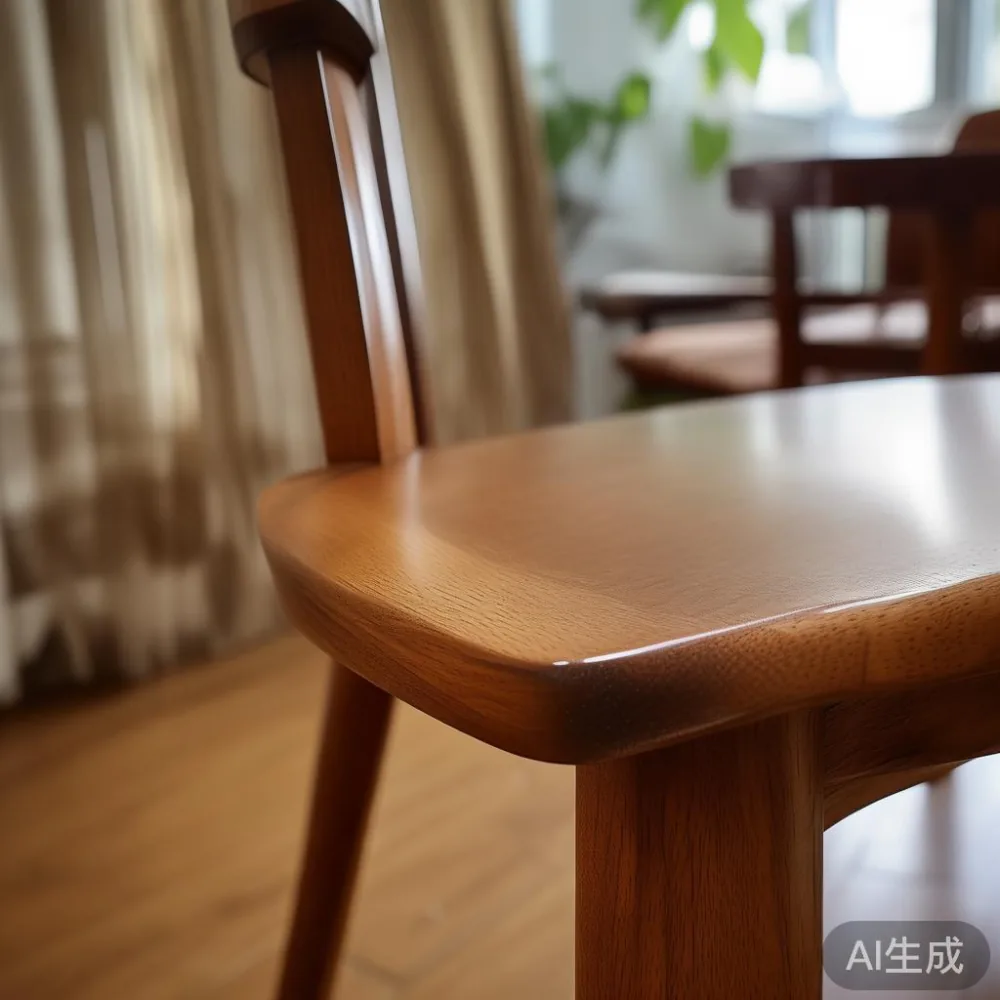
Most people I speak with in Bedok and Toa Payoh treat furniture as a static purchase — buy, deliver, forget. Solid wood is not static. It is a porous material that breathes with the room. Across Singapore, the annual mean relative humidity sits between 70% and 82%, and daily swings of 15% are common when the air-con fights the afternoon thunderstorm. Knowing how to handle that movement is the difference between an accent chair that tightens and loosens nicely through ten monsoons, and a dining table that cracks at the breadboard by month eleven.
Why Southeast Asian Humidity Hits Solid Wood So Hard
Solid wood is hygroscopic. Every cell wall in an oak stave or a teak slat is waiting to absorb or release water vapour until it reaches equilibrium with the surrounding air. In Foshan, where many pieces of French-inspired light luxury furniture are crafted, factory humidity is held between 45% and 55%, with kiln-dried lumber at roughly 8% to 10% moisture content. When that same piece lands in a Singapore HDB corridor, the wood begins moving immediately.
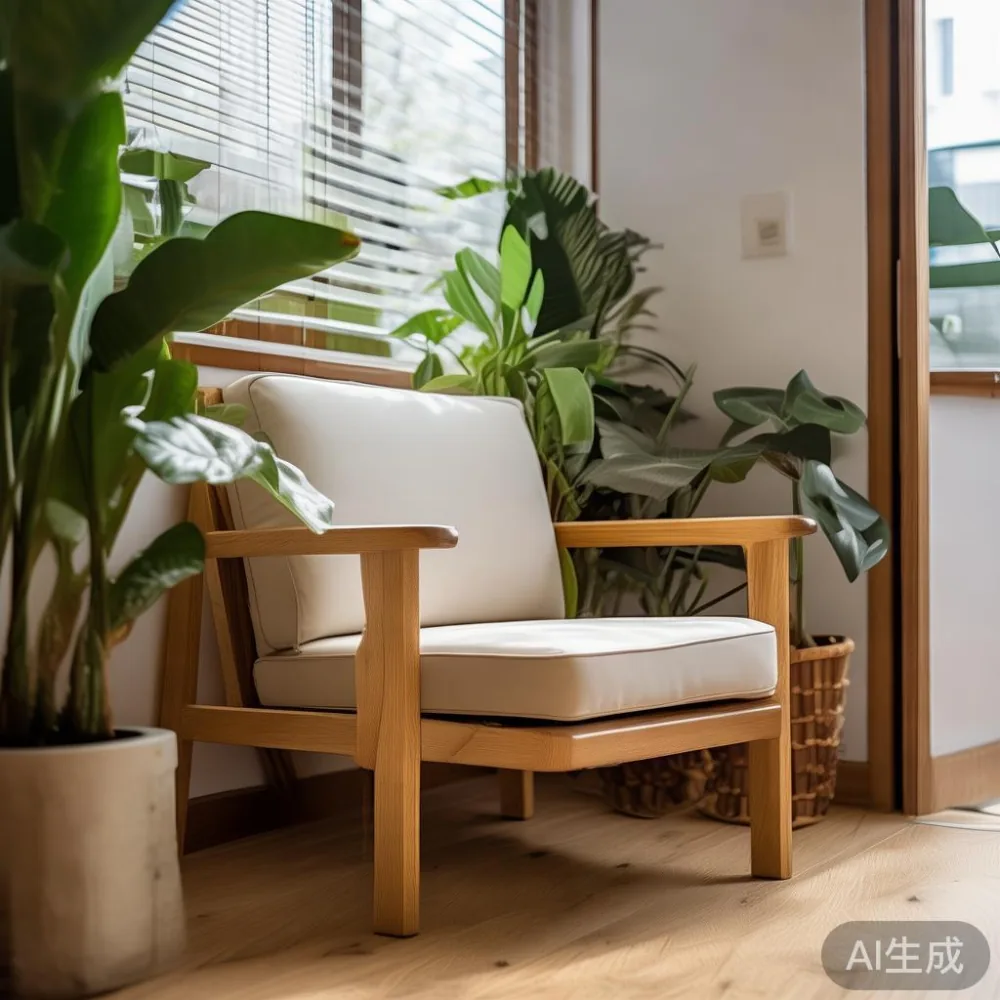
A 180 cm dining table top can change width by 4 mm across a 20% humidity swing. A 90 cm nightstand top can warp by 2 mm on the diagonals if the joints are glued with a brittle adhesive. Even bed frames — particularly those with headboard panels wider than 120 cm — show cupping when one side of the room faces a north-facing window.
Three forces drive this:
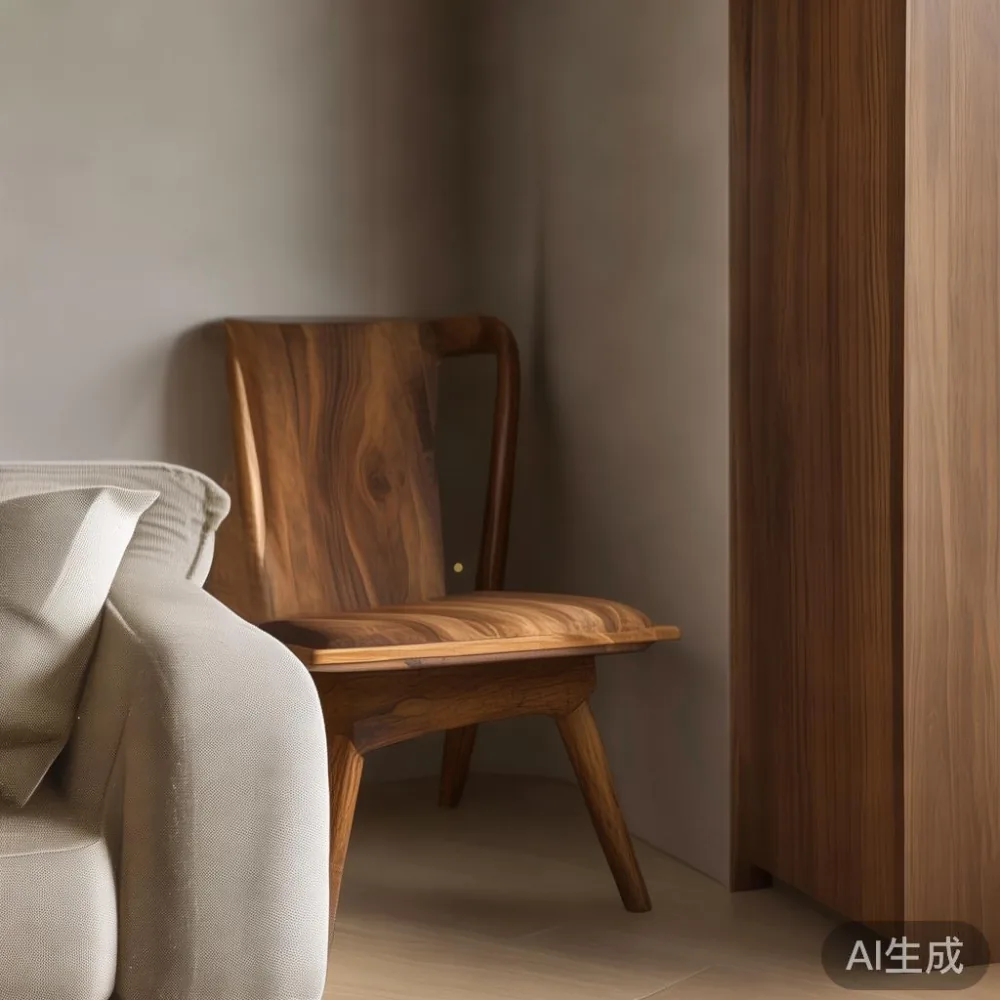
1. Daily cycling. Air-con runs from 11 p.m. to 7 a.m. (about 28°C set to 24°C in my home), driving humidity down to 55%–60%. At 3 p.m. with the air-con off and rain outside, humidity climbs past 75%. Wood expands and contracts twice a day.
2. Seasonal monsoon peaks. November to January brings the worst stretch — outdoor relative humidity often exceeds 90% between 5 a.m. and 7 a.m. A marble table top with a wooden plinth can wick moisture through the under-frame seal if the marble is unbacked.
3. Microclimates inside the home. Kitchens generate 1.2 kg of water vapour per hour of cooking. Bathrooms after a hot shower reach 92% RH. A wardrobe placed 1.5 m from an unventilated bathroom will absorb more than one placed on the opposite wall.
American light luxury design language often skips these considerations because it was conceived for dry indoor conditions around 40% RH. The post-modern light luxury aesthetic from Foshan workshops, by contrast, typically specifies quarter-sawn oak or ash with vertical grain orientation — a small but meaningful defence against cupping.
What Goes Wrong First — and How to Spot It Early
When I visited a friend’s 680 sq ft Condo in Punggol last April, she pointed at her solid wood sofa and said the cushions sat 5 mm higher on the left armrest than on the right. She assumed the frame was crooked. The frame was straight; the rear left leg had absorbed moisture overnight because the air-con vent blew directly onto it every evening. The grain on that corner was visibly raised, and a fingernail test left a faint impression.
Common early signs I look for:
• Drawers in a nightstand need two hands to open after a wet week.
• An accent chair that “groans” when you lean back; the frame is twisting against itself.
• White halos around metal hardware on a bed frame — moisture is weeping out through the finish.
• Visible gaps at mitre joints in a wardrobe crown moulding during dry spells.
• A musty smell from inside cabinetry that suggests mildew at the back panel.
Each of these is reversible if caught within the first four to six weeks. After six months of ignored swelling, glue lines fail.
What Should I Look for When Buying Solid Wood Furniture in Singapore?
Three numbers separate a problem-free piece from a headache. Ask the showroom (or the supplier’s customer team) for them in writing:
1. Moisture content at shipment. You want 8% to 12%. Anything below 8% will swell aggressively in our climate; anything above 12% will shrink later and crack. MIDHILL publishes its kiln-dried target on each product spec sheet for this reason — a bed frame leaving the Foshan warehouse should read 10% on a pin meter at the Singapore office.
2. Joinery method. Mortise-and-tenon and dowel joints tolerate 3% seasonal movement better than staple-and-glue constructions. For a wardrobe with doors taller than 110 cm, look for floating panels set in a rabbet with 2 mm expansion clearance on each side.
3. Finish system. A catalysed conversion lacquer seals wood more slowly than a pre-catalysed lacquer, but it lasts longer against HDB humidity cycles. Ask whether a wax topcoat was added — wax is decorative, not protective, and needs reapplication every 18 months.
For an accent chair, also check the seat platform. A solid wood seat platform with corner blocks glued and screwed is far more stable than a plywood platform stapled to the rails. MIDHILL’s accent chair range uses dovetailed corner blocks, which hold a 1.2 m³ box of cushion load for years.
Practical home-side checks before delivery:
• Measure your lift door. Most Singapore HDB passenger lifts are 90 cm wide by 210 cm tall, with a 1.6 m depth — a non-upholstered wardrobe under 90 cm wide will clear easily; anything wider needs to be checked diagonally. A 200 cm long dining table will not fit through the lift standing up; it must be tilted. Confirm with the logistics team in advance.
• Measure your corridor. Typical HDB corridor width is 1.2 m. A 150 kg marble table dolly needs at least 1.5 m swing room at the lift lobby corner. If your corridor narrows to 1.05 m (common in older blocks), request a two-man carry with rubber-joint sliders.
• Air your flat for 72 hours before delivery. Run the air-con at 24°C, 55% target humidity for three days, then hold steady. The wood will acclimatise gradually.
Day-to-Day Habits That Actually Move the Needle
I keep a thermo-hygrometer (S$29.90 from any neighbourhood hardware store, available at the Bedok branch of a large DIY retailer) next to my bed frame. The reading tells me when to act.
• 50%–60% RH: ideal. Do nothing extra.
• 60%–70% RH: acceptable but watch the wardrobe doors. Expect minor stickiness at the top hinge.
• 70%–80% RH: run a 20-litre domestic dehumidifier for four hours in the room with the affected piece. I empty 1.8 litres out of the tank on a wet morning.
• 80% RH and above: do not run the air-con colder than 23°C — the rapid contraction will crack the top of a nightstand. Set 25°C and let the dehumidifier carry the load.
Other small habits I picked up from neighbours in my block:
• Keep solid wood furniture at least 30 cm from the wall on the side facing the air-con. The back panel needs airflow.
• Never place an accent chair directly under a window that gets afternoon rain. Even with the glass closed, the radiant cooling at 4 p.m. creates a microclimate on the wood surface.
• Rotate cushions weekly. Uneven load + uneven humidity = uneven wear at the joints.
• Wipe spills within 60 seconds. A standing water ring on an oak dining table can sink 0.5 mm into the grain in under five minutes in our climate.
• Polish every six months with a paste wax containing carnauba. Use a soft cotton cloth, two passes, then buff. The wax film buys you about 4% extra moisture resistance per coat.
If you have bought a piece labelled for sale Scandinavian furniture, remember that Scandinavian design relies on lower indoor humidity (40%–50%) than Singapore delivers. The style travels well; the assumption about indoor climate does not. Most pieces from that category arrive with an acclimatisation note from the supplier — read it.
When to Refinish, When to Call a Carpenter
Solid wood furniture can outlast the flat it sits in. The Foshan maker I source from guarantees a 10-year structural warranty and offers lifetime refinishing support — meaning a dining table purchased in your twenties can be sanded and resealed in your forties, then again in your sixties. I have seen a 28-year-old wardrobe returned to its factory in Foshan, refinished, and back in a Jurong East home within 45 days, all for under S$480 in shipping and refinishing fees.
Refinish when:
• The finish has gone grey or dull across wide areas — usually around year 8 to 12.
• Light surface scratches expose bare wood. A 240-grit sand and a fresh coat of conversion lacquer solves this in two days.
• Joints have moved less than 1 mm over a full year. Tighten the corner blocks; do not reglue.
Call a carpenter when:
• A leg has split along the grain for more than 15 cm — structural, not cosmetic.
• The back panel of a wardrobe has buckled more than 8 mm; this compromises door alignment.
• A marble table top has cracked through to the substrate. Stone repair is a different trade.
For accent chair owners specifically, the loose-joint warning matters most. Tap each corner block with the handle of a screwdriver. A dull thud means the block is solid; a hollow ring means the glue has failed. Re-gluing takes one hour per joint, with a 24-hour clamp time, using Titebond III (S$22 per 237 ml bottle).
Acclimatising a New Piece Without Stressing the Joints
When my dining table arrived from Foshan last March, it spent 12 days in the spare bedroom before I moved it into the living room. Those 12 days — at 26°C and 64% RH on average — let the timber shed its final 1.2% of internal moisture slowly. Compare that to an unboxing in an air-con-cooled hall at 22°C, 50% RH: the stress on the tenons in the first 48 hours can produce audible ticks at 3 a.m.
A reliable acclimatisation protocol for any solid wood sofa, bed frame, or dining table in Singapore:
• Open all packaging but leave the foam wrap on. Air circulation without dust.
• Run a pedestal fan on low for 14 days across the room.
• Keep the room between 24°C and 27°C. Avoid the air-con blasting directly on the piece.
• After 14 days, unwrap fully. Inspect tenons, panel gaps, and finish sheen.
• Apply the first paste wax coat at day 16. Second coat at day 30.
If you have invested in 2026 French provincial furniture or a Boho-leaning wardrobe, the timber is usually heavier and the turning more detailed — meaning more surface area to absorb moisture, and more joints per square metre. The 14-day protocol applies even more strictly. Bringing a piece like the best Boho wardrobe for 2026 into a freshly painted room is tempting, but the paint’s first 30 days release solvents that interact with catalysed finishes. Wait.
Reading Spec Sheets the Way a Furniture Specialist Does
Most buyers compare a dining table by its length and price. I compare by four lines on the spec sheet:
• “Top thickness: 4 cm” — a 4 cm thick top moves half as much as a 2 cm thick top across a 20% humidity swing.
• “Stave width: 6 cm to 10 cm” — narrow staves resist warping better than wide ones. A 220 cm dining table built from 8 cm staves will sit flatter than one built from 18 cm planks.
• “Joint type: mortise and tenon, hide-glue” — hide glue is reversible, repairable, and tolerates movement slightly better than PVA.
• “Finish: 5% sheen catalysed lacquer, 2 coats” — sheen percentage tells you how thick the finish is. A 5% sheen reads matte but lays on a heavier film than a 20% sheen.
For French provincial pieces — and the search for the best French provincial sofa for 2026 is, frankly, what brought many of you here — look for hand-carved cabriole legs on a kiln-dried European oak frame. Heavier construction, but the trade-off is decades of service in a 700 sq ft HDB. A 95 kg French-style sofa arrives in three boxes; confirm box dimensions fit the lift before you commit.
If you are shopping for a bedroom set, learning how to style French bed in bedroom helps you place the bed away from the bathroom door, away from direct ceiling-fan rotation, and away from the air-con louvre. The aesthetic question quickly becomes a humidity question.
Common Mistakes I Have Made So You Don’t Have To
Three to keep on your own watchlist:
1. Buying a wardrobe with a built-in dehumidifier slot but never installing the rod. I skipped it for two years. The interior humidity was 8% higher than the room average, and a mould ring formed on the back wall.
2. Tightening door hinges on a humid day. The wood expanded further the next morning and split the hinge mortise. Tighten hardware on dry days only, when RH is below 60%.
3. Assuming “solid wood” covers every component. Some manufacturers use solid wood for the frame and plywood for the back panel. Plywood is dimensionally stable, but the edges telegraph as a different colour over time. Ask explicitly.
For owners of an MIDHILL TV console in a Bugis-era HDB or a new Bidadari flat — same rule. The console is closer to the floor than most furniture, where humidity pools. Keep it 8 cm off the ground using adjustable feet (S$6 for a 4-pack at the local hardware aisle).
Looking Ahead to the Next Decade of Ownership
A piece of solid wood furniture, well chosen and well kept, will outlive two HDB leases and reappear in your grandchildren’s photographs. The Singapore climate is harsh, but it is also predictable. With a S$30 hygrometer, four hours of quarterly dehumidifier time, and a half-day of waxing each year, the worst that humidity will do is give a dining table a 2 mm seasonal gap that closes again by morning.
The best purchases feel like quiet decisions, not dramatic ones. An accent chair that creaks less in its second year than in its first; a bed frame whose headboard stays plumb; a wardrobe whose doors swing without complaint; a dining table that gathers ten chairs around it without wobble. That is what a kilo of kiln-dried oak, 180 days of factory finishing, and 7,200 hours of careful Singapore humidity can produce when they are pointed in the same direction. If you are still deciding which piece to bring in next, weigh the delivery route (lift, corridor, door frame) before you weigh the price. The right piece, arriving in the right way, in the right acclimatised flat, is the one that will still be with you when the next decade of monsoons rolls in.