Humidity and Solid Wood Accent Chairs in Singapore Homes
Singapore’s equatorial climate can make an apartment feel welcoming in the morning and much more humid by the afternoon. That change matters for solid wood furniture because timber expands when it absorbs moisture and contracts as the air dries. An accent chair may occupy only 0.6 square metres of floor space, yet its long-term appearance can still reveal what the surrounding humidity is doing to the finish, joints, and upholstery.
This guide explains how humidity affects wood furniture in HDB flats and private condos across Tampines, Bedok, Punggol, and other Singapore districts. It also covers corridor and lift access, practical product dimensions, material choices, and maintenance routines. MIDHILL was established in 2008, exports to more than 15 countries, provides a 10-year structural warranty and lifetime refinishing service, and supports delivery with free shipping for orders over US$350. All prices mentioned below are in SGD.
How much does humidity affect solid wood furniture in Singapore?
Singapore’s outdoor relative humidity commonly ranges from roughly 65% to 90% across the year, with short periods of lower humidity when air-conditioning or fans are used indoors. Inside a studio HDB flat, a compact dining table may experience noticeably different conditions from a corridor or an air-conditioned bedroom. A room near the kitchen or bathroom can also experience faster moisture changes than a dry living room.
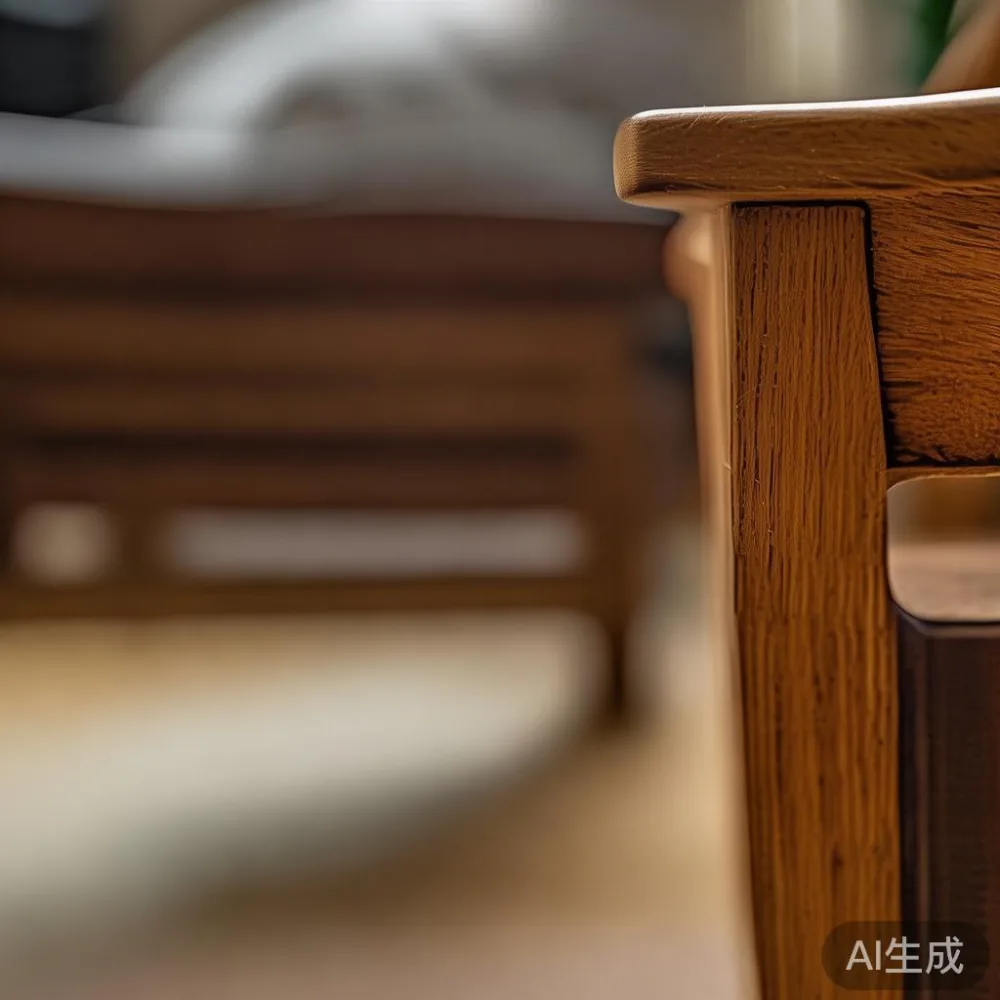
Solid wood is hygroscopic, meaning it naturally exchanges moisture with the surrounding air. A well-made joint allows controlled dimensional movement. Lower-quality construction, excessive moisture during finishing, or a finish that has cracked can allow more visible warping. That is why solid wood sofa frames, dining table aprons, bed frames, wardrobes, and nightstands should be made with stable joinery rather than brittle, over-tightened connections.
Humidity does not mean that solid wood furniture will fail in Singapore. It means that buyers should choose stable timber, sensible finishes, and construction that accounts for seasonal movement. An accent chair should not be pressed tightly against an air-conditioning vent, placed beside a damp balcony door, or repeatedly moved between a humid balcony and a dry flat. Its natural fibres will react to its environment just as skin reacts to temperature.
What wood movement should I expect in an HDB flat or condo?
A typical Singapore climate swing of 20 to 30 percentage points in relative humidity can produce visible movement in wide timber panels. The exact amount depends on species, grain direction, panel width, finish, and the severity of moisture exposure. A 45 cm wide solid timber board may show more dimensional change than a 12 cm chair leg because the board has more distance for expansion across its width.
Small movements are normal. A drawer that becomes slightly tighter, a panel that develops a fine gap, or a seat frame that feels different in January and July can reflect moisture-related dimensional change rather than defective construction. Major cracks, loose joints, or a chair that rocks should still be inspected and addressed under the applicable warranty.
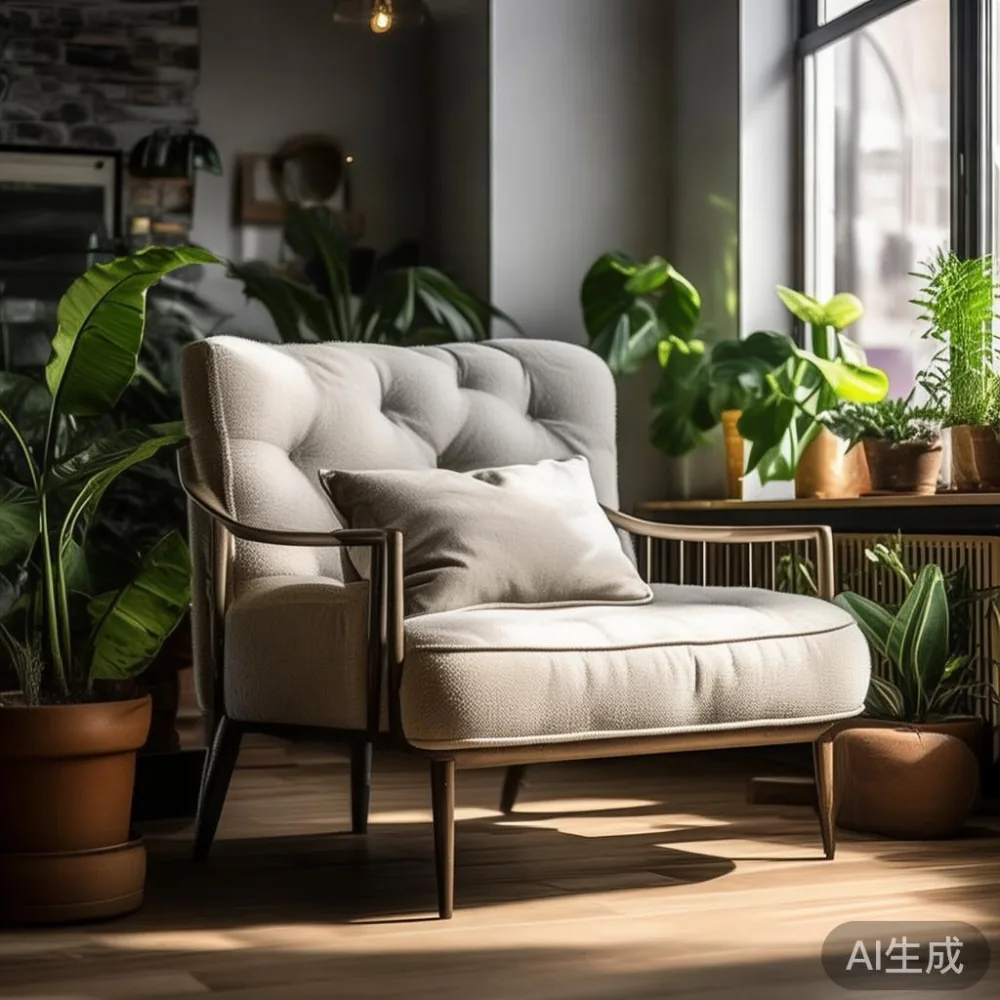
For furniture with a strong visual identity, light-luxury styling works well when the wood remains the focus. French light luxury can use a pale upholstered accent chair with tapered legs and restrained moulding. Post-modern light luxury can mix one curved chair with straight-lined pieces. American light luxury often combines clean silhouettes and durable natural finishes. In every case, keep airflow around the timber and avoid covering a chair with a thick cloth for months.
Will a solid wood accent chair fit through my HDB lift and corridor?
Access planning matters as much as humidity planning. A fully assembled accent chair may fit into the body of an HDB lift but still be difficult to manoeuvre around the lift door, corridor corners, and stairwell turns. Measure the chair at its widest point, add at least 5 cm of working clearance, and check the narrowest part of the route rather than relying on the lift’s rated floor area.
For example, a chair measuring 62 cm wide, 65 cm deep, and 82 cm high may fit comfortably through a 90 cm corridor after turning, but its angle could create problems near a right-angled landing. A more compact accent chair measuring 52 cm wide, 58 cm deep, and 78 cm high is easier to handle in older blocks. HDB lift door widths and internal dimensions can vary, so obtain the site measurements before dispatch.
Private condo corridors may be wider, yet access can still be complicated by security gates, narrow turns, and property-management rules. If an item must be flat-packed, confirm that the longest carton can enter the lift diagonally. It should also be short enough to avoid blocking a fire door. For projects involving a solid wood sofa, bed frame, dining table, wardrobe, nightstand, or marble table, request a delivery plan with the exact carton dimensions and lift-clearance notes.
Singapore’s GST is normally payable on taxable supplies, and the final invoice should show the treatment clearly. Retail prices for individual accent chairs may fall around SGD 680 to SGD 1,650, while larger framed pieces can range from SGD 2,400 to SGD 8,900. Confirm the quoted price, GST line, delivery charge, and any access-related service in writing.
Which timber and finishes handle Southeast Asian humidity most comfortably?
Teak is a practical choice for humid interiors because it has a naturally oily character and performs well when properly finished. Oak, ash, rubberwood, and other stable hardwoods can also work well when their moisture content and manufacturing process suit the destination climate. The species name alone does not determine durability; kiln drying, machining, joinery, and coating quality matter just as much.
Ask whether the timber was conditioned for approximately 35% to 55% relative humidity. This range covers many parts of Southeast Asia, although local conditions can exceed it. A responsible maker should avoid trapping excessive moisture inside the timber and should use joints that accommodate normal movement.
Water-based finishes are generally less aggressive during application than solvent-heavy coatings, while oil and wax finishes can be maintained more easily. Regardless of the system, inspect for open grain, tiny surface checks, and finish loss around high-touch areas. Keep the finish intact because exposed wood absorbs moisture more readily than a sealed surface.
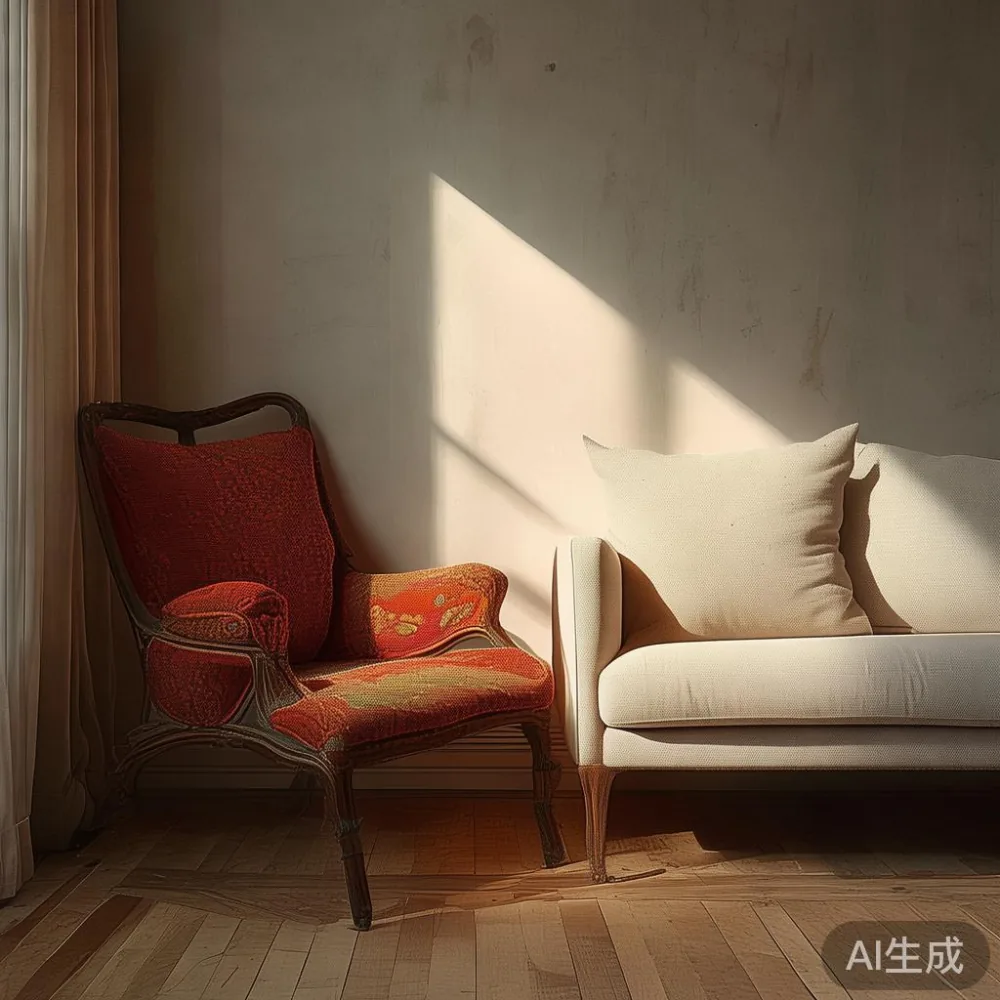
For a French provincial room, an accent chair with a lightly upholstered seat can bring warmth without overwhelming a compact flat. A marble table may provide a cool visual counterpoint, but a solid dining table remains the centre of daily use. If storage is the priority, research how to style Japanese wardrobe in apartment layouts and how to style Japandi wardrobe in room schemes; in both cases, allow the side panels and doors to expand without forcing them against walls.
How should I care for an accent chair during humid months?
Begin with placement. Keep an accent chair at least 30 cm away from windows with frequent condensation, and avoid direct contact with exterior walls that stay cool and damp. If a balcony door is opened often, choose a spot deeper inside the home. Do not place the chair directly beneath an air-conditioning outlet, as rapid drying followed by humid exposure can cause repeated finish movement.
Use a digital hygrometer and check the main living area several times per week. Readings around 45% to 65% relative humidity are comfortable for people and beneficial for balanced timber movement. Singapore homes may sit above 70% for long periods, so ventilation, dehumidification, and consistent air-conditioning become part of furniture care rather than optional household tasks.
Wipe the timber with a soft, slightly damp cloth, then dry it immediately. Do not use silicone sprays, abrasive pads, or household cleaners on lacquered or oiled surfaces. Cushion covers should be removable and washable where the material permits. If a chair has leather or fabric upholstery, check its cleaning code and keep moisture away from seams and exposed foam.
Re-oil an oil-finished chair every 12 to 24 months, or sooner if the surface looks pale and dry. Inspect screws and joints every 6 months, especially after a major monsoon season. Tighten them only as needed; forcing every fixing can restrict natural timber movement. For leather seating, condition it every 6 to 12 months according to the supplier’s instructions.
Does a light-luxury accent chair need a different care approach?
Light-luxury furniture is not exempt from environmental realities. Pale finishes show dust, fingerprints, and colour changes more readily, while a padded accent chair can collect humidity if its foam or filling is not ventilated. French light luxury proportions often favour slender backs and exposed timber legs, so inspect those joints carefully. American light luxury usually relies on straightforward profiles that are easier to maintain. Post-modern light luxury can combine rounded shells, tapered frames, or upholstered panels with very different moisture responses.
For mixed-material homes, maintain separate care schedules. A solid wood sofa frame may need only a yearly check, while a fabric accent chair may require monthly vacuuming. A marble table should be protected from acidic liquids and impact, not treated as a humidity solution. Oak or walnut-look nightstands should have coasters and stable placement. A bed frame should be checked for movement at the headboard and footboard.
Design decisions can reduce stress. Pair one statement accent chair with a compact side table rather than clustering several pieces against a damp external wall. Use breathable throws instead of permanent covers. Leave 5 to 8 cm between movable furniture and built-in joinery when dimensions allow, and rotate the chair’s position every few months if direct sun reaches it.
How do I compare solid wood, MDF, and upholstered alternatives in a humid room?
Solid wood offers repairability and a distinctive grain, but it moves with humidity. Good-quality MDF and veneered furniture can be dimensionally stable, although exposed edges and connector holes need care. Upholstered metal frames resist humidity well, while upholstered wood frames require more attention around foam, joints, and fabric seams. The right choice depends on the room, budget, and willingness to maintain the piece.
For shoppers comparing visual styles, a search for European bed vs Mid-century modern bed highlights how construction and proportion alter the room without changing humidity management. Likewise, the best Minimalist bed for 2026 can suit a compact bedroom only after its full dimensions, mattress clearance, and access route are checked. A separate search for the best Vintage sofa for 2026 should include the frame material, cushion composition, and delivery packaging—not just appearance.
If storage and soft furnishing are central, a search for French provincial with storage can reveal useful planning ideas. One carefully selected accent chair with a concealed storage base may serve a small flat better than several bulky units. Keep storage inserts dry, and do not seal damp clothing or papers into an unventilated compartment.
What should I check before delivery and after installation?
Before delivery, verify the chair’s final dimensions, timber species, finish, cushion filling, weight, warranty, and carton measurements. MIDHILL offers a 10-year structural warranty and lifetime refinishing, which gives buyers a defined route for long-term maintenance. The 14-day return period should be read with the condition requirements clearly understood, particularly for made-to-order upholstery.
On arrival, inspect the carton for puncture or dampness before opening it. Check the chair from every side under daylight and a neutral lamp. Look for chips, finish bubbles, loose joints, creased fabric, and uneven legs. Photograph the unpacking process, retain the packaging, and assemble the chair on a clean, level surface.
Allow newly delivered solid wood to acclimatise indoors for 3 to 7 days before applying heavy pressure or placing it near a wall. During that period, keep it away from wet cleaning zones and direct airflow. Check it after the first week and again after 30 days. If a joint loosens, a crack appears, or moisture damage is suspected, document the issue and contact the supplier rather than applying glue or filler without guidance.
Can I keep an accent chair near the balcony in a Punggol condo?
Yes, but the safest position is not necessarily the one with the best view. An open balcony in Punggol, Tampines, or Bedok can experience rain, heat, and persistent humidity that differ greatly from the conditioned interior. A chair exposed on the balcony should have a suitable outdoor-rated finish and quick-dry cushions; indoor upholstery may deteriorate within 6 to 18 months under repeated exposure.
A better approach is to bring the accent chair into the living area and use a slim, weather-resistant perch near the balcony for occasional use. Keep the wooden chair at least 1 metre from an open sliding door during heavy rain. Watch for condensation on metal rails and the back of the door, and remove the chair if the adjacent wall or floor feels damp.
Regular readings make the decision easier. If the area beside the balcony remains above 75% relative humidity for hours, move the chair and run a dehumidifier. A target near 55% will reduce the contrast between the humid threshold and the conditioned room.
How can I choose an accent chair that will age well in Singapore?
Choose details that can be maintained: removable covers, replaceable glides, accessible screws, and a finish that can be renewed. Solid wood construction with sound joinery is a strong foundation. Make sure the seat height suits the users, the arms are easy to grip, and the depth does not obstruct circulation. For a dining setting, leave roughly 60 cm of space behind the chair for pulling it out; in a living room, allow about 45 cm around it where possible.
Ask for samples and a finish care guide. See how the timber reacts under showroom lighting and request photographs of a piece after 12 months if the supplier has them. For a project requiring several coordinated items, request a sample set, site access measurements, and an installation schedule. Longer lead times can range from 20 to 45 days for made-to-order work, while standard stocked pieces may ship sooner.
MIDHILL’s 10-year structural warranty and lifetime refinishing service make long-term care part of the ownership plan. Refinishing should still follow sensible humidity control; a finish cannot compensate for repeated rain exposure or unstable storage. Use the warranty for genuine structural concerns, and the refinishing option for surface wear when appropriate.
Good furniture care in Singapore is a balance between material knowledge and everyday discipline. Keep the accent chair dry, ventilated, correctly positioned, and mechanically sound. Check the room humidity, wipe the timber promptly, maintain the finish, and give each joint room to move. With those habits, solid wood can remain handsome through several years of tropical weather and frequent use.