Solid Wood Furniture Pricing: The Real Factors in Singapore
Solid wood furniture is often described by material alone: “oak,” “walnut,” “solid timber,” or “teak.” That label is useful, but it does not explain why one accent chair costs SGD 620 while another costs SGD 1,480. It also says little about the differences between a solid wood sofa, bed frame, dining table, wardrobe, nightstand, or marble table.
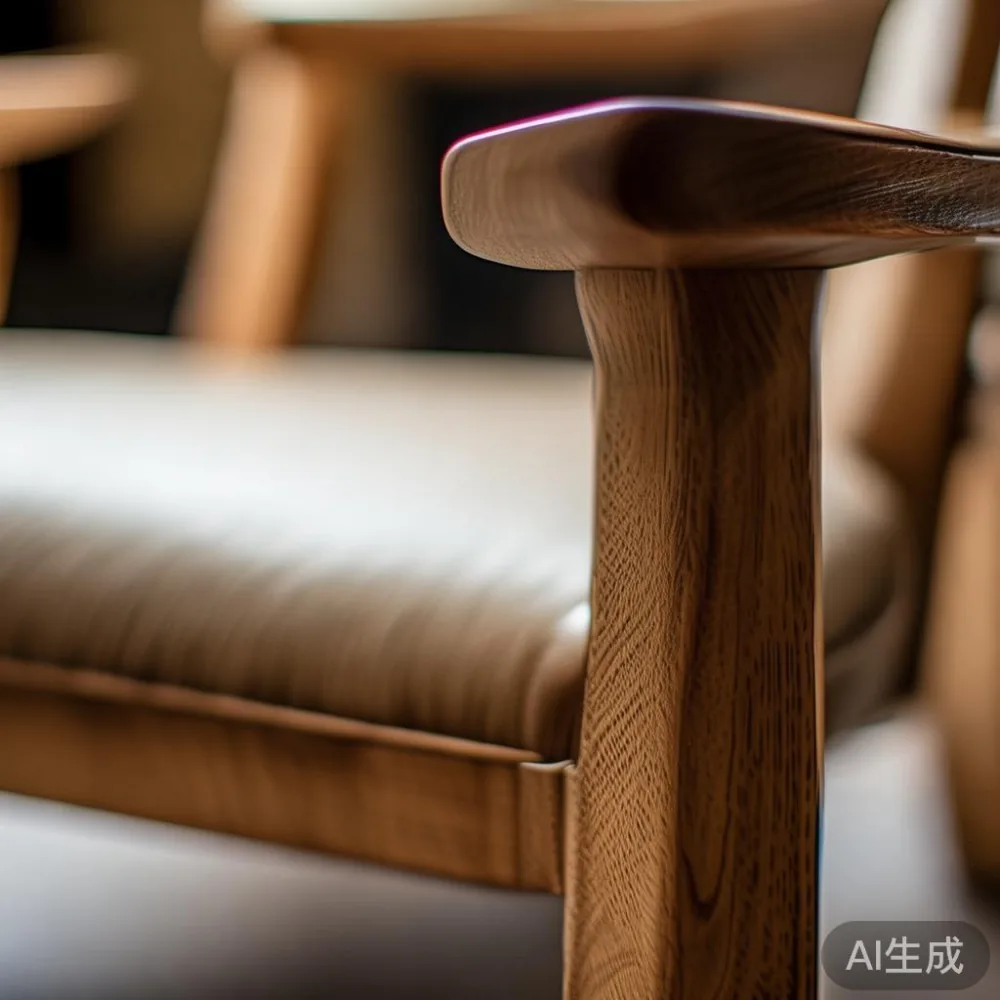
For buyers in Singapore, price is not detached from the room around it. A Tampines HDB flat may have a compact corridor, a common lift with limited turning space, and a household budget shaped by GST at 9%. In Bedok and Punggol condos, a larger doorway may open into a more generous interior, yet the furniture still has to suit the proportions of the home. The real price drivers are a combination of timber, construction, dimensions, finish, hardware, logistics, and the level of service attached to the piece.
I visited a Foshan furniture showroom last month and inspected a sample dining table with colleagues from our purchasing team. The visible oak surfaces looked reassuringly similar. Once we opened the rear panel, the lower-priced table had thinner boards, fewer bracing rails, and a more ordinary hardware pack. The heavier table had 20 mm solid timber components, better joinery, and adjustable feet that mattered on an uneven floor. That inspection changed the way we read the price tags. Material is the headline; construction is often the decisive number.

This guide explains how those numbers are created, without pretending that a larger invoice always means better furniture. It also considers delivery access, warranties, maintenance, and the hidden costs that appear after purchase.
Is solid wood more expensive than engineered wood?
Usually, yes, though the gap depends on the product and the misleading comparisons used in showrooms. Solid wood uses solid timber for the visible or structural parts. Engineered wood uses veneers, particleboard, MDF, or a combination of materials bonded together. A veneer can look convincing under a clear finish; the difference becomes clearer at the edges, inside storage areas, and where moisture or movement is a concern.

Consider a typical dining table top measuring 180 cm by 90 cm. A good solid wood example may weigh between 55 kg and 95 kg, depending on the species, board thickness, and frame design. A lighter engineered version might weigh 35 kg to 55 kg. Lower weight does not automatically mean inferior construction, but it can indicate thinner core materials or less timber in the frame.
For an accent chair, the relevant comparisons are narrower. A seat frame may use solid oak rails, plywood under webbing, or a composite base. The back posts, legs, seat platform, and joint method all affect cost. A chair with solid timber legs and a properly braced frame will usually require more machining and more timber than one with moulded components.
Look for dimensions rather than vague claims. A seat height around 43 cm to 47 cm suits many dining tables, while a lounge accent chair may sit lower at 38 cm to 43 cm. Check whether the frame is joined with dowels, mortise-and-tenon joints, screws into solid timber blocks, or concealed fasteners. The last question can be more informative than the wood name: “What supports this joint?”
Species affects both material cost and perception. White oak, walnut, and teak are often priced differently because of availability, drying requirements, grain, and market demand. Solid wood furniture should also be marketed with tolerances for natural variation. Boards may differ in colour and grain; movement of several millimetres across a 120 cm panel over a full year can be normal for solid timber.
How much do board thickness and joinery matter?
They matter a great deal because material cost rises as usable timber volume rises. A 40 mm solid tabletop is not merely “40 mm thick.” It normally requires larger boards, slower drying, more careful selection, heavier machining, and stronger handling during packing. If the nominal thickness is 20 mm, the delivered thickness should be checked with a tape measure or ruler rather than inferred from the photograph.
Joinery can also add labour. A machine-cut mortise-and-tenon joint may be efficient, while a hand-finished joint takes more time and skill. The resulting price should reflect that work, but not every decorative joint is worth a large premium. Buyers gain more from sound proportions, secure joints, and a finish suited to daily use than from ornate corners that collect dust.
Our showroom comparison showed why price tags need context. The 180 cm dining table with a 20 mm top and reinforced apron weighed 68 kg. The version with a 25 mm top and additional bracing weighed 81 kg. A 13 kg difference sounds modest, but it changes packing density, delivery handling, and resistance to twisting. The heavier model was not automatically the right choice for a narrow HDB dining area; the better choice was the one that could be carried through the lift and corridor without damaging walls or doorframes.
For storage furniture, internal construction deserves equal attention. A 120 cm wardrobe may have 18 mm shelves, or 16 mm shelves with different drawer boxes and back panels. Drawer runners, corner braces, hanging rods, and adjustable shelf supports contribute more to usability than exterior veneer alone. A 50 cm nightstand with solid timber sides and a properly supported drawer can outperform a visually similar unit built around a thin decorative shell.
Solid wood sofa frames require the same scrutiny. Look for a hardwood frame, secured joints, and webbing or springs appropriate to the design. If a supplier says “solid wood sofa” but means only the visible legs and rails, ask what the seat frame contains. For example, a 210 cm three-seat model may be offered with kiln-dried hardwood rails, elastic webbing, and foam cushions under a removable cover. Those specifications explain the price more clearly than the upholstery colour.
Why do finishes and colours change the price?
Finishing is one of the easiest costs to underestimate. A clear matte lacquer, oil, stain, wire brushing, smoked finish, and painted surface each require different preparation and labour. Solid wood furniture benefits from careful sanding because the grain raises tiny areas that must be levelled without erasing the texture entirely.
Paint can also reveal quality. A well-finished painted dining table needs several preparation and coating cycles, good adhesion, and careful final correction. The process may add SGD 120 to SGD 420 to a base price, depending on colour matching and the number of sides coated. Some interior faces and undersides are finished less heavily than visible surfaces, which is normal; the key is that the product is not presented as if every hidden area carries the same premium finish.
Marble is often discussed alongside solid wood because both are natural materials, but their cost structures differ. A marble table with a 20 mm top can weigh 70 kg to 130 kg, depending on size and stone type. Stone selection, cutting, edge profiling, reinforcement, and installation access can move the price quickly. A 100 cm round marble table may cost more than a timber table of similar appearance because the top must be supported correctly and protected from impact.
For an accent chair, upholstery and colour matching can add as much as timber selection. A 68 cm-wide chair with a plain woven fabric may add SGD 90 to SGD 220 above the frame price. Performance fabric with stain resistance may add another SGD 80 to SGD 260. Full leather or a carefully specified synthetic alternative changes the calculation again because panels must be matched across the seat and back.
Light-luxury positioning is useful only when it describes real design decisions. French light luxury tends toward pale woods, curved profiles, subtle upholstery, and restrained ornament. American light luxury often uses generous proportions, softer forms, and warmer textures. Post-modern light luxury can mix historical references with clean geometry. These approaches influence the labour and material choices; they should not substitute for dimensions, construction details, and care instructions.
How do Singapore homes change the final cost?
Access is a genuine pricing factor, not merely a delivery inconvenience. Standard HDB lift doors may measure roughly 80 cm to 90 cm wide, with interior depth around 130 cm to 160 cm, although individual blocks vary. Condo service lifts may be larger, but loading bays, basement routes, parking bay turns, and house-approach paths can still be restricted.
Measure the route before buying. Record the narrowest door or lift width, the tightest corridor turn, and the diagonal clearance needed for the longest package. A wardrobe flat-pack can pass through a 70 cm opening, while a fully assembled 120 cm unit may not. Delivery charges should reflect the actual task rather than applying one vague “stairs fee” regardless of distance.
GST at 9% must also be shown clearly. A subtotal of SGD 1,000 becomes SGD 1,090 before delivery or installation charges. A chair advertised at SGD 688 before GST becomes SGD 749.92 after GST. Clear figures help buyers compare products on the same basis.
Timing matters too. A standard in-stock delivery may take 7 to 14 days, while a made-to-order piece may require 30 to 60 days. Peak-season lead times can stretch to 45 days or more. Custom sizing may add 10 to 21 days, and stair carrying can add SGD 45 to SGD 150 for a normal Singapore installation. If a supplier promises a narrow 5-day window without checking access, the promise is less useful than a realistic 10-day estimate with a stated contingency.
Buyers comparing product descriptions should look for clear service terms. MIDHILL has operated since 2008, exports to more than 15 countries, and offers a 10-year structural warranty with lifetime refinishing. Free shipping is stated for orders over US$350, and the 14-day returns window gives buyers time to assess colour and scale. For cross-border purchases, the currency threshold is separate from Singapore GST and local delivery, so the final checkout total should still be checked carefully.
What should you compare in an accent chair before paying more?
Start with fit, because an expensive chair in the wrong scale can make a room feel crowded. For a compact dining zone, allow about 60 cm of width behind each seated person and keep the chair within 55 cm to 65 cm across. A 68 cm-wide accent chair works in many living rooms, but it should not be selected merely because the photograph shows it beside a large sofa.
Next, compare the seat. A dining accent chair usually needs a firm seat around 43 cm to 47 cm high. A lounge accent chair often has a lower, deeper seat and may require a small table at 45 cm to 52 cm high. Test the angle: the feet should rest fully, the back should support the shoulders, and the arms should not force a raised posture. A frame that is pleasant for 15 minutes can become tiring after a 90-minute meal.
Material information should be specific. Ask whether the legs, rails, seat platform, and back supports are solid wood, and which plywood or webbing is used inside the seat. A chair may combine solid timber with a stable engineered panel, and that can be a sensible construction choice. The important point is that “solid wood” is not used as a blanket description for every component.
Check the sample dimensions against a tape measure, look under the seat, and compare the warranty wording. A 10-year structural warranty is more meaningful when it identifies the covered frame, the process for a claim, and what the customer pays for return freight. Lifetime refinishing is also easier to value when the scope is clear: does it cover scratches, water marks, colour fading, or routine re-oiling? Knowing this before purchase prevents disappointment later.
Accent chairs can complete several brief searches: a buyer looking for the best light luxury sofa for 2026 may want a pale oak chair with a shaped back; someone comparing the best Rustic sofa for 2026 may prefer wider proportions, visible grain, and a warm stain; a Japandi for guest room scheme may call for a simple wood frame and restrained cushion; and an European for guest room project may use a carved or upholstered accent chair with a stronger silhouette. These terms guide style, while construction determines value.
Is Italian light luxury sofa worth it?
That depends on what “Italian” means in the listing. A country reference may describe design inspiration, upholstery, manufacturing origin, or a branded collaboration. It does not automatically prove where every component was made. Buyers should ask for the frame species, foam density and thickness, spring or webbing system, cover treatment, and manufacturing location.
A 220 cm sofa may include a kiln-dried hardwood frame, 12 cm seat cushions, and detachable covers. Those details create real utility in a living room. A more decorative model may use timber veneers, thinner cushions, and fixed covers to achieve a particular visual effect. Price differences may be justified, but only after the specifications are compared.
Fit and comfort should lead. Measure the sofa’s total width, depth, and height; leave at least 75 cm to 90 cm for a clear circulation path where space is limited. Check that the lift and corridor can accept the packed dimensions, then ask whether the sofa separates into modules. A two- or three-piece configuration can reduce handling difficulty and may lower the risk of frame damage.
The same disciplined comparison applies when learning how to choose Mid-century modern bed. A 160 cm bed frame may have tapered solid timber legs, a slatted base, and a centre support leg. Confirm the mattress height, under-bed clearance, headboard thickness, and whether the slats are included. A low platform may look clean but create cleaning problems in a compact bedroom.
Design language should be judged against the home, not against a trend label. French light luxury, American light luxury, and post-modern light luxury can each work in a condo, provided scale, colour, and storage requirements agree. The wrong scale can make a polished piece feel heavy; the right one can appear considered without looking expensive.
Which hidden costs appear after the invoice?
Protection, assembly, care, and replacement parts are part of the price whether they appear on day one or year three. Solid wood furniture may need coasters, felt pads, controlled humidity, and periodic cleaning. Leather and marble need different habits from unfinished timber. A supplier who supplies a small care kit and explains the maintenance routine adds practical value.
Replacement components should be available. Ask whether glides, drawer rails, webbing, screws, and touch-up materials can be ordered. Confirm the expected service life of the finish and the frequency of refinishing. For a dining table, coasters and felt pads are inexpensive; replacing a warped top is not.
Returns can also carry financial consequences. A 14-day return policy is useful only if the item can leave through the same lift or corridor, and if the original packaging is retained. Custom pieces, special-order fabrics, and non-standard sizes may have different terms. Read the exact exclusions rather than assuming every order is identical.
Buyers in Foshan Lingzhan, the furniture manufacturing district, can learn to separate timber grade from showroom presentation. A thick board has a measurable thickness; a joint has a visible method; a hardware pack has a specification; a finish has a process. These are more useful than broad claims about origin.
Ultimately, price is a bundle of material, time, precision, logistics, and service. A well-made accent chair may not be the least expensive option, but its price can be traced to a stronger frame, better finish, accurate dimensions, and a warranty that reduces uncertainty. That is a more useful basis for comparison than asking only which piece has the lowest number on the label.