Selecting a Sofa: Must-Check Features
A sofa may photograph beautifully and fit the dimensions of a Singapore HDB flat, yet still be impossible to sit on comfortably. The seat may be too high, the cushion too soft, the back too short, or the armrests too broad. Delivery is another test: a 210 cm frame may turn a normal corridor into a tight squeeze, while a lift doorway of 90 cm can reject a packed sofa altogether.
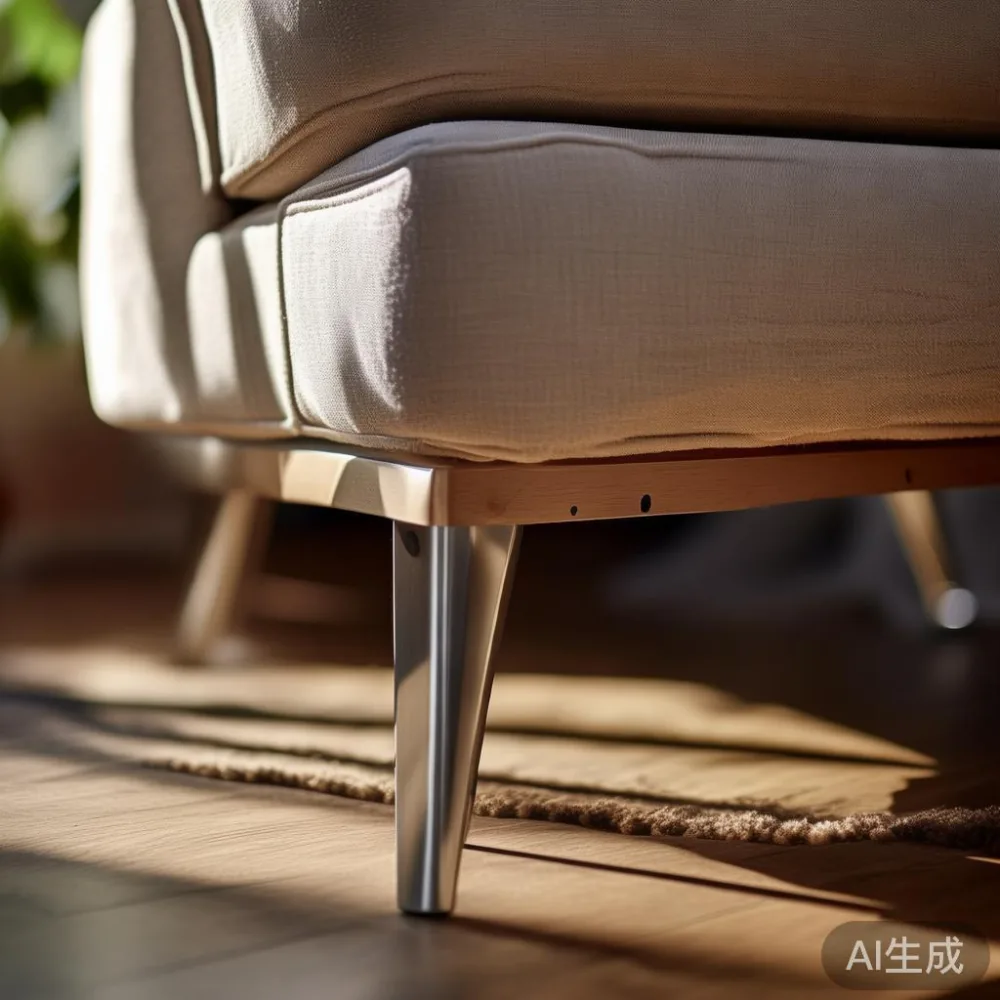
Last month, I visited a client in Tampines with a newly delivered accent chair. It looked elegant in the catalogue, with a 45 cm seat and an 82 cm height, but the client had to perch on its front edge because the loose cushion kept sliding. We removed the cushion, checked the underlying support, and discovered that a protective film had trapped a slight buckle beneath the foam. The frame was sound; the usable seat was not.
That experience captures the issue: attractive appearance and sound construction do not guarantee comfortable sitting. Before buying an accent chair—or any sofa selected mainly for appearance—you should check its usable dimensions, construction, access route, and return terms.

Will the usable seat actually support you?
Start with the dimensions that affect your body rather than the product’s width. A practical seat height is generally 40–45 cm, while 42–45 cm suits many adults. For a sofa, the front edge should not press directly into the back of your legs, and the seat should let your feet reach the floor with only a slight downward angle at the knee.
Check seat depth as well. A usable depth of 50–58 cm allows normal sitting without the backrest pushing your shoulders forward. A deeper seat of 60–70 cm can feel relaxed for lounging, but it may be unsuitable for shorter users or for anyone rising from the seat. Compact HDB living rooms often encourage a 2-seat sofa measuring 150–180 cm wide, yet that width alone says nothing about individual seat space.

For an accent chair, consider both the listed body dimensions and the space between the seat, backrest, and arms. Tight armrests can force a wider posture, while a seat that narrows toward the front may feel unstable. Ask for a photograph with a person seated, not merely an empty chair shown from the front. The visible cushion thickness should also be stated: 10–12 cm gives a softer surface, while 8–10 cm often feels more supportive.
Test or inspect the cushion return. Remove any cover and sit for 5–10 minutes. It should rebound rather than remain visibly compressed. If buying online, require clear information about foam density, cushion fill, and the replacement process. A 10-year structural warranty does not automatically cover comfort-related wear, so the distinction matters.
Is the frame built for everyday use?
A sofa you cannot sit on may still have a capable frame, but both features need examination. For solid wood sofa options, identify the timber used in the load-bearing members and whether the frame is kiln-dried, joined, and reinforced. Look for corner blocks or braces, not only decorative outer panels. The rails should be fixed to the legs with mechanical joints rather than relying on adhesive alone.
For upholstered seating, ask whether the springs are fixed, elasticated webbing, or a suspended platform. These systems feel different. A properly fixed spring unit may provide a firmer response, while good webbing can remain supportive for years if it is installed with appropriate tension. Avoid treating a vague description such as “strong frame” as a specification.
Move the sofa slightly after assembly. It should not rock, twist, or produce a scraping noise. Sit at each end and near the centre to check for movement in the joints. A solid wood sofa should have an even feel under load, with no soft corner or sudden dip. For the accent chair category, pay particular attention to rear-leg fixings, because narrow side chairs are often moved frequently.
MIDHILL produces solid wood furniture for living, dining, and bedroom spaces, including solid wood sofa frames, dining table designs, wardrobes, and nightstands. That broader furniture knowledge matters because the same connection principles apply across categories: a bed frame needs rigid corner support, a dining table needs stable stretchers and level legs, and a wardrobe needs anti-tip provisions and secure hinges.
Can the sofa pass through your lift and corridor?
Measure the route before choosing the sofa. In many Singapore HDB blocks, the lift car measures roughly 110–140 cm deep and 90–110 cm wide, but older blocks and specific tower wings vary. A useful rule is to add at least 5 cm to the sofa’s smallest packed dimension when comparing it with the narrowest doorway or lift entrance. Do not assume that the product fits the lift car if its carton is too tall for the door opening.
For example, a sofa with a 205 cm frame, 88 cm height, and 92 cm depth may fit some Tampines lift cars when turned on its side, but only if the packaged diagonal and the installer’s turning space are suitable. The route from the lift to the unit also matters. Check corridor widths of 100–120 cm, thresholds, the number of right-angle turns, and the distance between the lift door and the home entrance.
Measure the actual door leaf as well as its frame. A nominal 90 cm door can provide less than 85 cm of clear width after hinges and handles. If the sofa must enter through a service opening, confirm that the supplier is permitted to use it and whether any building management fee applies.
For stair delivery, establish the floor, landing dimensions, and turning radius in advance. Bedok and Punggol condo corridors may be generous, while the apartment’s own entrance can still be narrow. Ask whether delivery is curbside or room-of-choice placement. A nominal free-shipping threshold of US$350 is useful for international purchasing, but Singapore orders should still have their access charges and placement terms stated clearly in SGD.
Compact Punggol studios may benefit from an armless accent chair under 70 cm wide. A small 2-seat sofa around 145–160 cm can preserve circulation, but a deep chaise version may occupy too much floor area. Leave at least 75–90 cm for a main walkway and 30–45 cm between the sofa and a coffee table for normal movement.
What should you check before paying?
Ask for a written specification covering the exact dimensions, packed dimensions, weight, seat height, seat depth, frame material, suspension type, upholstery composition, cushion fill, assembly method, warranty, and return conditions. A product page that gives only “W 180 × D 85 × H 80 cm” leaves too many unanswered questions.
Look at the finish under daylight. If the piece is a solid wood sofa, inspect exposed grain, joints, and colour consistency. If it is upholstered, check seam alignment, piping, loose threads, and the fit of the back cushion. The latter should remain supportive rather than pressing forward when someone sits down.
Lighting affects colour and proportion. Place a soft 2700–3000K lamp nearby, but also view the sofa beside a window during the day. Screen colours are not enough. French light luxury styling often uses pale upholstery and slender profiles, so a slightly warm frame tone can be more practical than a very pale finish in a sunlit HDB living room.
Price transparency is equally important. Compare like-for-like specifications in SGD rather than relying on a low headline figure. Confirm whether GST is included, whether white-glove placement is separate, and what happens if the sofa arrives with a damaged leg, torn fabric, or compressed cushion. Singapore’s 9% GST should appear clearly on the invoice.
Consumers also search for phrases such as for sale Minimalist furniture and for sale Japanese furniture when considering refined, restrained designs. These phrases can help identify a style, but material and measurements must still come before appearance. A listing for Italian light luxury for bedroom may describe a coordinated bedroom setting, yet the sofa’s own usable seat remains a separate issue. Likewise, a European light luxury dressing table needs stable proportions and clear drawer clearance; it does not answer the seating question.
Can you return it if the seat feels wrong?
<A 14-day return window can protect a buyer from size or comfort disappointment, provided the terms are clear. Check whether the sofa must be unused, whether the original packaging is required, and who pays return delivery. For a bulky item, return freight can exceed the cost of resolving the problem through replacement parts or repair.
Before approving delivery, photograph the sofa from several angles. Record the frame number, cushion condition, and packaging dimensions. If a leg arrives uneven or a corner is dented, report it before the carton is discarded. Cushion compression can also be confused with manufacturing failure, so ask the supplier how long the piece should be left in a ventilated room to regain its shape.
Look for a written comfort-related service process. Does the supplier replace a defective foam cushion? Can an incorrect seat height be adjusted, or is the item simply returnable? MIDHILL’s 10-year structural warranty and lifetime refinishing policy provide useful long-term coverage for eligible furniture, but buyers should still confirm what “structural” covers and whether refinishing is offered for the specific finish.
Delivery timing matters too. Allow approximately 7–14 delivery days for ready-stock items in Singapore, but confirm the actual dispatch window. A made-to-order piece can require 4–8 weeks. Free shipping over US$350 applies to qualifying international orders, while local delivery terms should be checked separately. Never let an uncertain lead time become pressure to accept a sofa with an untested seat.
What makes a sofa suitable for a compact Singapore home?
The right sofa balances comfort, circulation, and visual calm. An accent chair needs a supportive seat between 40–45 cm high and 50–58 cm deep, firm cushion recovery, and a stable frame. A sofa should offer similar usable dimensions per person, even when its total width is larger.
American light luxury can suit a compact condo through clean lines, pale fabrics, and restrained ornament. Post-modern light luxury may introduce gentle curves or unexpected details, but those should not compromise legroom. In either style, place the sofa against the longest usable wall, keep the main passage open, and use a slim coffee table if circulation is limited.
Consider the room after the sofa arrives. A 180 cm sofa can work in a 280 cm-wide living area, yet the nearby dining table, TV unit, or bed frame may still affect movement. Measure the complete furniture arrangement rather than the empty floor. If searching for under 2000 Coastal furniture, check whether the pale, easy-looking finish will suit local humidity and everyday use; coastal styling does not remove the need for stable construction.
For bedroom planning, reviews of the best Nordic wardrobe for 2026 may focus on storage capacity, but a coordinated bed frame and nightstand should also have stable proportions and accessible spacing. The same diligence applies when choosing for a living room: build a list of measurements, verify access, test the seat if possible, and review the written return policy. A sofa may be chosen for its appearance, but it should also be furniture you can genuinely sit on.